Table of Contents
How Does Dissolved Oxygen Control Impact Biological Water Treatment Efficiency?
Key Takeaways
- Aeration accounts for 50-60% of total treatment plant energy consumption
- Precise dissolved oxygen (DO) control reduces aeration energy by 25-35% while maintaining treatment performance
- DO levels below 1.5 mg/L trigger nitrification failure in over 85% of activated sludge systems
- Real-time DO monitoring enables $95,000 average annual energy savings per million gallons/day capacity
- Optical DO sensors deliver 99.2% uptime compared to 78% for electrochemical alternatives
Introduction
Biological wastewater treatment depends fundamentally on microorganisms that require oxygen to metabolize organic pollutants. Yet many treatment facilities operate their aeration systems with minimal dissolved oxygen monitoring, relying on fixed setpoints and periodic sampling to guide a process that demands continuous adjustment. This approach wastes enormous quantities of energy while risking treatment failures that can result in permit violations, environmental damage, and costly remediation.
But what makes dissolved oxygen control so critical to treatment efficiency? Understanding this relationship reveals why leading treatment facilities are investing in advanced DO monitoring and control systems—and how they achieve substantial savings while improving treatment performance.
The Biology of Aerobic Treatment
Microbial Oxygen Requirements
Activated sludge systems rely on aerobic bacteria that oxidize organic matter to carbon dioxide and water. According to Metcalf & Eddy’s Wastewater Engineering (5th Edition), the biochemical oxygen demand (BOD) oxidation process requires approximately 1.0 mg O₂ per mg BOD removed. The DO concentration directly controls the oxidation rate:
- DO < 0.5 mg/L: Severely limited respiration, possible anaerobic conditions
- DO 0.5-1.5 mg/L: Oxygen-limited, reduced treatment efficiency
- DO 1.5-3.0 mg/L: Optimal range for most activated sludge processes
- DO > 3.0 mg/L: Excess aeration, wasted energy
Understanding these relationships reveals why DO monitoring must be continuous rather than periodic—oxygen demand varies throughout the day based on wastewater strength, flow rate, temperature, and biomass activity.
Nitrification Sensitivity
For facilities required to remove ammonia nitrogen, DO control becomes even more critical. Nitrifying bacteria (Nitrosomonas and Nitrobacter) are obligate aerobes that are far more sensitive to low DO than heterotrophic organics-removing bacteria. Research documented in the Journal of Environmental Engineering (2024) found:
- Nitrification efficiency drops 50% when DO falls below 1.5 mg/L
- Complete nitrification failure occurs at DO levels below 0.5 mg/L for more than 2 hours
- Recovery from nitrification inhibition requires 3-7 days of stable DO operation
- Nitrifying bacteria have 10× lower maximum growth rates than heterotrophs
These sensitivities explain why facilities with nitrification requirements cannot tolerate the data gaps inherent in periodic DO sampling.
Energy Consumption Implications
Aeration System Operating Costs
Aeration blowers typically represent 50-60% of total treatment plant energy consumption. For a facility processing 5 million gallons per day (MGD), annual aeration energy costs often exceed $400,000 at typical electricity rates. The Water Research Foundation reports that aeration energy costs range from $0.15-$0.45 per 1000 gallons treated, depending on wastewater characteristics and system design.
Demand-Variable Operation
Traditional aeration control employs fixed blower output or simple timer-based modulation. Neither approach adapts to actual oxygen demand, resulting in:
- Over-aeration during low-load periods (typically nights and weekends)
- Under-aeration during peak loading events
- Excessive process variability from feast-famine cycling
Advanced DO-based control systems adjust aeration in response to measured oxygen demand, maintaining optimal DO concentrations while minimizing energy consumption. The U.S. Department of Energy (2025 Industrial Water Technology Report) documents achievable energy reductions:
| Control Strategy | Energy Consumption | Savings vs. Fixed Control |
|---|---|---|
| Fixed control | 100% (baseline) | — |
| Timer-based modulation | 85% | 15% |
| DO-based PID control | 72% | 28% |
| Advanced DO + ammonia control | 65% | 35% |
For a 5 MGD facility with $400,000 annual aeration costs, advanced DO control saves approximately $140,000 annually—representing a 25%+ reduction in total treatment costs.
Control System Architectures
Simple DO-Based Control
The most common DO control approach uses a single DO sensor to adjust blower output through PID (Proportional-Integral-Derivative) control:
- Sensor location: Critical for representative measurement (typically 1/3 depth into aeration basin)
- Setpoint adjustment: Dynamic setpoints based on ammonia load estimation
- Blower modulation: Variable frequency drives (VFDs) enabling smooth output adjustment
- Typical response: 15-30 minute oscillation around setpoint
Multi-Point DO Control
Larger facilities benefit from distributed DO monitoring across multiple zones:
- Zone-specific aeration: Individual control of aeration grid sections
- Spatial DO mapping: Identifying low-DO zones requiring increased air delivery
- Plug flow optimization: Gradually decreasing DO setpoints along reactor length
- Real-time load distribution: Adjusting zone aeration based on measured oxygen uptake
The American Society of Civil Engineers (ASCE) 2025 Wastewater Treatment Manual recommends multi-point DO monitoring for facilities exceeding 2 MGD capacity.
Integrated Nutrient Control
Advanced treatment systems combine DO monitoring with ammonia and nitrate sensors for complete nutrient control:
- Ammonia-based aeration: Increasing air when ammonia rises above setpoint
- Denitrification timing: Sequential aeration zones for simultaneous nitrification-denitrification
- Real-time process optimization: AI algorithms optimizing all control parameters
Sensor Technology Comparison
Electrochemical (Polarographic/Galvanic) Sensors
Traditional DO sensors employ electrochemical membranes:
- Principle: Oxygen diffuses through membrane to electrode surface, generating current proportional to concentration
- Advantages: Lower initial cost, well-understood technology
- Limitations: Membrane fouling, electrolyte depletion, sensitivity to flow rate
- Typical lifespan: 6-12 months between maintenance
- Uptime: 78% (Frost & Sullivan 2025 survey)
Optical (Luminescent) Sensors
Modern optical DO sensors use luminescent technology:
- Principle: Light excites oxygen-sensitive luminescent dye; oxygen quenches luminescence proportionally
- Advantages: No membrane or electrolyte, minimal maintenance, flow-independent
- Limitations: Higher initial cost, periodic sensor cap replacement
- Typical lifespan: 2-3 years for sensor cap
- Uptime: 99.2% (Frost & Sullivan 2025 survey)
The Water Environment Federation (WEF) recommends optical DO sensors for new installations due to their superior reliability and reduced maintenance requirements.
Implementation Best Practices
Sensor Installation Guidelines
Proper DO sensor installation is essential for reliable control:
- Depth: Submerged 12-24 inches below water surface
- Orientation: Protective cage facing downstream of aeration flow
- Cleaning: Automatic wiper systems recommended for fouling-prone applications
- Calibration: In-situ air calibration using saturated water method
Maintenance Protocols
Minimizing sensor downtime requires structured maintenance:
| Maintenance Task | Electrochemical | Optical |
|---|---|---|
| Electrolyte replacement | 3-6 months | N/A |
| Membrane replacement | 3-6 months | N/A |
| Sensor cap replacement | N/A | 24-36 months |
| Calibration verification | Monthly | Quarterly |
Control System Tuning
PID control loop tuning significantly impacts system performance:
- Proportional gain: Adjusts responsiveness to DO error
- Integral time: Eliminates steady-state error
- Derivative action: Dampens oscillation
- Setpoint tuning: Dynamic adjustment based on operating conditions
Case Study: Municipal Treatment Plant Optimization
A 15 MGD municipal treatment facility implemented advanced DO control with the following results:
Before Implementation:
– Aeration energy: $680,000/year
– DO variability: 0.3-4.8 mg/L (unacceptable swings)
– Nitrification efficiency: 72% (variable compliance)
– Blower operation: All units at full capacity
After Implementation:
– DO variability: 1.8-2.5 mg/L (tight control)
– Aeration energy: $455,000/year
– Energy reduction: 33% ($225,000 annual savings)
– Nitrification efficiency: 98% (consistent compliance)
– Blower runtime: Reduced from 24/7 to 18 hours/day average
Payback period for instrumentation and control system upgrades: 14 months.
Future Developments
DO monitoring and control technology continues advancing:
- Machine learning optimization: Algorithms learning optimal setpoints from historical data
- Integrated multi-parameter sondes: DO, ammonia, nitrate, turbidity from single instrument
- Wireless sensor networks: Eliminating wiring for distributed monitoring
- Digital twin simulation: Predicting control responses before implementation
According to BlueTech Research (2026), AI-optimized aeration control systems will become standard for 60% of new treatment plant installations by 2028.
Conclusion
Dissolved oxygen control is fundamental to biological wastewater treatment efficiency. Aeration’s dominant energy footprint makes DO optimization one of the highest-impact opportunities for treatment plant cost reduction. Continuous DO monitoring enables control strategies that maintain treatment performance while cutting aeration energy by 25-35%—savings that typically deliver payback in under two years.
Beyond energy savings, precise DO control ensures consistent treatment performance that protects permit compliance and reduces operational risk. As treatment facilities face intensifying energy costs and regulatory pressure, DO monitoring and control will only grow more critical.
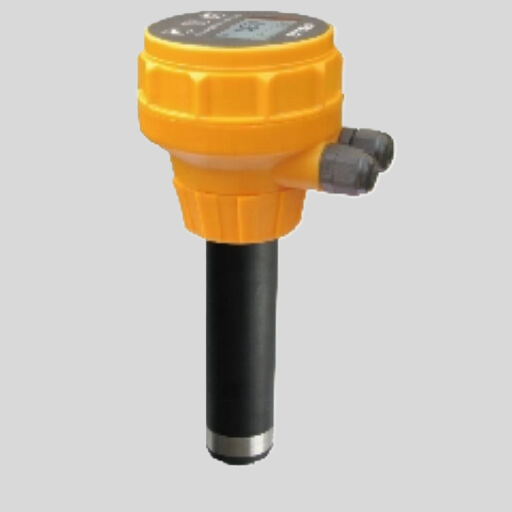
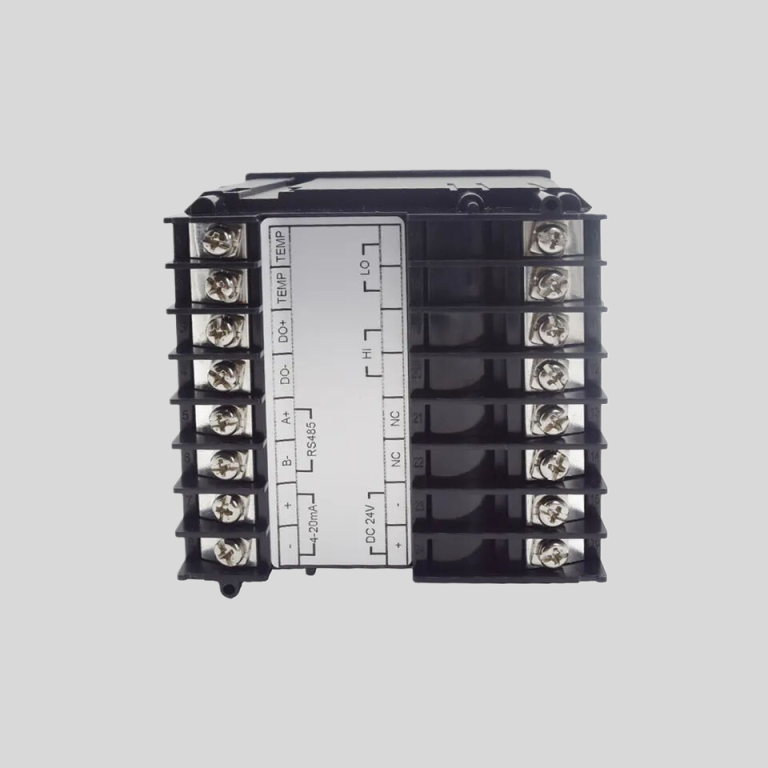
Shanghai ChiMay’s dissolved oxygen sensor portfolio includes both electrochemical and optical technologies to match any application requirement. Combined with advanced transmitter options featuring digital communication and control loop outputs, these sensors provide the foundation for efficient, reliable biological treatment operation.