Key Takeaways:
- UV254 absorbance provides a rapid, cost-effective surrogate for organic carbon measurement in water treatment
- Real-time UV254 monitoring enables optimization of coagulation, filtration, and disinfection processes
- Correlation between UV254 and dissolved organic carbon (DOC) allows process adjustments without laboratory delays
- Advanced sensors with self-cleaning mechanisms ensure reliable continuous operation
Table of Contents
Introduction
Natural organic matter (NOM) in source waters creates significant challenges for water treatment facilities, affecting coagulation efficiency, membrane performance, and disinfection byproduct formation. Traditional laboratory analysis of dissolved organic carbon (DOC) requires hours to days for results, leaving operators without real-time data for process optimization. UV254 monitoring offers a practical solution, providing continuous surrogate measurements that correlate with organic carbon concentration.
According to the U.S. Environmental Protection Agency (EPA), managing organic matter throughout the treatment train reduces total organic carbon (TOC) removal costs by 15-30% while improving finished water quality. Real-time UV254 monitoring has become standard practice at modern water treatment facilities seeking operational efficiency and regulatory compliance.
Understanding UV254 Absorbance
The Science Behind UV254 Measurement
UV254 refers to the absorbance of ultraviolet light at a wavelength of 254 nanometers by water samples. This wavelength corresponds to the absorption peak of aromatic organic compounds containing conjugated double bonds, particularly humic substances—the primary components of natural organic matter. The measurement is expressed in units of cm⁻¹ (reciprocal centimeters) or as absorbance units (AU).
When UV light passes through a water sample, dissolved organic compounds absorb energy proportional to their concentration and molecular structure. The Lambert-Beer Law describes this relationship:
A = ε × b × c
Where:
- A = Absorbance at 254 nm
- ε = Molar absorptivity (L/mol·cm)
- b = Path length (cm)
- c = Concentration (mol/L)
Higher UV254 values indicate greater organic matter concentration, enabling operators to track changes in water quality throughout the treatment process.
Relationship Between UV254 and DOC
Research spanning decades has established consistent correlations between UV254 absorbance and dissolved organic carbon concentration. The ratio of UV254 to DOC, known as specific UV absorbance (SUVA), provides additional information about organic matter character:
- SUVA < 2 L/mg·C: Low molecular weight, non-humic organics
- SUVA 2-4 L/mg·C: Mixed organics with moderate humic content
- SUVA > 4 L/mg·C: High molecular weight, hydrophobic humic substances
The American Water Works Association (AWWA) reports that utilities using real-time UV254 monitoring achieve 20-40% improvement in coagulation optimization compared to daily grab sampling approaches. This optimization reduces chemical costs while improving TOC removal efficiency.
Measurement Technologies
Fixed-Wavelength UV Sensors
Traditional UV254 sensors employ a mercury lamp or UV LED as the light source, with optical filters selecting the 254 nm wavelength. The sensor measures light intensity before and after passage through the sample, calculating absorbance from the ratio. Modern instruments use dual-beam designs that reference the light source output, compensating for lamp aging and temperature drift.
Key specifications for UV254 sensors include:
- Measurement range: 0-200 cm⁻¹ (or 0-2 AU)
- Detection limit: 0.001 cm⁻¹ (0.0001 AU)
- Path length: 1-100 mm selectable
- Response time: <5 seconds
- Temperature range: 0-60°C
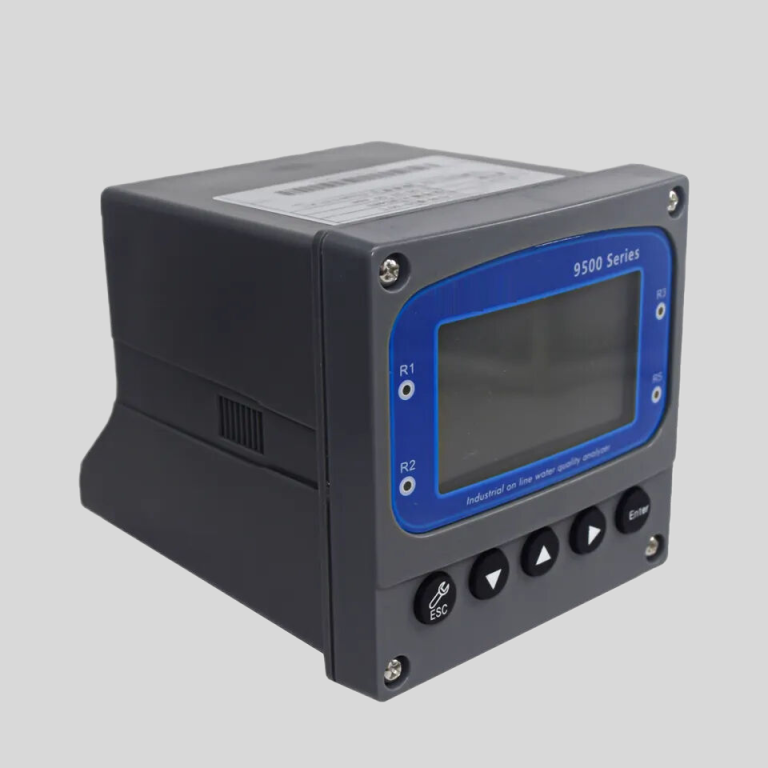
ChiMay's online turbidity testers incorporate UV254 monitoring capability for comprehensive organic matter assessment, enabling simultaneous measurement of particulate and dissolved contaminants.
UV-Vis Spectrophotometers
Advanced instruments provide spectral scanning across the UV range, enabling characterization of organic matter composition. Multi-wavelength measurements allow calculation of spectral slope, which correlates with molecular weight distribution. Some systems also measure visible wavelengths for color assessment and interference compensation.
Research from Stanford University demonstrates that spectral slope analysis can differentiate between terrestrial and algal organic matter sources, providing early warning of algal bloom events in source waters.
Applications in Water Treatment
Coagulation Optimization
Coagulant dosing optimization represents the primary application for UV254 monitoring in conventional treatment plants. By tracking UV254 removal efficiency, operators can:
- Adjust coagulant doses in real-time based on influent organic loading
- Respond to storm events that increase NOM concentrations
- Optimize for seasonal variations in water quality
- Reduce coagulant costs while maintaining treatment performance
Field studies conducted by the Water Research Foundation found that UV254-based coagulation control reduced alum consumption by 25-35% at participating utilities while maintaining finished water quality standards.
Membrane Treatment Monitoring
Membrane systems including microfiltration (MF), ultrafiltration (UF), nanofiltration (NF), and reverse osmosis (RO) require careful management of organic fouling. UV254 monitoring upstream of membranes provides early warning of organic loading spikes that could accelerate fouling rates.
Membrane performance indicators derived from UV254 include:
- Permeate quality monitoring: Ensuring membrane integrity
- Fouling rate assessment: Tracking resistance increase over time
- Cleaning optimization: Determining optimal cleaning frequency
- Recovery optimization: Maximizing water production between cleans
ChiMay's multi-parameter sensor systems integrate UV254 monitoring with conductivity, pH, and other parameters for comprehensive membrane feed water characterization.
Disinfection Byproduct Control
The Stage 2 Disinfectants and Disinfection Byproducts Rule (Stage 2 D/DBPR) establishes maximum contaminant levels for trihalomethanes (THMs) and haloacetic acids (HAAs). These disinfection byproducts (DBPs) form when chlorine reacts with organic matter, particularly humic and fulvic acids.
UV254 monitoring enables:
- Precursor control: Optimizing TOC removal before chlorination
- DBP prediction: Correlating UV254 with DBP formation potential
- Process optimization: Identifying treatment stages for maximum DBP precursor removal
- Compliance monitoring: Ensuring finished water meets regulatory limits
The EPA's D/DBP Information System indicates that utilities with real-time organic monitoring achieve DBP levels 30-50% below those relying on periodic sampling.
- Flow rate: Sufficient sample flow to prevent stratification (typically 100-500 mL/min)
- Shear conditions: Gentle flow to avoid particle disruption
- Temperature control: Measurement cells with temperature compensation
- Air exclusion: Bubble-free samples prevent measurement artifacts
Sensor Placement
Strategic sensor placement provides maximum operational value:
- Source water intake: Early warning of organic loading changes
- Post-coagulation: Assessment of coagulation efficiency
- Post-filtration: Verification of filtration performance
- Pre-chlorination: DBP precursor monitoring
- Distribution system: TOC surrogate for DBP formation assessment
Data Integration
UV254 data integrates with treatment plant control systems through analog signals (4-20 mA) and digital protocols (Modbus, HART, PROFINET). Cloud-based platforms enable:
- Real-time dashboards: Visual display of UV254 trends
- Alarm notifications: Immediate alerts for out-of-specification conditions
- Historical analysis: Long-term trend identification
- Machine learning: Predictive modeling for process optimization
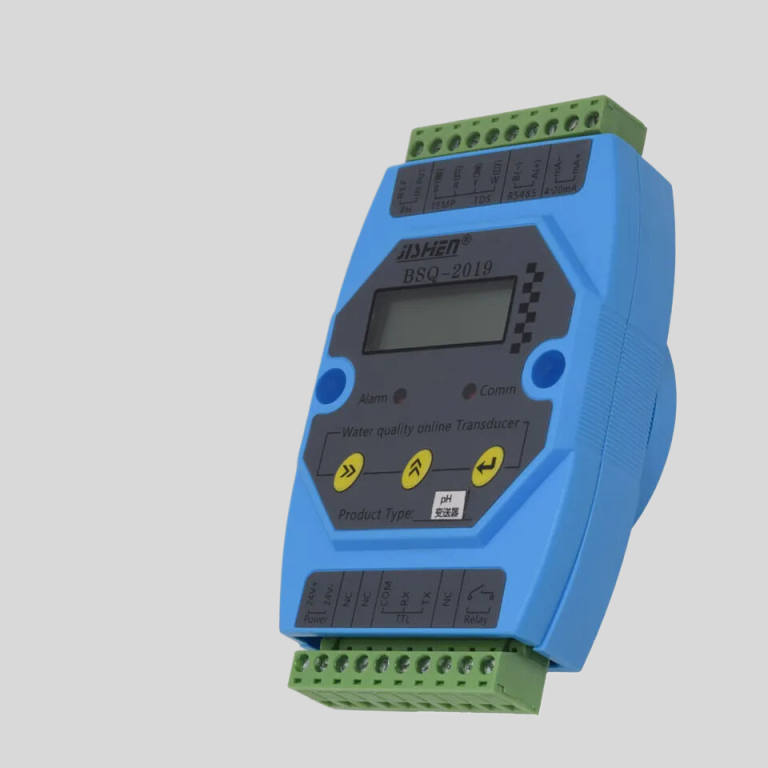
ChiMay's transmitter systems support multiple communication protocols for seamless integration with existing infrastructure.
Maintenance and Calibration
Optical Cleaning
Mineral scaling, biological growth, and particle deposition on optical surfaces cause measurement drift and failure. Automated cleaning systems prevent these issues:
- Mechanical wipers: Rotating or oscillating cleaning elements
- Ultrasonic cleaning: High-frequency vibration dislodges particles
- Chemical cleaning: Periodic acid or caustic circulation
- Air sparging: Bubble-induced turbulence for self-cleaning
Most manufacturers recommend cleaning frequencies from daily to weekly, depending on water quality. ChiMay's monitoring systems include programmable automatic cleaning cycles that extend sensor life and reduce maintenance labor.
Calibration Verification
UV254 sensors require periodic calibration verification against laboratory measurements. The standard procedure involves:
- Collect grab sample concurrent with sensor reading
- Analyze sample in laboratory for UV254 and/or DOC
- Compare laboratory and sensor values
- Adjust sensor calibration if difference exceeds ±5%
Frequency of calibration verification typically ranges from weekly to monthly, depending on measurement criticality and historical sensor stability.
Lamp Replacement
UV light sources degrade over time, causing reduced output and measurement drift. Mercury lamps typically require replacement after 3,000-5,000 hours of operation. Modern UV LED sources offer longer life spans exceeding 10,000 hours, reducing maintenance requirements and operating costs.
Advantages of Continuous UV254 Monitoring
Operational Benefits
Continuous UV254 monitoring provides immediate feedback for process optimization:
- Rapid response: Detect water quality changes within seconds versus hours for laboratory analysis
- Process optimization: Adjust treatments in real-time based on actual conditions
- Chemical savings: Reduce coagulant and disinfectant consumption
- Energy savings: Optimize filter backwash timing based on fouling rates
Economic Benefits
While continuous UV254 monitoring requires initial investment, operational savings typically provide 12-24 month payback periods:
- Reduced chemical costs: 15-35% coagulant reduction through optimization
- Extended filter runs: 20-30% longer filtration cycles
- Decreased membrane cleaning: Reduced cleaning frequency and chemical usage
- Lower labor costs: Automated monitoring reduces sampling labor