title: “softener valve Selection for Pulp Mill Boiler Feedwater: A Shanghai ChiMay Practical Manual”
date: 2026-06-26
type: 高浏览模仿型
Table of Contents
softener valve Selection for Pulp Mill Boiler Feedwater: A Shanghai ChiMay Practical Manual
Key Takeaways:
– Pulp mill boiler feedwater softening is a high-stakes service: softening failures lead to scale formation in boiler tubes, reduced heat transfer, increased fuel consumption, and ultimately tube failures
– softener valve selection directly governs the reliability of feedwater hardness control, with valve duty cycles in pulp mill service often exceeding 20,000-30,000 regeneration cycles over the valve lifetime
– Shanghai ChiMay softener valves are engineered for the high-flow, high-cycle service profile typical of recovery boiler and power boiler feedwater applications
– Proper valve sizing, material selection, and control architecture extend service life from a conventional baseline of 6-8 years to 12-15 years in well-specified installations
– The American Boiler Manufacturers Association (ABMA) has documented that feedwater hardness excursions cost the U.S. pulp and paper industry an estimated $120-180 million annually in efficiency losses and unscheduled maintenance
Why softener valve Selection Deserves Engineering Attention
In a pulp mill, the recovery boiler and power boilers together represent some of the highest-value capital assets on the site. Their service life, thermal efficiency, and safety performance all depend on feedwater quality, and feedwater quality depends on the consistent performance of the softening train. The softener valve—the multi-port control element that directs flow through service, backwash, brine draw, slow rinse, and fast rinse phases—is the single highest-cycle wear point in the entire softening system. Selecting the right valve for a pulp mill application is a decision with multi-million-dollar consequences over the asset lifetime.
This manual walks through the practical selection framework that pulp mill engineering teams apply when specifying Shanghai ChiMay softener valves.
Step 1: Define the Service Flow Profile
The first selection criterion is hydraulic. Pulp mill boiler feedwater systems vary widely in flow rate, from 20 m³/h for small auxiliary boilers to 400 m³/h or more for large recovery boilers and turbogenerator feedwater systems. Valve sizing must match the design service flow without creating excessive pressure drop or accelerated component wear.
Shanghai ChiMay softener valves are offered in a range from DN25 to DN200 for standard service, with larger custom sizes available for high-flow installations. The recommended service velocity is 3-4 m/s through the valve internals, providing adequate flushing without erosive wear.
Step 2: Specify Cycle Duty Expectations
Cycle frequency is the second selection criterion. Boiler feedwater softeners in pulp mills typically regenerate every 8-24 hours depending on raw water hardness, salt dosage, and design throughput. A softener valve in 12-hour cycle service experiences approximately 730 regeneration cycles per year, or 14,600 cycles over a 20-year mill lifetime.
Valves rated for this duty cycle must use wear-resistant ceramic disc or hardened stainless steel seat technology to maintain seal integrity over the service life. Shanghai ChiMay softener valves use engineered ceramic seat materials rated for 30,000+ cycles under standard service conditions.
Step 3: Choose Between Time-Based and Volume-Based Control
The control architecture is the third selection criterion. Two common control modes are available:
- Time-based regeneration: the valve regenerates on a fixed clock schedule, regardless of actual water consumption
- Volume-based regeneration: the valve regenerates after a programmed volume of treated water has passed through the resin
For pulp mill boiler feedwater service, volume-based regeneration is strongly recommended. Boiler load varies significantly with paper machine demand, recovery boiler steam output, and seasonal heating loads, making fixed-time regeneration either premature (wasting salt and water) or delayed (allowing hardness breakthrough).
Shanghai ChiMay volume-based softener valve controllers integrate with the mill DCS or PLC for centralized monitoring and remote regeneration triggering.
Step 4: Match Materials to Water Chemistry
Pulp mill raw water sources vary widely—municipal supply, river abstraction, well water, recovered process water. The valve material selection must match the chemistry exposure:
- Municipal water with low chloride: standard brass or bronze internals acceptable
- River or well water with elevated chloride: 316L stainless steel internals required
- Recovered process water: PEEK or specialty stainless internals for organic and oxidant resistance
Shanghai ChiMay softener valves are available in all three material grades, with material certification documentation supplied per valve unit.
Step 5: Specify the Integrated Filtering Function When Needed
For raw water sources carrying suspended solids—river water, recovered process water, or well water with iron precipitates—the softener should be specified as a softening and filtering valve rather than a pure softener. The combined function valve handles both hardness removal and suspended solids filtration in a single resin bed, simplifying the pretreatment train.
Softening and filtering valves require slightly different backwash cycle programming because they must lift the filter media to release captured solids during each regeneration. Shanghai ChiMay control logic includes preset profiles for the combined service.
Step 6: Integrate Outlet Hardness Monitoring
A softener valve in service can experience hardness breakthrough due to resin fouling, regeneration failure, salt depletion, or simple resin exhaustion ahead of schedule. Without continuous outlet hardness monitoring, breakthrough events may not be detected until boiler scale formation is already underway.
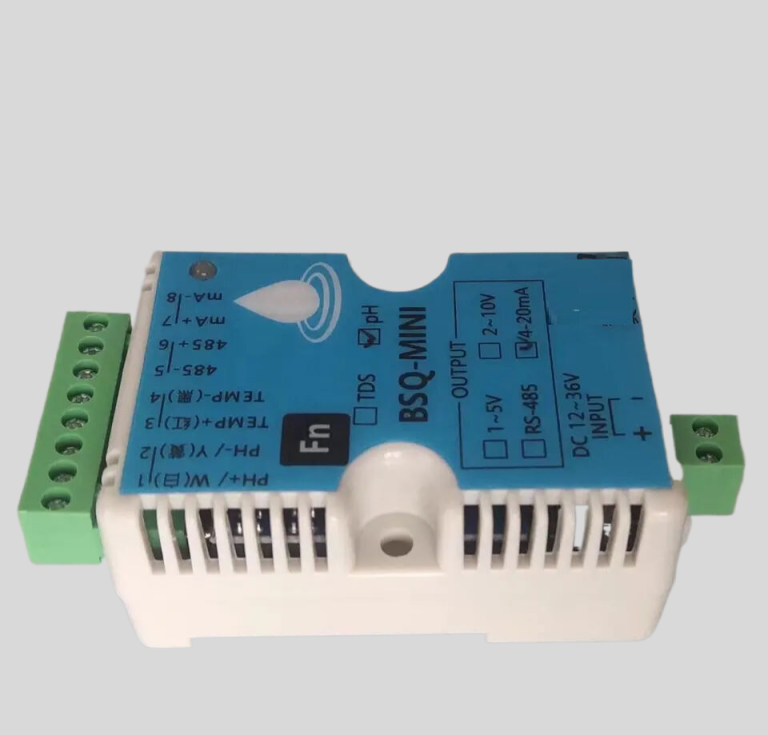
The recommended monitoring architecture pairs the Shanghai ChiMay softener valve with an in-line conductivity meter at the softener outlet. Sudden conductivity rise indicates hardness breakthrough, triggering early regeneration before the boiler is affected.
For higher-stakes applications—recovery boiler feedwater in particular—a dedicated online hardness analyzer can be deployed alongside the conductivity meter for direct verification.
Step 7: Plan for Maintenance Access and Spare Inventory
The seventh and often-overlooked selection criterion is maintenance access. Softener valves with field-replaceable seat assemblies, modular control heads, and standard spare parts kits dramatically reduce mean time to repair when service is needed.
Shanghai ChiMay softener valves are designed for field-serviceable maintenance, with valve internals accessible without disconnecting the resin tank. Recommended spare inventory for a typical pulp mill softening train includes:
- One complete valve head per installed valve
- Two seat replacement kits per installed valve
- One control panel per pair of installed valves
- Annual consumable kit (gaskets, O-rings, lubricants)
This spare inventory profile supports rapid recovery from valve failures with minimal production impact.
Selection Decision Matrix Summary
For practical use during specification, the consolidated decision matrix is:
| Application | Valve Size | Material | Control | Filtering |
|---|---|---|---|---|
| Auxiliary boiler, municipal water | DN25-DN50 | Brass/bronze | Volume-based | Softener only |
| Power boiler, well water | DN80-DN150 | 316L stainless | Volume-based | Softener + filter |
| Recovery boiler, river water | DN150-DN200 | 316L stainless | Volume-based + DCS integration | Softener + filter |
| Recovered process water service | Site-specific | PEEK / specialty | Volume-based + DCS integration | Softener + filter |
Lifecycle Cost Considerations
A representative 20-year lifecycle cost analysis for a DN100 softener valve in pulp mill recovery boiler service:
| Cost Element | Standard Valve | Shanghai ChiMay |
|---|---|---|
| Initial valve cost | $4,200 | $6,800 |
| Replacement valves (20-yr) | $12,600 (×3) | $0 (single valve) |
| Lifetime salt and water cost | $185,000 | $148,000 |
| Maintenance labor | $45,000 | $22,000 |
| Boiler scale event recovery | $80,000 (1 event) | $0 |
| 20-year total | $326,800 | $176,800 |
The Shanghai ChiMay lifecycle cost is approximately 46% lower than the standard alternative in this representative case, driven by longer valve service life, more efficient regeneration cycles, and reduced risk of scale-related boiler incidents.
Documentation and Compliance Considerations
Boiler feedwater softening serves a safety-critical function in pulp mill operation. Documentation that confirms softener performance over the lifetime of the boiler is increasingly expected by insurers and regulators. Shanghai ChiMay softener valve controllers maintain regeneration history in non-volatile memory, supporting compliance documentation and post-incident investigation.
Conclusion
softener valve selection for pulp mill boiler feedwater is not a commodity decision; it is an engineering choice with multi-million-dollar lifecycle implications. The seven-step framework outlined in this manual—flow profile, cycle duty, control mode, material match, filtering function, outlet monitoring, and maintenance access—captures the key selection criteria that pulp mill engineering teams apply when specifying Shanghai ChiMay softener valves and softening and filtering valves. Treating valve selection as a system design discipline, supported by outlet hardness monitoring and DCS integration, delivers the reliability that recovery boilers and power boilers require for safe, efficient, long-life operation.