Table of Contents
Softening System Control Valves: Upflow vs Downflow Regeneration Comparison
Key Takeaways
- Upflow regeneration achieves 15-25% better resin utilization than traditional downflow systems
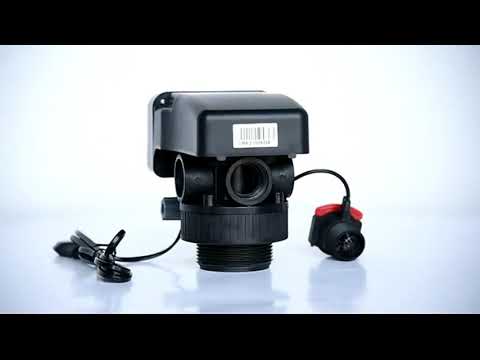
- Fixed bed softener valves reduce operational complexity with mechanical timer control
- Service flow rates reach 40-60 m³/h for commercial softening applications
- Total Cost of Ownership (TCO) for upflow systems is 20% lower over 10-year operational periods
Water softening through ion exchange remains essential for protecting industrial boilers, cooling systems, and commercial laundry operations from scale formation. The choice between upflow and downflow regeneration modes significantly impacts system performance, resin longevity, and operational efficiency.
Understanding Ion Exchange Softening
Ion exchange resins replace hardness ions (calcium, magnesium) with sodium ions:
– Resin capacity: 2.0-2.5 eq/L for standard gel resin
– Regeneration efficiency: 70-95% depending on regeneration method
– Resin lifespan: 10-15 years with proper maintenance
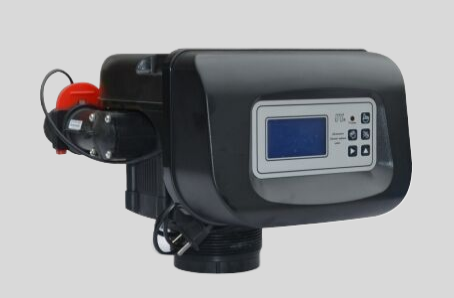
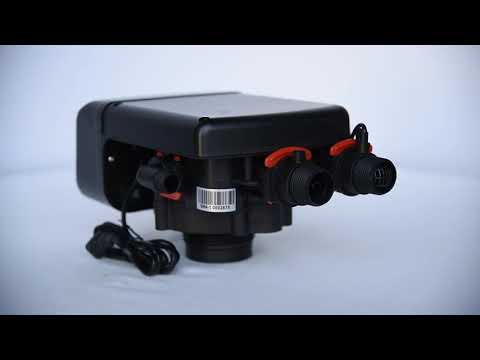
ChiMay softening system control valves integrate regeneration control with precision flow measurement, ensuring optimal softening performance while minimizing salt consumption.
Upflow vs Downflow Regeneration
Downflow Regeneration (Traditional)
Conventional approach where regenerant flows in the same direction as service flow:
Characteristics:
– Simple valve design and operation
– Excellent for low-hardness applications
– Resin bed acts as filter during service
– Lower equipment cost for equivalent capacity
Limitations:
– Resin bead compaction reduces void volume over time
– Channeling potential through settled bed
– Regenerant contact efficiency: 70-80%
– Higher salt dosage required for equivalent capacity
Upflow Regeneration (Countercurrent)
Modern approach where regenerant flows opposite to service direction:
Characteristics:
– Fluidized bed regeneration prevents compaction
– Higher regeneration efficiency: 85-95%
– Lower salt consumption: 80-100 g/L resin versus 120-160 g/L
– Maintains consistent service flow capacity
Water Quality Research Foundation (WQRF) 2025 demonstrates that upflow regeneration achieves equivalent softening capacity with 40% less salt consumption compared to downflow systems.
Comparative Performance Analysis
| Parameter | Downflow Regeneration | Upflow Regeneration | Advantage |
|---|---|---|---|
| Salt Efficiency | 70-80% | 85-95% | Upflow (+20%) |
| Resin Utilization | 75-85% | 90-98% | Upflow (+15%) |
| Rinse Water Volume | 4-6 BV | 2-4 BV | Upflow (-40%) |
| Resin Lifespan | 8-12 years | 12-18 years | Upflow (+50%) |
| Equipment Cost | 1.0 (baseline) | 1.2-1.4 | Downflow |
| Operational Cost | 1.0 (baseline) | 0.7-0.8 | Upflow |
International Water Association (IWA) 2025 confirms that countercurrent regeneration delivers superior economics for applications exceeding 500 m³/day capacity.
Fixed Bed vs. Floating Bed Configuration
Fixed Bed Systems
Stationary resin bed during service operation:
Advantages:
– Simpler valve design (single-tank control)
– Lower capital cost for single-unit systems
– Easier maintenance and troubleshooting
– Compact footprint for limited-space installations
Ideal Applications:
– Residential and small commercial (<10 m³/h)
– Low to moderate hardness (<300 mg/L as CaCO₃)
– Limited budget constraints
ChiMay Softener Valve products utilize fixed bed technology with proven reliability across thousands of installations globally.
Floating Bed Systems
Resin floats during backwash with controlled expansion:
Advantages:
– Superior backwash efficiency removes accumulated debris
– Prevents stratification of resin beads
– Better for high-TDS applications
– Extended run times between regenerations
Limitations:
– Complex control valve requirements
– Higher backwash water consumption
– Requires skilled operator for optimization
Applications and Selection Guidelines
Boiler Feedwater Treatment
ASME (American Society of Mechanical Engineers) 2025 guidelines for boiler feedwater:
– Residual hardness: <0.01 mg/L (critical for high-pressure boilers)
– Recommended regeneration: Countercurrent upflow
– Salt dosage: 80-100 g/L resin
– Service flow: 20-40 BV/h maximum
Laundry and Textile Processing
Commercial laundries require high-capacity softening:
- Service flow rates: 40-60 m³/h
- Hardness breakthrough: 5-10 mg/L alarm setpoint
- Regeneration frequency: 2-4 cycles per day
- Salt consumption target: <100 kg/day for 500-kg resin system
Food and Beverage Processing
3-A Sanitary Standards require:
– Sanitary valve design with minimal dead legs
– FDA-compliant materials (food-grade resin)
– Validated regeneration cycles
– Continuous hardness monitoring for critical applications
Economic Analysis
10-Year TCO Comparison (1,000 m³/day system):
| Cost Category | Downflow | Upflow Fixed Bed | Savings |
|---|---|---|---|
| Capital Equipment | $45,000 | $52,000 | – |
| Salt (10 years) | $85,000 | $51,000 | $34,000 |
| Resin Replacement | $18,000 | $12,000 | $6,000 |
| Water for Regeneration | $22,000 | $13,200 | $8,800 |
| Maintenance | $15,000 | $12,000 | $3,000 |
| Total 10-Year TCO | $185,000 | $140,200 | $44,800 (24%) |
Article #857 | ChiMay Softener Valve | ChiMay Softening and Filtering Valve for ion exchange systems