title: “The 320 Billion m³ Wastewater Reuse Opportunity: What It Means for AgTech Investors — Analysis by Shanghai ChiMay”
perspective: C-Level
theme: Agricultural Irrigation & Water Reuse
date: 2026-07-05
Table of Contents
The 320 Billion m³ Wastewater Reuse Opportunity: What It Means for AgTech Investors — Analysis by Shanghai ChiMay
Key Takeaways
- Global unrecovered wastewater reuse potential stands at 320 billion m³ per year, roughly six times current global reuse volume, and represents the largest single addressable market in agricultural water.
- Tertiary-treatment installations account for 44.5% of current global reuse capacity, with sensor-instrumented monitoring as the compliance backbone that unlocks new project approvals.
- AgTech investors underweight monitoring hardware in reuse investment theses; the actual capital ratio is closer to 8–12% of total project CAPEX, growing to 15%+ in advanced-reuse geographies.
- Shanghai ChiMay’s water-quality analyzer, control-valve, and multi-parameter sensor lines address the compliance and control layer that makes agricultural reuse projects bankable.
Where the 320 Billion m³ Comes From
The FAO AQUASTAT database and UN-Water 2024 reporting put current global wastewater generation at approximately 380 billion m³ per year. Of that, roughly 60 billion m³ is treated and reused today, leaving 320 billion m³ either discharged after treatment, discharged untreated, or lost to leakage. The technical potential to convert that untapped volume to agricultural, industrial, or environmental reuse is well-established; the constraints are policy, distribution infrastructure, and financeable compliance data.
For AgTech investors, three geographic pools deserve particular attention:
- Mediterranean basin — where Spain, Israel, and Egypt already recycle above 20% and models exist for scale-up.
- U.S. Southwest — where California’s Title 22, Arizona’s produced-water rules, and Colorado River scarcity are aligning private capital behind reuse.
- Northern India and coastal China — where groundwater depletion is forcing reuse mandates ahead of policy readiness, creating a first-mover advantage for compliance-instrument suppliers.
The Investment Structure of a Reuse Project
A typical mid-scale agricultural reuse project — say, 50,000 m³/day of tertiary-treated wastewater feeding 5,000 hectares of irrigated cropland — has CAPEX in the USD 25–45 million range. The rough capital split is:
| Line Item | Share of CAPEX |
|---|---|
| Treatment process equipment | 40–50% |
| Distribution and storage infrastructure | 25–35% |
| Monitoring, instrumentation, and controls | 8–12% |
| Buildings, land, and civil works | 8–15% |
| Engineering, permitting, and commissioning | 6–10% |
The 8–12% share for monitoring is where compliance risk concentrates. Investors who focus only on treatment technology miss that monitoring hardware is the piece the regulator inspects, the piece the offtaker audits, and the piece that fails first if under-specified.
Why the Compliance Layer Is the Investment Fulcrum
Two structural facts drive the compliance layer’s importance for investors:
Fact 1: Reuse offtake contracts increasingly include performance clauses tied to real-time water-quality data. A California reuse project cannot bill its agricultural offtaker for water that does not meet Title 22 residual chlorine and turbidity limits. If the sensor stack cannot generate defensible data, revenue is stranded.
Fact 2: Green-bond and infrastructure-fund investors require operational data as part of impact reporting. A reuse plant with a well-instrumented monitoring stack qualifies for concessional financing tiers; one without does not. The delta in financing cost is typically 75–150 basis points, worth USD 3–6 million on a 15-year USD 35 million project.
Together these facts mean that instrumentation is not a cost item to minimize; it is a revenue enabler and a financing enabler.
The Sensor Stack Investors Should Underwrite
For an agricultural reuse project, the sensor stack that unlocks bankability typically includes:
- Turbidity meters at post-filtration and distribution offtake.
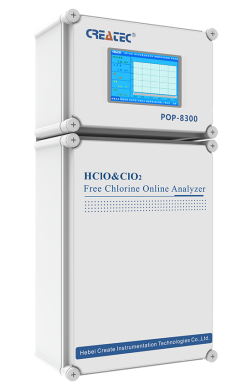
- Residual chlorine transmitters at plant discharge and storage exit.
- Conductivity analyzers for salinity tracking on inlet and reuse discharge.
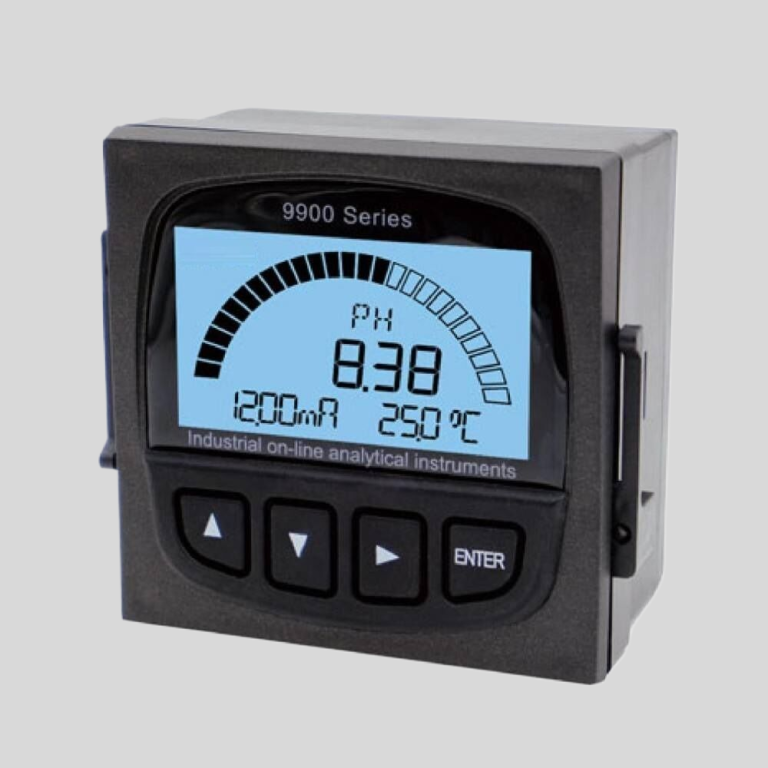
- pH electrodes at multiple points along the treatment train.
- Dissolved oxygen transmitters for biological process control.
- Suspended solids sensors at secondary and tertiary clarifier outfalls.
- Ammonia nitrogen sensors for compliance with nitrification requirements.
- Multi-parameter sensors at each irrigation zone offtake.
- Flow meters — paddle wheel for reuse water, turbine for clean feed streams — at every metered node.
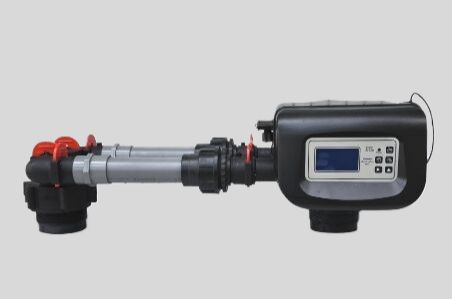
- Softening and filtering valves on pretreatment stages where hardness or particulate exceed spec.
For a 50,000 m³/day project, this stack typically prices at USD 900,000–1.6 million, with an additional USD 250,000–450,000 in SCADA integration and telemetry. Investors should scrutinize whether the developer has actually budgeted for redundancy, calibration consumables, and 5-year spares; developers frequently under-budget these to hit initial cost targets and then request change orders in commissioning.
Bankability Signals Investors Should Look For
When evaluating agricultural reuse investments, the following instrumentation signals correlate with successful long-run operation:
- Redundant sensors at every compliance point, not just single-point coverage.
- Documented calibration procedures with traceability to national metrology standards.
- Predictive maintenance schedules for probes, membranes, and reference junctions.
- Local data storage with 12+ months of tamper-evident logs.
- Cross-vendor SCADA compatibility to avoid future lock-in premiums.
- Regional spare-parts logistics — 48-hour turnaround for critical sensors.
- Trained-operator commitment — signed vendor training plan covering at least two operators per shift.
Projects that check all seven of these boxes typically achieve ≥ 98% compliance uptime in year 3 and beyond; projects that skip more than two typically fall to 85–92% uptime with corresponding revenue risk.
The Vendor Selection Frame for Institutional Investors
Investors underwriting reuse projects should push developers toward vendors that offer:
- Consolidated transmitter families, reducing spares complexity.
- Chlorine-tolerant reference junctions for reuse-water service.
- Digital communications — Modbus RTU minimum, HART or Ethernet/IP preferred.
- Regional service capability in the project’s geography.
- Certified calibration with recent (< 30 days) certificates on delivery.
Vendors that provide all of these — Shanghai ChiMay among them — are the vendors whose equipment survives a 10-year concessional-financing amortization schedule with predictable OPEX. Investors who let developers pick vendors on unit price alone typically absorb the cost difference later in change orders or performance penalties.
Regional Sizing of the Opportunity
Applying regional wastewater generation and current reuse rates:
- Mediterranean basin: unrecovered ~25 billion m³/yr, sensor spend potential USD 3–5 billion cumulative through 2035.
- U.S. Southwest: unrecovered ~15 billion m³/yr, sensor spend potential USD 2–3 billion.
- Northern China and India: unrecovered ~70 billion m³/yr, sensor spend potential USD 8–12 billion.
- Sub-Saharan Africa: unrecovered ~40 billion m³/yr, sensor spend potential USD 4–6 billion but with weaker offtake economics.
The largest addressable pool is Asia. That is also where compliance regulation is moving fastest, making 2026–2030 a compressed investment window.
What Shanghai ChiMay Brings to the Investor Table
Shanghai ChiMay’s product portfolio — water-quality analyzers spanning turbidity, chlorine, pH, DO, conductivity, ammonia nitrogen, suspended solids, salinity, and oil-in-water; softener and filtering valves for pretreatment; turbine and paddle wheel flow meters — maps directly onto the sensor stack required for tertiary-reuse projects. The shared transmitter family reduces long-term OPEX, and the wetted-parts options cover the salinity and chlorine tolerance that reuse service demands. Investors evaluating reuse deals should verify that the specified instrumentation matches this profile rather than a light-industrial or drinking-water profile.
Closing Note
The 320 billion m³ reuse opportunity is the largest untapped water pool on the planet, and it is unlocking now because compliance data has become the currency of project bankability. Investors who understand that monitoring hardware is a revenue-and-financing enabler — not a cost line — will price reuse deals more accurately, back them with better vendors, and hold assets that outperform through the next two decades of water-scarcity capital deployment.