It seems we can’t find what you’re looking for. Perhaps searching can help.
Other Related Posts

Inline Conductivity Measurement in Reverse Osmosis Systems: A Technical Deep Dive

Key Takeaways Conductivity monitoring in RO systems enables 99.5%+ salt rejection verification, protecting product water quality and membrane integrity Online conductivity meters detect membrane fouling 72-96 hours before conventional pressure drop methods, enabling proactive cleaning interventions Temperature-compensated conductivity measurement accuracy within ±0.5% ensures reliable system performance tracking across varying operating conditions ChiMay's inline conductivity electrodes…

Municipal Wastewater Treatment Plants Achieving Higher Emerging Contaminant Removal Rates

Municipal Wastewater Treatment Plants Achieving Higher Emerging Contaminant Removal Rates Key Takeaways: – Municipal WWTPs remove 60-90% of emerging contaminants, with significant variation based on treatment technology according to Water Research Foundation 2025 Report – Multi-parameter sensor networks improve removal efficiency by 25-40% through real-time process optimization – 4-in-1 multi-parameter sensors enable comprehensive monitoring with…

Top 6 Benefits of Continuous Chlorine Monitoring Over Grab Sampling

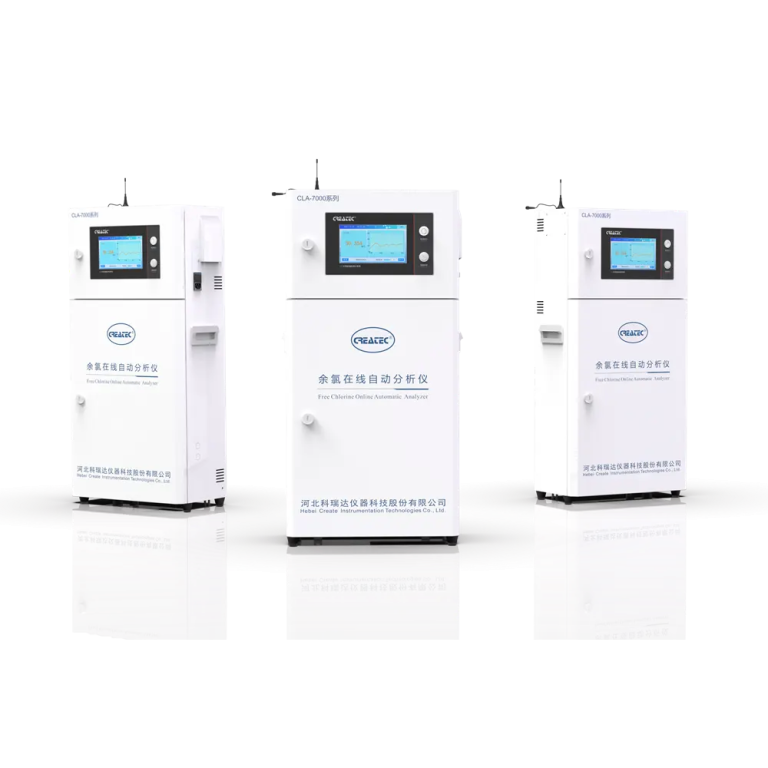
Key Takeaways: Continuous monitoring provides real-time data enabling immediate process response Automated monitoring reduces human error and improves data reliability Continuous systems achieve 30-50% better process control than periodic sampling ChiMay's continuous residual chlorine monitoring solutions deliver measurable operational improvements Introduction Water utilities face a fundamental choice in residual chlorine monitoring: periodic grab sampling or…