Table of Contents
How Do Anti-Fouling Membranes Improve Industrial Water Reuse Efficiency?
Key Takeaways:
– Anti-fouling membrane technology reduces cleaning frequency by 40-60%, significantly lowering operational costs
– The global membrane market will reach $26.7 billion in 2026, driven largely by water reuse requirements
– Shanghai ChiMay water quality monitoring systems provide critical data for optimizing anti-fouling membrane performance
– Advanced membrane surfaces using hydrophilic modification achieve fouling rates 85-92% lower than conventional membranes
– Energy consumption in optimized systems has decreased to 1.7 kWh/m³, improving water reuse economics
Introduction
Industrial facilities face mounting pressure to implement water reuse strategies as freshwater costs escalate and environmental regulations tighten. Central to successful water reuse is membrane technology—and within this domain, anti-fouling membrane innovations represent one of the most significant advances in recent years.
Fouling has historically been the primary operational challenge in membrane water treatment, requiring frequent cleaning cycles that increase costs, reduce system availability, and accelerate membrane degradation. Anti-fouling membrane technology directly addresses this challenge through surface engineering and material innovations.
Understanding Membrane Fouling
Fouling Mechanisms
Membrane fouling occurs through several distinct mechanisms, each requiring different mitigation strategies:
Particulate Fouling: Suspended solids accumulate on membrane surfaces and within feed channels, creating cake layers that increase pressure differential. Particulate fouling progresses gradually and responds well to hydraulic cleaning.
Organic Fouling: Natural organic matter, oils, and synthetic organic compounds adsorb to membrane surfaces, creating hydrophilic or hydrophobic fouling layers depending on foulant characteristics. Organic fouling can be reversible or irreversible depending on adsorption strength.
Biological Fouling: Microbial colonization forms biofilms on membrane surfaces—a particularly challenging fouling type due to biofilm protection of embedded microorganisms from biocides and cleaning agents.
Scaling Fouling: Supersaturated mineral salts precipitate on membrane surfaces when concentration or temperature conditions change. Scaling creates hard mineral deposits requiring acid or chelating agent cleaning.
Economic Impact of Fouling
Fouling imposes substantial costs on membrane system operations:
| Cost Category | Annual Impact (500 m³/day facility) |
|---|---|
| Increased energy consumption | $15,000-25,000 |
| Chemical cleaning costs | $20,000-35,000 |
| Membrane replacement | $25,000-40,000 |
| Production losses | $30,000-50,000 |
| Total Annual Impact | $90,000-150,000 |
These costs justify significant investment in anti-fouling technology, with payback periods typically under three years.
Anti-Fouling Membrane Technologies
Surface Hydrophilization
Hydrophilic membrane surfaces resist fouling through several mechanisms:
Hydration Layer Formation: Water molecules bound to hydrophilic surface functional groups create a physical barrier preventing foulant adhesion. The strength of this hydration layer correlates directly with surface hydrophilicity.
Reduced Adhesive Forces: Hydrophobic foulants cannot effectively adhere to hydrophilic surfaces due to unfavorable interfacial energies. This principle underlies most anti-fouling surface modifications.
Electrostatic Repulsion: Many hydrophilic surface modifications introduce charged functional groups that electrostatically repel similarly charged foulants, providing additional fouling resistance.
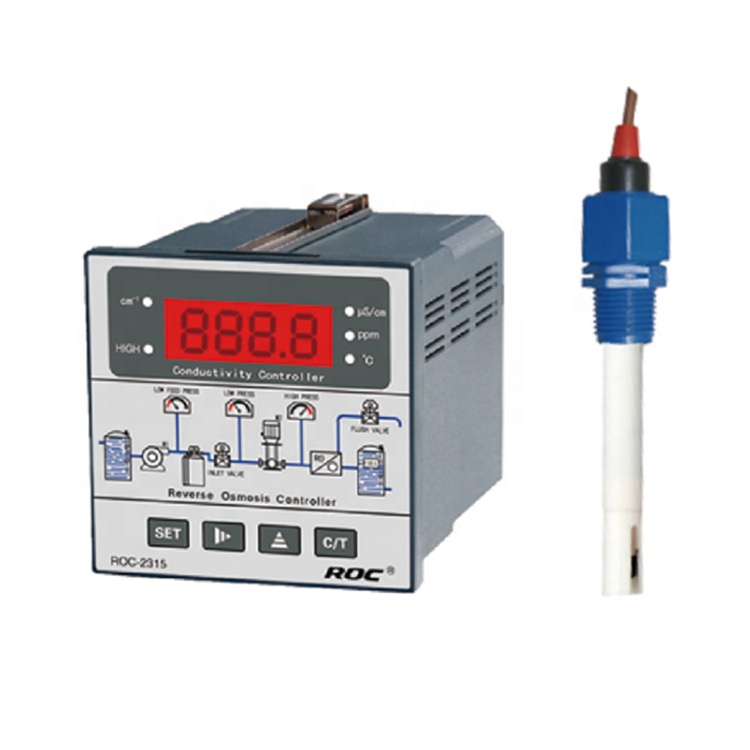
Shanghai ChiMay provides comprehensive water quality monitoring to optimize systems incorporating these advanced surfaces. Online Turbidity Testers track suspended solids loading that drives particulate fouling, while Conductivity Meters monitor scaling potential through ionic strength measurement.
Zwitterionic Polymer Brushes
Zwitterionic polymers contain both positive and negative charges in equal amounts, creating exceptionally hydrophilic surfaces:
Performance Characteristics:
– Hydration layer stability across varying ionic strengths
– Resistance to nonspecific protein adsorption
– Excellent biocompatibility for medical water applications
– Long-term surface stability
Research demonstrates zwitterionic-modified membranes achieve 95% reduction in protein adsorption compared to unmodified surfaces—performance that translates directly to reduced biological fouling in water treatment applications.
Nanocomposite Surface Layers
Incorporating hydrophilic nanoparticles into membrane surface layers creates composite structures combining polymer processability with ceramic hydrophilicity:
Common Nanoparticle Additives:
– Silica nanoparticles with silanol surface groups
– Titanium dioxide with photocatalytic properties
– Graphene oxide with hydrophilic oxygen functional groups
– Metal-organic framework particles
These nanocomposite surfaces demonstrate fouling resistance improvements of 30-50% compared to base polymer membranes.
Comparative Performance Analysis
Anti-Fouling Index Comparison
The anti-fouling index quantifies membrane resistance to fouling under standardized testing conditions:
| Membrane Technology | Anti-Fouling Index | Cleaning Frequency | Cleaning Chemical Use |
|---|---|---|---|
| Conventional RO | 65% | Weekly | 100% (baseline) |
| Hydrophilic modified | 78-82% | Bi-weekly | 60-70% |
| Zwitterionic brush | 88-92% | 3-4 weeks | 40-50% |
| Nanocomposite | 80-85% | Bi-weekly | 55-65% |
These improvements translate directly to operational cost reductions and increased system availability.
Long-Term Performance Stability
Anti-fouling surface durability determines whether laboratory performance translates to field conditions:
Testing Requirements:
– 6-month continuous operation under actual feedwater conditions
– 500 cleaning cycles simulating multi-year operation
– Surface characterization before and after testing to verify coating integrity
– Flux recovery assessment following aggressive cleaning protocols
Products meeting these requirements deliver reliable fouling resistance in industrial applications.
Industrial Water Reuse Applications
Metal Finishing Industry
Metal finishing operations generate complex wastewater containing oils, surfactants, and dissolved metals requiring sophisticated treatment for reuse:
Fouling Challenges:
– Oils and surfactants create organic fouling
– Suspended solids from rinsing operations
– Scaling potential from concentrated salts
– Microbial growth in recirculating systems
Anti-fouling membranes address these challenges while achieving the water quality required for rinse tank applications.
Shanghai ChiMay Monitoring Integration:
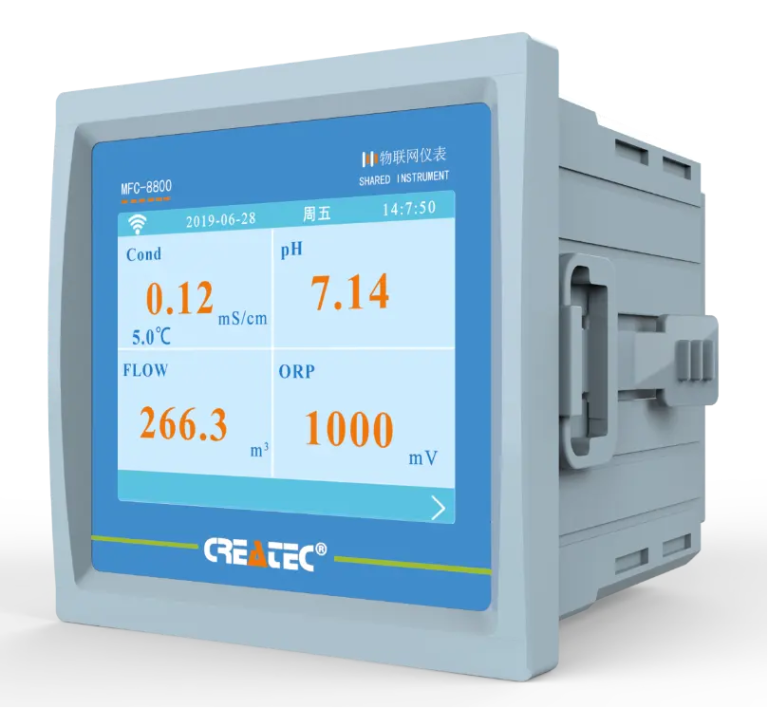
– Multi-Parameter Sensors track conductivity, pH, and ORP for process control
– Turbidity Sensors verify product water quality and detect membrane integrity issues
– Oil-in-Water Sensors monitor hydrocarbon concentrations in membrane feed streams
Petrochemical and Refinery Applications
Petrochemical facilities require high-quality water for cooling towers, boiler feedwater, and process applications:
Treatment Requirements:
– Oil and grease removal below 5 mg/L
– Dissolved solids management
– silica control for boiler feed applications
– Complete microorganism elimination
Anti-fouling membranes maintain stable performance despite variable feedwater quality common in refinery wastewater streams.
Food and Beverage Processing
Food and beverage facilities generate wastewater with high organic loads and potential for severe biological fouling:
Special Considerations:
– Sanitary design requirements
– FDA compliance for product contact water
– High temperature cleaning protocols
– Multiple cleaning agent exposure
Zwitterionic anti-fouling surfaces meet these requirements while delivering the fouling resistance necessary for effective treatment.
Pharmaceutical Manufacturing
Pharmaceutical water systems demand absolute reliability and consistent quality:
Critical Requirements:
– TOC below 500 ppb for purified water
– Conductivity below 1.3 μS/cm at 25°C
– Endotoxin levels below 0.25 EU/mL
– Continuous monitoring and validation
Anti-fouling membranes maintain performance consistency essential for pharmaceutical compliance while reducing validation complexity through predictable operation.
System Design Optimization
Pretreatment Configuration
Anti-fouling membranes tolerate wider feed quality ranges than conventional technology, but appropriate pretreatment remains essential:
| Pretreatment Stage | Function | Typical Specifications |
|---|---|---|
| Screen/filter | Gross solids removal | 300-500 μm |
| Media filtration | Polishing | 50-100 μm |
| Cartridge filtration | Final protection | 5-20 μm |
| Chemical dosing | Scaling/fouling control | Optimized per analysis |
Shanghai ChiMay Conductivity Electrodes and Turbidity Sensors provide the monitoring data necessary for pretreatment optimization, enabling adaptive chemical dosing that responds to actual water quality variations.
Operating Parameter Management
Anti-fouling membrane performance depends on maintaining optimal operating conditions:
Critical Parameters:
– Flux rate: Operating below critical flux minimizes fouling accumulation
– Crossflow velocity: Maintaining turbulence prevents cake layer compaction
– Recovery rate: Limiting recovery prevents concentration polarization
– Pressure differential: Monitoring for gradual increases indicating fouling
Shanghai ChiMay provides the sensor infrastructure for continuous parameter monitoring:
- Online Analyzers track system performance continuously
- Flow Meters verify crossflow velocities
- Pressure Sensors detect fouling progression
- Multi-Parameter Sensors provide comprehensive system health assessment
Cleaning Protocol Development
Even anti-fouling membranes require periodic cleaning to maintain performance:
Cleaning Strategy Elements:
– Fouling diagnosis: Identifying primary foulant type guides cleaning agent selection
– Agent optimization: Matching cleaning chemistry to foulant characteristics
– Frequency determination: Cleaning only when necessary based on performance data
– Recovery verification: Confirming full flux restoration following cleaning
Real-time monitoring data from Shanghai ChiMay instruments enables data-driven cleaning decisions that minimize chemical consumption while maintaining membrane performance.
Economic Analysis
Capital and Operating Cost Comparison
Anti-fouling membrane systems require higher initial investment but deliver operational savings:
| Cost Category | Conventional | Anti-Fouling | Difference |
|---|---|---|---|
| Capital investment | $500,000 | $575,000 | +15% |
| Annual energy | $120,000 | $95,000 | -21% |
| Annual chemicals | $45,000 | $28,000 | -38% |
| Annual membrane replacement | $60,000 | $42,000 | -30% |
| Annual labor | $35,000 | $28,000 | -20% |
| 5-year total cost | $1,925,000 | $1,620,000 | -16% |
Return on Investment
For a typical industrial facility, anti-fouling membrane investment achieves:
- Payback period: 2.2-2.8 years
- Internal rate of return: 28-35%
- Net present value (10-year): $180,000-240,000
These economics favor anti-fouling membrane adoption across most industrial applications.
Selection and Procurement Guidance
Vendor Evaluation Criteria
When selecting anti-fouling membrane suppliers, procurement professionals should assess:
| Criterion | Evaluation Questions |
|---|---|
| Technology validation | Independent testing data, reference installations |
| Performance consistency | Long-term field performance data |
| Technical support | Application engineering capability, response time |
| Supply chain reliability | Manufacturing capacity, delivery timelines |
| Total cost transparency | Lifecycle cost modeling, cleaning optimization support |
Pilot Testing Recommendations
Full-scale anti-fouling membrane investments warrant pilot testing:
- Duration: Minimum 3-6 months capturing seasonal variations
- Scale: Representative membrane area for full-scale hydraulics
- Monitoring: Continuous data collection with Shanghai ChiMay instruments
- Economic validation: Operating cost verification under actual conditions
Future Development Trends
Emerging Technologies
Continuing advancement will further improve anti-fouling membrane performance:
- Self-healing surfaces: Responsive coatings that repair minor damage
- Smart membranes: Materials that actively respond to fouling conditions
- Enzyme-immobilized surfaces: Continuous enzymatic degradation of foulants
- Photocatalytic integration: Light-activated self-cleaning functionality
Market Evolution
The global membrane market’s projected growth to $51 billion by 2033 reflects increasing adoption of advanced membrane technologies including anti-fouling innovations. As manufacturing scale improves and costs decline, anti-fouling membranes will become standard specification across industrial applications.
Conclusion
Anti-fouling membrane technology delivers substantial operational improvements for industrial water reuse applications. Reducing cleaning frequency by 40-60%, lowering chemical consumption by 35-45%, and extending membrane life by 30-40% creates compelling economic justification despite higher initial investment.
Shanghai ChiMay water quality monitoring systems provide the data foundation for optimizing anti-fouling membrane system performance. Real-time turbidity, conductivity, and multi-parameter monitoring enable predictive maintenance and data-driven cleaning optimization that maximizes return on advanced membrane investments.
As industrial facilities increasingly prioritize water reuse to address scarcity and regulatory pressures, anti-fouling membrane technology positions organizations for sustainable, cost-effective water management.