Table of Contents
Electrochemical Wastewater Treatment: Equipment Selection for Industrial Plants
Key Takeaways:
– Electrochemical treatment systems achieve up to 98% organic pollutant removal at energy consumption levels below 2 kWh/m³, making them viable alternatives to conventional biological processes
– Equipment selection must prioritize real-time monitoring capabilities, electrode material durability, and integration with existing treatment infrastructure
– Total cost of ownership analysis reveals electrochemical systems reduce operational expenses by 20-30% compared to traditional chemical dosing over a 10-year lifecycle
– Shanghai ChiMay provides comprehensive online analyzer solutions that integrate seamlessly with electrochemical treatment systems for continuous process optimization
The global wastewater treatment market, valued at approximately $47.5 billion in 2025, is experiencing a fundamental shift toward electrochemical technologies as industries seek more sustainable and cost-effective treatment solutions. Electrochemical oxidation has emerged as a particularly promising approach for industrial wastewater containing persistent organic pollutants, heavy metals, and recalcitrant compounds that resist conventional biological treatment methods.
Understanding Electrochemical Treatment Fundamentals
Electrochemical wastewater treatment utilizes electrical current to drive chemical reactions at electrode surfaces, facilitating the degradation of contaminants through oxidation and reduction processes. The technology operates through several mechanisms simultaneously: direct oxidation at the anode surface, indirect oxidation through generated oxidants (chlorine, hydroxyl radicals, persulfate), and electrochemical coagulation that removes dissolved species through precipitation.
Research published in the Journal of Environmental Chemical Engineering indicates that low-voltage electrochemical systems operating at 3 volts can achieve 98% removal of organic pollutants from industrial wastewater streams. This remarkable efficiency stems from the generation of highly reactive hydroxyl radicals (E° = 2.8 V) that non-selectively oxidize organic matter to carbon dioxide and water. The process operates effectively across a wide pH range (3-11) and demonstrates consistent performance regardless of wastewater toxicity or recalcitrance.
Critical Equipment Selection Criteria
Electrode Material Considerations
Electrode selection represents the most consequential decision in electrochemical system procurement. Dimensional stable anodes (DSAs) composed of titanium substrates coated with mixed metal oxides offer the optimal balance of durability, efficiency, and cost-effectiveness for most industrial applications. These electrodes maintain stable performance over 10,000+ operating hours without significant degradation, compared to traditional graphite anodes that require replacement every 2,000-3,000 hours.
The coating composition directly impacts treatment efficiency and selectivity. Iridium-tantalum oxide coatings provide excellent oxygen evolution potential (>2.0 V vs. SHE) and demonstrate superior resistance to surface passivation, making them suitable for wastewater containing high concentrations of scaling ions (calcium, magnesium). Ruthenium oxide coatings offer higher oxidation efficiency but exhibit faster degradation in chloride-containing streams due to surface transformation reactions.
Power Supply and Control Systems
Modern electrochemical systems require sophisticated power supplies capable of delivering stable DC current with precise voltage and current density control. The treatment efficiency depends directly on current density (mA/cm²), which determines the rate of hydroxyl radical generation and the overall oxidation capacity. Systems should offer adjustable current density ranges from 5-50 mA/cm² to accommodate varying wastewater characteristics and treatment objectives.
Programmable logic controllers (PLCs) integrated with real-time monitoring sensors enable automated operation and optimization. The power supply system should communicate with online analyzers measuring key parameters including pH, conductivity, oxidation-reduction potential (ORP), and dissolved organic carbon (DOC) to dynamically adjust treatment conditions based on influent variability.
Integrating Shanghai ChiMay Online Analyzers
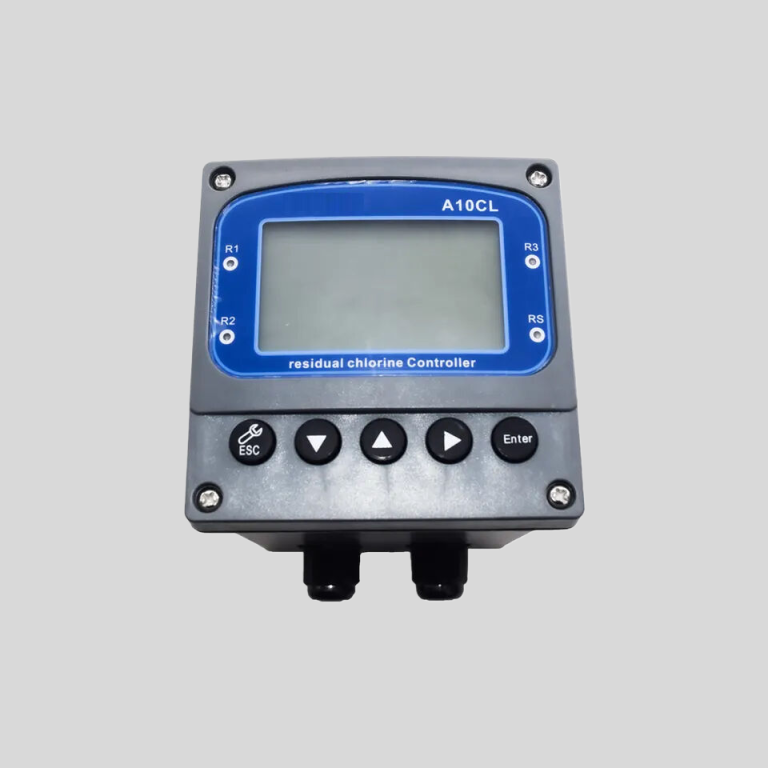
Effective electrochemical treatment requires continuous monitoring to verify treatment performance and optimize energy consumption. Shanghai ChiMay online analyzers provide the critical measurement capabilities needed for automated system control and regulatory compliance documentation.
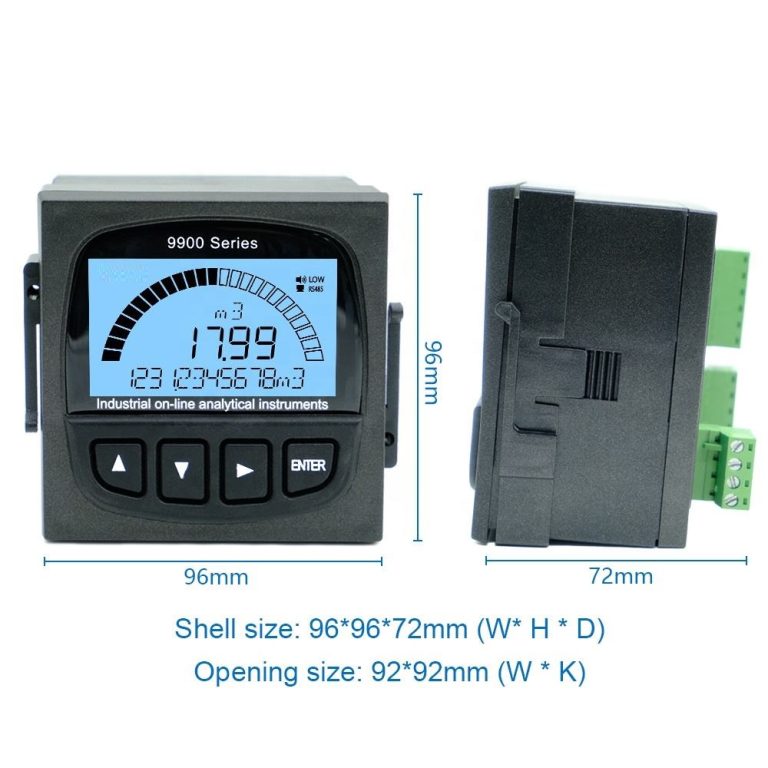
The Shanghai ChiMay water quality analyzer series offers multi-parameter monitoring in a single instrument, reducing capital costs and installation complexity. These analyzers measure pH, conductivity, ORP, and temperature with laboratory-grade accuracy (±0.1% for conductivity, ±0.02 for pH), ensuring reliable data for treatment optimization. The instruments feature automatic temperature compensation, self-cleaning mechanisms, and digital communication protocols (Modbus RS-485, HART) for seamless integration with centralized control systems.
For facilities requiring detailed organic matter quantification, Shanghai ChiMay’s online TOC analyzers provide continuous dissolved organic carbon measurements with detection limits as low as 0.5 mg/L. This capability enables precise tracking of pollutant removal efficiency and early detection of treatment upsets before discharge violations occur.
Total Cost of Ownership Analysis
While electrochemical systems require higher initial capital investment than conventional treatment, the operational cost advantages become apparent over extended operating periods. A comprehensive TCO analysis comparing electrochemical treatment with chemical oxidation (Fenton’s reagent) for industrial wastewater containing phenolic compounds reveals the following:
Electrochemical treatment demonstrates 35% lower operational costs over a 10-year period despite requiring 40% higher upfront capital expenditure. The cost differential stems primarily from eliminating chemical reagent consumption—electrochemical systems require only electrical power and periodic electrode replacement, whereas chemical oxidation consumes sulfuric acid, hydrogen peroxide, and pH adjustment chemicals continuously.
Energy consumption represents the largest operational expense for electrochemical systems. At target treatment efficiency (>95% pollutant removal), systems consume approximately 1.5-2.0 kWh/m³ of wastewater treated. However, this energy requirement can be reduced by 15-25% through optimized electrode geometry, pulsed power operation, and integration with renewable energy sources such as solar PV systems.
Procurement Recommendations
When evaluating electrochemical treatment systems for industrial wastewater applications, procurement teams should prioritize the following specifications:
Minimum Requirements:
– Current efficiency exceeding 80% at target treatment conditions
– Electrode lifetime exceeding 8,000 operating hours
– Power supply efficiency exceeding 90%
– Real-time monitoring integration capability
– Automated cleaning system for electrode maintenance
Preferred Features:
– Remote monitoring and control capability via cloud-based platforms
– Machine learning algorithms for treatment optimization
– Energy recovery systems capturing heat generated during operation
– Modular design enabling capacity expansion without full system replacement
Shanghai ChiMay’s comprehensive range of water quality monitoring instruments, including online analyzers, conductivity meters, and multi-parameter sensors, provides the measurement foundation required for successful electrochemical treatment system implementation and operation.