Table of Contents
Membrane Fouling Prediction and Control: Real-Time Monitoring Strategies
Key Takeaways:
– Real-time monitoring enables fouling prediction 24-48 hours before critical threshold violations
– Membrane fouling costs industry $5.2 billion annually in treatment plants worldwide
– Shanghai ChiMay turbidity sensors and conductivity analyzers provide essential fouling detection capabilities
– Machine learning algorithms improve fouling prediction accuracy by 40-60% compared to threshold-based methods
– Proactive fouling management reduces cleaning frequency by 30-50% and extends membrane life by 25-40%
Membrane fouling remains the primary operational challenge in water treatment applications, representing the most significant source of system performance degradation and operational cost increases. This comprehensive guide examines real-time monitoring strategies that enable proactive fouling prediction and control, transforming reactive maintenance approaches into predictive management systems that optimize membrane system performance.
Understanding Membrane Fouling Dynamics
Fouling Mechanism Classification
Membrane fouling encompasses multiple distinct mechanisms:
Particulate Fouling: Accumulation of suspended solids on membrane surfaces creates cake layers that increase hydraulic resistance. Turbidity levels above 20 NTU at membrane feed significantly accelerate particulate fouling rates.
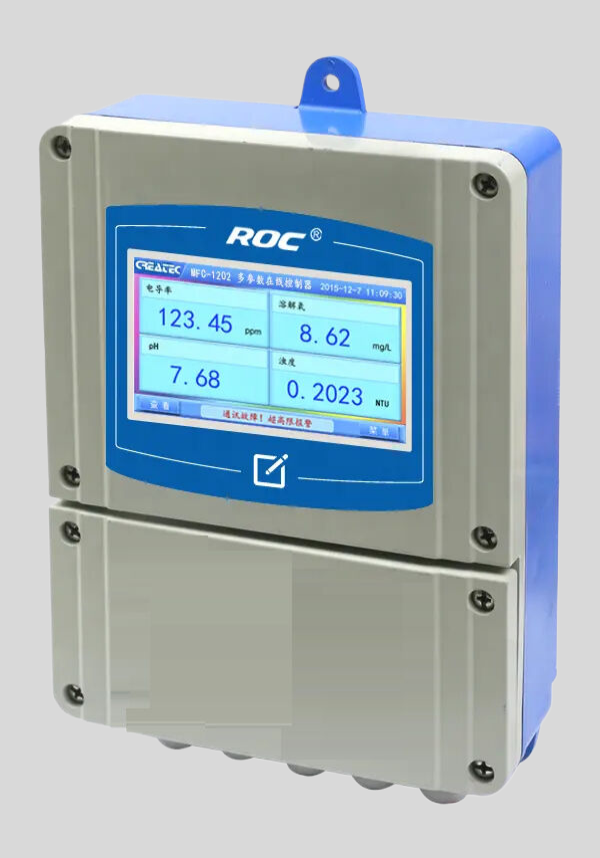
Shanghai ChiMay online turbidity analyzers with 0-4000 NTU measurement range provide continuous particulate monitoring enabling early detection of fouling conditions.
Organic Fouling: Natural organic matter, oils, and synthetic organic compounds adsorb to membrane surfaces, reducing hydrophilicity and increasing hydrophobic interactions. Total organic carbon (TOC) concentrations exceeding 5 mg/L typically indicate elevated organic fouling potential.
Biological Fouling (Biofouling): Microbial colonization produces biofilm layers that can reduce membrane flux by 30-50% and increase transmembrane pressure by 40-60%. Biofouling develops over days to weeks, providing opportunities for intervention when detected early.
Inorganic Scaling: Precipitation of calcium carbonate, silica, and other sparingly soluble salts occurs when concentration factors exceed solubility limits. Conductivity monitoring serves as the primary indicator of scaling potential.
Fouling Progression Patterns
Fouling development follows predictable patterns:
Stage 1 – Initial Deposition (0-24 hours): Individual particles and foulants accumulate on membrane surface, with minimal flux impact. Detection at this stage enables preventive intervention.
Stage 2 – Cake Layer Formation (24-72 hours): Connected fouling layers develop, increasing TMP by 5-15%. Critical period for cleaning intervention.
Stage 3 – Consolidation (72-168 hours): Fouling layers compress and age, becoming increasingly difficult to remove. Irreversible fouling may develop.
Stage 4 – Severe Fouling (>168 hours): Critical flux reduction, potential membrane damage, and prolonged recovery requirements.
Real-Time Monitoring Technologies
Turbidity Monitoring
Turbidity measurement provides direct indication of particulate fouling potential:
Feed Turbidity Monitoring: Continuous measurement at membrane feed identifies particulate loading conditions. Shanghai ChiMay sensors provide 0-1000 NTU range with 0.1 NTU resolution.
Permeate Turbidity Monitoring: Increases indicate membrane breach or integrity issues requiring immediate attention.
Backwash effluent monitoring: Turbidity of backwash water indicates fouling layer accumulation rates.
Critical Thresholds: Turbidity exceeding 5 NTU at feed triggers preventive backwash initiation in optimized systems.
Conductivity Monitoring
Conductivity measurement supports scaling prediction:
Feed Conductivity: Baseline measurement for concentration factor calculation
Permeate Conductivity: Rejection monitoring indicates membrane integrity
Concentration Factor Calculation: CF = Conductivity_current / Conductivity_initial enables scaling risk assessment
Shanghai ChiMay conductivity meters (0-200 mS/cm range) with automatic temperature compensation provide accurate measurement for scaling prediction.
Transmembrane Pressure Monitoring
TMP serves as the primary fouling indicator:
Continuous TMP Tracking: Real-time pressure differential measurement across membrane modules
TMP Rise Rate Analysis: Rate of increase indicates fouling severity and progression speed
Critical TMP Thresholds: Predefined pressure limits trigger cleaning cycles or process adjustments
Flux Normalized TMP: TMP/Flux ratio accounts for operating condition variations
Fluorescence Monitoring
Advanced organic fouling detection through fluorescence:
Protein-Like Fluorescence: Indicates biological activity and protein-based organic matter
Humic-Like Fluorescence: Correlates with natural organic matter and potential membrane fouling
Real-Time Excitation-Emission Matrix (EEM): Comprehensive organic characterization
Particle Counting
Optical particle counters provide early fouling indication:
Size Distribution Analysis: Identifies fouling precursor particles before accumulation
Concentration Trends: Particle count increases signal developing fouling conditions
Early Warning Capability: Detects fouling potential 12-24 hours before turbidity increases
Machine Learning for Fouling Prediction
Predictive Algorithm Development
Machine learning approaches transform fouling management:
Training Data Requirements: Historical operational data spanning normal and fouling conditions
Feature Engineering: Relevant input variables including turbidity, conductivity, TMP, flow rates, temperature, and cleaning events
Model Selection: Random forest, gradient boosting, and neural network architectures demonstrate 40-60% improvement over threshold-based methods
Prediction Capabilities
Advanced algorithms provide:
Fouling Onset Prediction: Anticipating fouling initiation 24-48 hours in advance
Cleaning Optimization: Optimal cleaning timing recommendations minimizing chemical consumption
Membrane Life Estimation: Remaining useful life predictions supporting maintenance planning
Anomaly Detection: Identifying unusual fouling patterns indicating potential membrane damage
Implementation Considerations
Successful ML deployment requires:
Data Quality: Accurate, continuous monitoring data for reliable predictions
Model Updating: Regular retraining as operating conditions evolve
Integration: Seamless incorporation into existing control systems
Validation: Ongoing performance verification against actual fouling events
Shanghai ChiMay data acquisition systems support ML integration through standardized communication protocols.
Fouling Control Strategies
Pre-Treatment Optimization
Preventing fouling at source:
Coagulation and Flocculation: Enhanced particle aggregation reduces membrane-particulate interactions. Aluminum and iron salts improve removal of colloidal material by 40-60%.
Media Filtration: Dual-media or multimedia filters remove suspended solids exceeding 10-20 μm. Pre-filtration extends membrane life by 20-30%.
Activated Carbon Adsorption: TOC reduction through adsorption, particularly effective for hydrophobic organic compounds.
Shanghai ChiMay TOC analyzers and particle counters support pre-treatment optimization.
Hydraulic Optimization
Crossflow velocity and shear stress management:
Velocity Control: Maintaining crossflow velocities of 0.3-0.6 m/s limits foulant accumulation
Aeration Systems: Coarse bubble aeration in submerged membranes provides mechanical scouring
Oscillatory Flow: Variable flow patterns improve foulant removal compared to constant crossflow
Vortex Promoters: Turbulence enhancement devices reduce boundary layer fouling
Chemical Dosing Strategies
Proactive chemical management:
Scale Inhibitors: Phosphonate and polyacrylate dosing prevents crystalline fouling. Dosing at 2-5 mg/L reduces scaling incidents by 80-90%.
Biocide Dosing: Oxidizing (chlorine, ozone) and non-oxidizing biocides control biological fouling. Continuous maintenance dosing at sub-lethal concentrations prevents biofilm establishment.
Anti-Foulant Coating: Surface-active agents reduce organic adsorption to membrane surfaces.
Cleaning Optimization
Data-driven cleaning protocols:
Threshold-Based Cleaning: Triggered when TMP exceeds predefined limits. Simple but may result in premature or delayed cleaning.
Time-Based Cleaning: Fixed interval protocols. Conservative approach potentially causing unnecessary cleaning.
Flux Decline-Based Cleaning: Cleaning initiated when flux reduction exceeds threshold. Responsive to actual fouling conditions.
Predictive Cleaning: ML-optimized scheduling based on predicted fouling progression. Most efficient approach achieving 30-50% reduction in cleaning frequency.
Shanghai ChiMay monitoring data supports optimized cleaning protocol development.
Monitoring System Integration
SCADA Connectivity
Comprehensive monitoring integration:
Communication Protocols: Modbus RTU/TCP, HART, and Foundation Fieldbus enable data transmission to control systems
Data Logging: Continuous recording supporting historical analysis and ML training
Alarm Management: Automatic alerts when monitoring parameters exceed thresholds
Trend Analysis: Visual displays of parameter trends supporting operational decisions
Dashboard Development
Operator interface design:
Real-Time Visualization: Current operating parameters and system status
Historical Trends: Historical data displays supporting pattern recognition
Performance Metrics: Key performance indicators including flux, recovery, and energy consumption
Maintenance Scheduling: Integration with maintenance management systems
Remote Monitoring
Cloud-based monitoring capabilities:
Mobile Access: Smartphone and tablet interfaces for remote system oversight
Automated Reporting: Scheduled performance reports delivered to stakeholders
Predictive Alerts: Notification of predicted fouling events before threshold violations
Multi-Site Management: Centralized monitoring of distributed treatment facilities
Economic Analysis of Fouling Management
Cost-Benefit Assessment
Real-time monitoring investment analysis:
Capital Costs: $15,000-50,000 for comprehensive monitoring system depending on membrane system size
Operational Savings:
- 30-50% reduction in cleaning chemical consumption
- 20-35% extension of membrane life
- 15-25% reduction in energy consumption
- 40-60% reduction in unplanned maintenance events
Payback Period: 12-24 months depending on membrane system scale and fouling severity
Maintenance Cost Reduction
Proactive management benefits:
Reduced Cleaning Frequency: Fewer cleaning cycles reduce chemical consumption and labor requirements
Extended Membrane Life: Optimized operation extends membrane replacement intervals
Reduced Downtime: Predictive maintenance prevents unexpected system failures
Improved Efficiency: Consistent performance maintains optimal energy consumption
Best Practices for Fouling Management
Implementation Framework
Successful fouling management requires:
- Comprehensive Baseline Assessment: Understanding current fouling patterns and operational conditions
- Monitoring System Deployment: Installing appropriate sensors and data acquisition equipment
- Threshold Development: Establishing appropriate alarm and action thresholds
- Protocol Development: Creating cleaning and operational response procedures
- Staff Training: Ensuring operational personnel understand fouling management principles
- Continuous Improvement: Regular review and optimization of management strategies
Critical Success Factors
- Data Quality: Accurate, reliable monitoring data essential for effective management
- Operator Engagement: Staff understanding and commitment to proactive management
- Management Support: Organizational commitment to monitoring and maintenance investments
- Vendor Partnerships: Collaborative relationships with monitoring and membrane suppliers
Conclusion
Real-time fouling monitoring and predictive management transform membrane operations from reactive maintenance to proactive optimization. Investment in comprehensive monitoring systems—encompassing turbidity sensors, conductivity analyzers, and advanced analytics—delivers 30-50% reductions in cleaning frequency, 20-35% extension of membrane life, and substantial operational cost savings.
Shanghai ChiMay provides the monitoring instrumentation foundation for effective fouling management. Online turbidity analyzers, conductivity meters, multi-parameter sensors, and data acquisition systems enable the comprehensive monitoring necessary for predictive fouling management.
Organizations seeking to optimize membrane system performance should prioritize monitoring investments that enable:
- Early fouling detection through continuous parameter monitoring
- Predictive fouling management using machine learning algorithms
- Optimized cleaning protocols based on actual fouling conditions
- Continuous improvement through data-driven operational refinement
The $5.2 billion annual cost of membrane fouling to the water treatment industry represents substantial opportunity for organizations implementing advanced monitoring and predictive management strategies. Fouling management excellence delivers operational efficiency improvements that directly impact treatment costs and system reliability.