Table of Contents
Your Drinking Water Contains Microplastics. Here’s Why That Matters for Your Health
You wash your face with it. You brew coffee with it. You give it to your children. Your drinking water contains microplastics—tiny plastic particles invisible to the naked eye but potentially harmful to your health.
What the science reveals:
– 94% of U.S. tap water samples contain microplastic particles
– You consume up to 5 grams per week—equivalent to eating a credit card
– Particle concentrations range from 1,000 to 1,000,000 particles per cubic meter
And your local water treatment plant? It’s removing only a fraction.
What Are Microplastics?
Definition and Sources
Microplastics are plastic particles smaller than 5 mm in size, originating from:
Primary microplastics: Intentionally manufactured as small particles
– Cosmetic microbeads
– Industrial abrasives
– Pharmaceutical carriers
– Plastic production pellets
Secondary microplastics: Result from larger plastic breakdown
– Tire wear particles (from roads)
– Synthetic fiber shedding (from clothing)
– Plastic bottle fragmentation
– Fishing gear degradation
Particle size categories:
– Macroplastics: >5 mm
– Large microplastics: 1-5 mm
– Small microplastics: 0.1-1 mm
– Nanoplastics: 0.001-0.1 mm (1-100 μm)
Your water treatment plant removes large microplastics well but struggles with smaller particles and nanoplastics.
How Microplastics Enter Your Water
Wastewater Sources
Every time you wash synthetic clothing, you release thousands of microfibers. A single wash cycle releases 700,000 microfibers from a polyester fleece jacket. These microfibers pass through washing machines into municipal wastewater.
Other sources include:
– Personal care products: Exfoliants, cleansers, toothpaste
– Pharmaceuticals: Drug delivery capsules, coatings
– Industrial processes: Plastic manufacturing, textile operations
– Consumer products: Packaging degradation, household plastics
The treatment problem: Conventional wastewater treatment removes 60-90% of microplastics—but that still leaves 10-40% entering rivers and lakes.
Environmental Transport
Once discharged, microplastics contaminate:
– Surface waters: Rivers, lakes, reservoirs serving as drinking water sources
– Groundwater: Infiltration from surface transport
– Sediment: Particle settling and resuspension
– Atmospheric deposition: Airborne particles settling on water surfaces
Drinking Water Treatment Failures
Conventional drinking water treatment faces similar challenges:
Coagulation and flocculation: Effective for particles >10 μm, but poor removal of smaller microplastics.
Sand filtration: Removes 80-95% of particles >50 μm, but only 20-40% of particles <10 μm.
Chlorination: Has minimal effect on plastic particles. May increase toxicity by creating chlorinated transformation products.
The removal efficiency spectrum:
| Particle Size | Treatment Removal | Remaining in Drinking Water |
|---|---|---|
| >100 μm | 95-99% | 1-5% |
| 10-100 μm | 60-80% | 20-40% |
| 1-10 μm | 20-40% | 60-80% |
| <1 μm | <20% | >80% |
Nanoplastics—the most abundant and potentially most harmful category—largely pass through every treatment barrier.
Health Impacts: What We Know
Exposure Pathways
You’re exposed to microplastics through:
– Ingestion: Drinking water, food (especially seafood)
– Inhalation: Airborne particles from indoor dust
– Dermal absorption: Contact with contaminated water
Daily intake estimates:
– Drinking water: 4,000-40,000 particles per day
– Food: 10,000-100,000 particles per day
– Inhalation: 5,000-20,000 particles per day
– Total: 19,000-160,000 particles per day
Potential Health Effects
Research on microplastic health effects is ongoing, but concerns include:
Physical damage: Sharp particles can cause tissue inflammation and abrasion. Particles <10 μm can cross intestinal barriers and enter bloodstream.
Chemical leaching: Plastics contain additives (plasticizers, flame retardants, stabilizers) that leach into bodily fluids. Bisphenol A (BPA), phthalates, and styrene show endocrine-disrupting effects.
Biofilm colonization: Microplastics provide surfaces for microbial growth, potentially transporting pathogens and antibiotic-resistant bacteria.
Immune system effects: Ingested particles trigger inflammatory responses. Chronic inflammation links to various diseases.
Developmental concerns: Fetal exposure through placenta transfer documented in animal studies. Potential developmental impacts require further research.
Emerging Research Findings
Human biomonitoring studies (2024-2025) detect microplastics in:
– Human blood: 80% of tested individuals had detectable microplastics
– Placenta: 24% of placental samples contained microplastics
– Feces: Microplastic excretion confirms human exposure
Toxicity studies reveal:
– Size-dependent effects: Smaller particles show greater toxicity
– Surface chemistry: Rougher surfaces increase inflammation
– Additive effects: Chemical additives leach more under acidic conditions
What Water Quality Sensors Can Tell You
Turbidity Monitoring
Turbidity sensors measure light scattering by suspended particles. While microplastics contribute to turbidity, turbidity readings cannot distinguish plastics from other particles.
Correlations: High turbidity often correlates with elevated microplastic concentrations during storm events. Turbidity spikes >50% from baseline often indicate microplastic influxes.
Limitations: Nanoplastic contributions to turbidity are minimal. A water sample with 1,000,000 nanoplastics per liter may show identical turbidity to a clean sample.
Particle Counters
Optical particle counters detect particles by size distribution:
Detection range: 1-100 μm for standard instruments
Microplastic correlation: Particle counts in this range correlate with microplastic concentrations (R² = 0.4-0.6)
Cost: $5,000-15,000 per instrument
Limitations: Cannot distinguish plastic from non-plastic particles
Advanced Monitoring Approaches
Fourier-transform infrared (FTIR) microscopy:
– Identification: Polymer type identification
– Size range: 10-500 μm
– Analysis time: 30-120 minutes per sample
– Cost: $150-300 per sample
Raman spectroscopy:
– Identification: Polymer identification including small particles
– Size range: 1-100 μm
– Analysis time: 60-180 minutes per sample
– Cost: $200-400 per sample
Pyrolysis-GC/MS:
– Quantification: Mass-based microplastic measurement
– Size range: 0.1-500 μm
– Analysis time: 2-4 hours per sample
– Cost: $300-500 per sample
ChiMay Monitoring Solutions
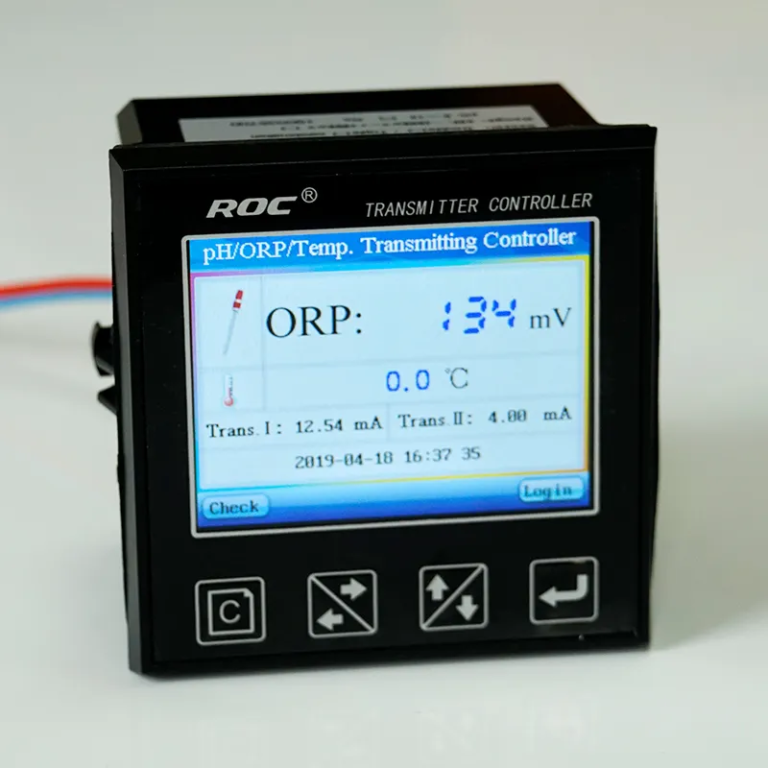
ChiMay inline turbidity sensors provide screening-level monitoring for microplastic events:
– Real-time detection of concentration spikes
– Triggered sampling for detailed laboratory analysis
– Process control for treatment optimization
While turbidity monitoring cannot directly quantify microplastics, it provides valuable screening data for contamination events requiring detailed investigation.
Treatment Technologies for Microplastic Removal
Enhanced Filtration
Microfiltration:
– Removal: 90-99% of particles >0.1 μm
– Energy: 0.5-2 kWh/m³
– Cost: $0.10-0.30/m³
Ultrafiltration:
– Removal: 95-99.9% of particles >0.01 μm
– Energy: 1-3 kWh/m³
– Cost: $0.20-0.50/m³
Reverse osmosis:
– Removal: >99.9% of all particles
– Energy: 1.5-3 kWh/m³
– Cost: $0.40-0.80/m³
Membrane Bioreactors
MBRs combine biological treatment with membrane filtration:
– Removal: 95-99% of microplastics
– Advantages: Smaller footprint, higher removal efficiency
– Limitations: Higher operating costs, concentrate management
Advanced Treatment
Dissolved air flotation (DAF):
– Removal: 60-85% of microplastics
– Best for: Low-density plastics
– Cost: $0.05-0.15/m³
Electrocoagulation:
– Removal: 70-90% of microplastics
– Mechanism: Metal coagulant generation promotes particle aggregation
– Cost: $0.10-0.25/m³
Protecting Your Family: Practical Steps
At Home
Water filtration:
– Activated carbon: Reduces microplastics by 30-60% (pitcher/faucet filters)
– Ceramic filtration: Removes 80-95% of particles >0.5 μm
– Reverse osmosis: Provides >99% microplastic removal (point-of-use systems)
Plastic reduction:
– Glass and stainless: Use for water storage and food containers
– Natural fibers: Choose cotton, wool, and linen over synthetics
– Microwave caution: Never heat food in plastic containers
Lifestyle Changes
Clothing care:
– Laundry bags: Capture microfibers during washing
– Front-loading machines: Reduce fiber shedding vs. top-loading
– Full loads: Fewer wash cycles = less fiber release
Consumer choices:
– Avoid microbeads: Check cosmetics for “polyethylene” or “polypropylene”
– Choose natural: Preference natural materials over synthetics
– Proper disposal: Never flush plastic products or packaging
Advocacy and Awareness
Utility engagement:
– Ask about testing: Request microplastic monitoring from your water utility
– Support upgrades: Advocate for enhanced treatment technologies
– Transparency: Demand access to water quality data
Policy support:
– Source reduction: Support bans on intentionally-added microplastics
– Producer responsibility: Advocate for plastic producer accountability
– Research funding: Support microplastic health effects research
The Path Forward
Microplastics represent an emerging contaminant challenge with uncertain but concerning health implications. Your water treatment plant—designed before microplastics were recognized as contaminants—removes only a fraction of these particles.
Current sensor technology provides limited direct detection capability. However, turbidity monitoring from ChiMay offers screening-level surveillance for contamination events requiring detailed investigation.
Effective protection requires multiple approaches:
– Source reduction: Minimizing microplastic input to wastewater
– Enhanced treatment: Implementing advanced filtration technologies
– Home filtration: Point-of-use treatment for final protection
– Personal choices: Reducing exposure through lifestyle changes
The science on microplastic health effects continues to evolve. Until comprehensive treatment solutions arrive, individual protective actions become essential.
Your drinking water contains microplastics. The question isn’t whether exposure occurs—it’s what you’re doing about it.