Key Takeaways:
- The semiconductor ultra-pure water (UPW) market reached $6.04 billion in 2025, with projected growth to $12 billion by 2035 at a 7.1% CAGR
- Dissolved oxygen (DO) levels in semiconductor-grade UPW must remain below 1 part per billion (ppb) to prevent oxidation defects
- Fluorometric DO sensors offer 20x greater sensitivity compared to electrochemical alternatives with zero oxygen consumption
- Real-time DO monitoring reduces wafer defect rates by up to 35% in advanced fabrication facilities
Table of Contents
Introduction
Semiconductor manufacturing represents one of the most demanding applications for water quality instrumentation. Ultra-pure water (UPW) serves as the primary process fluid in wafer fabrication, cleaning, and rinsing operations where even trace contaminants can compromise device yields. Dissolved oxygen, present at concentrations measured in parts per billion, poses a significant threat to semiconductor quality through oxidation of sensitive device structures.
The global market for semiconductor UPW systems continues expanding at 7.1% CAGR, driven by new fabrication facility construction in Taiwan, South Korea, and the United States. This growth underscores the critical importance of reliable dissolved oxygen monitoring technology capable of detecting ultra-low oxygen concentrations with precision and stability.
Understanding Dissolved Oxygen Challenges in Semiconductor Applications
The Impact of Oxygen on Wafer Quality
Molecular oxygen dissolved in UPW reacts with sensitive device materials including copper interconnects, silicon surfaces, and photoresist layers. Even at concentrations as low as 5-10 ppb, dissolved oxygen can cause:
- Copper oxidation: Formation of copper oxide layers reduces conductivity and increases contact resistance
- Silicon surface degradation: Native oxide growth introduces variability in gate oxide thickness
- Photoresist contamination: Oxygen species can interfere with photochemical reactions during lithography
Industry standards established by SEMI require dissolved oxygen levels below 1 ppb for advanced semiconductor processes, with some manufacturers targeting sub-0.5 ppb levels for sub-7nm technology nodes.
Limitations of Traditional Electrochemical Sensors
Conventional electrochemical dissolved oxygen sensors operate by reducing oxygen at a cathode and measuring the resulting electrical current. While adequate for many industrial applications, these sensors present significant drawbacks for semiconductor UPW service:
Oxygen Consumption: Electrochemical sensors actively consume dissolved oxygen during measurement, creating concentration gradients and measurement inaccuracies in low-DO environments.
Electrolyte Depletion: The internal electrolyte solution gradually depletes, requiring frequent calibration and replacement intervals typically measured in weeks rather than months.
Flow Rate Sensitivity: Electrochemical sensor response varies with sample flow rate, complicating installation in low-flow purge streams common in semiconductor facilities.
Fluorometric Detection Technology Explained
Fluorometric dissolved oxygen sensors employ a fundamentally different measurement principle that overcomes the limitations of electrochemical technology. The measurement system utilizes:
Luminescent Indicator Chemistry: A ruthenium or platinum-based fluorescent dye is immobilized in a gas-permeable polymer matrix. When excited by blue light (typically 470 nm wavelength), the indicator emits red-orange fluorescence with an intensity inversely proportional to oxygen concentration.
Stern-Volmer Relationship: The quenching of fluorescence by oxygen follows the Stern-Volmer equation, allowing precise calculation of dissolved oxygen concentration from fluorescence lifetime or intensity measurements.
Dynamic Quenching Mechanism: Oxygen molecules diffuse into the polymer matrix and collide with excited indicator molecules, transferring energy and reducing fluorescence emission. Higher oxygen concentrations produce greater quenching effects.
Key Advantages for Semiconductor Applications
Fluorometric sensors offer several performance characteristics particularly valuable for semiconductor UPW monitoring:
| Feature | Electrochemical | Fluorometric |
|---|---|---|
| Detection limit | 10-50 ppb | <0.5 ppb |
| Oxygen consumption | Yes, continuous | Zero |
| Calibration frequency | Weekly | Monthly or less |
| Flow rate dependency | High | Minimal |
| Response time (T90) | 30-60 seconds | 10-30 seconds |
| Cross-sensitivity | pH, salinity | Temperature only |
Industry Data and Market Validation
Research published by Mordor Intelligence projects the ultra-pure water market to expand from $3.21 billion in 2026 to $5.11 billion by 2031, representing a 9.7% CAGR. This growth reflects increasing semiconductor fabrication capacity and more stringent water quality requirements for advanced process nodes.
Taiwan currently leads global UPW consumption at approximately 18.7% of market share, followed by South Korea at 15.4%. These regions host the most advanced semiconductor fabrication facilities, driving demand for the highest-performance monitoring instrumentation.
Dr. Michael Foster, director of process water systems at SEMI, states: "Fluorometric dissolved oxygen sensing has become the de facto standard for advanced semiconductor manufacturing. The technology's combination of ultra-low detection limits, stability, and minimal maintenance requirements addresses the exacting requirements of sub-10nm fabrication processes."
Implementation Considerations for UPW Systems
Installation Requirements
Proper sensor installation significantly impacts measurement accuracy and system reliability:
Sample Point Location: Position sensors in locations with consistent flow (minimum 0.3 m/s) to ensure representative sampling. Avoid dead legs or locations with potential for gas bubble accumulation.
Temperature Compensation: Fluorometric sensors require temperature compensation algorithms, as fluorescence quenching varies with temperature. Integrated temperature measurement with automatic compensation provides accurate readings across the typical 20-25°C operating range.
Cleaning and Maintenance: While fluorometric sensors resist fouling better than electrochemical alternatives, periodic cleaning with DI water maintains optical clarity. Some manufacturers offer automated cleaning systems that extend maintenance intervals to 6-12 months.
Integration with Process Control Systems
Modern semiconductor fabrication facilities employ sophisticated process control architectures that integrate water monitoring data:
Distributed Control System (DCS) Integration: Sensors communicate via Foundation Fieldbus, Profibus, or Modbus protocols to enable centralized data acquisition and alarming.
Statistical Process Control (SPC): Real-time DO measurements feed SPC algorithms that detect process deviations before they impact product quality.
Historian and Analytics Platforms: Cloud-based or on-premise historian systems store monitoring data for trend analysis, predictive maintenance, and regulatory compliance documentation.
Conclusion
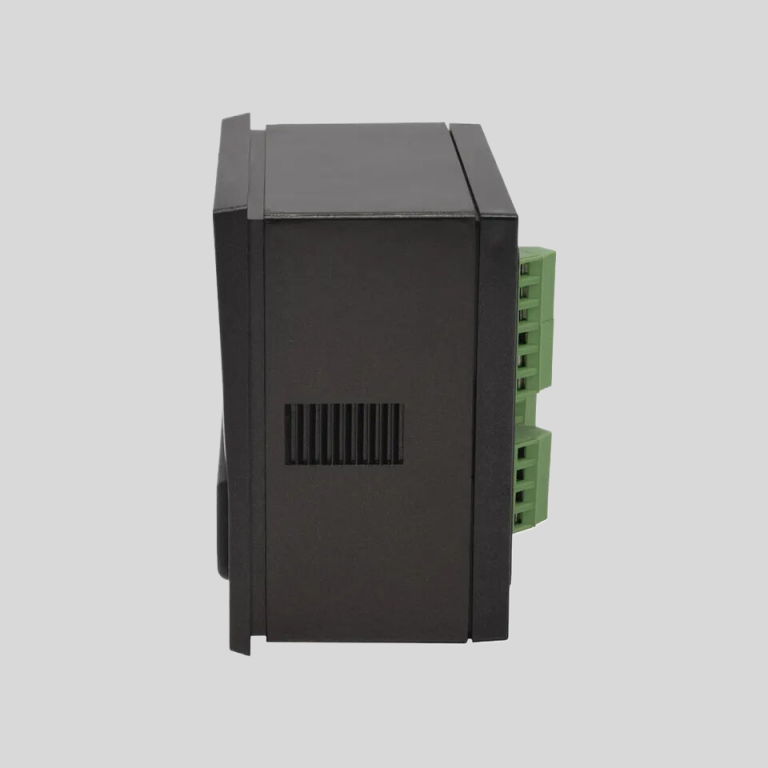
Fluorometric dissolved oxygen sensing technology has established itself as the preferred monitoring solution for semiconductor ultra-pure water applications. ChiMay's dissolved oxygen transmitter product line incorporates advanced fluorometric sensing technology with detection limits exceeding 20 times the sensitivity of electrochemical alternatives and zero oxygen consumption during measurement, providing the precision and reliability demanded by advanced fabrication processes.
As semiconductor technology continues advancing toward smaller geometry nodes, water quality monitoring requirements will become even more stringent. Facilities that implement state-of-the-art fluorometric DO monitoring systems will be better positioned to achieve optimal wafer yields, minimize defect rates, and maintain competitive manufacturing efficiency.