RO System Controllers for Data Center Cooling Applications: Selection Guide
Data centers consume approximately 1.8 gallons of water per kilowatt-hour for cooling, with large facilities using 3-5 million gallons daily
RO system monitoring reduces cooling efficiency losses by 18% through real-time conductivity monitoring
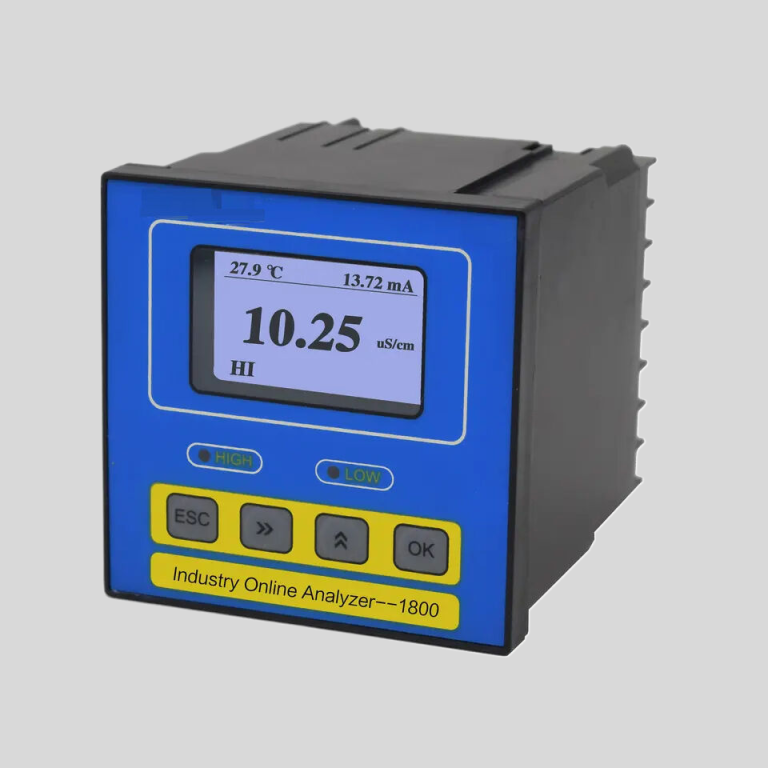
ChiMay's RO system controller integrates multi-parameter monitoring with Modbus TCP/IP for BMS integration
The global data center water treatment market will reach $3.4 billion by 2027, driven by sustainability requirements
Advanced RO controllers can reduce water waste by 25% through optimized rejection recovery systems
Introduction
Data centers represent one of the fastest-growing industrial water consumers globally. As digital transformation accelerates and artificial intelligence workloads drive unprecedented computing demand, the water footprint of data center operations has become a critical sustainability and operational cost consideration.
Reverse osmosis (RO) systems play an essential role in providing high-purity feed water for cooling towers, humidification systems, and direct liquid cooling applications. The RO system controller—the intelligent brain managing membrane performance, cleaning cycles, and system protection—directly impacts water efficiency, operational costs, and infrastructure reliability.
According to the U.S. Department of Energy's 2025 Data Center Energy report, water-cooled data centers consume an average of 1.8 gallons per kilowatt-hour (gal/kWh) for evaporative cooling, compared to 0.5 gal/kWh for air-cooled facilities. With hyperscale data centers consuming 20-100 MW continuous power, the water treatment systems supporting these facilities represent significant capital and operating investments.
Understanding RO System Water Quality Requirements
Cooling Tower Makeup Water Specifications
Modern data center cooling towers require carefully controlled water chemistry to prevent scale formation, microbiological growth, and corrosion:
RO pretreatment typically achieves 90-98% conductivity reduction, producing permeate conductivity of 20-100 μS/cm suitable for cooling tower makeup after proper conditioning.
RO System Controller Architecture
Core Control Functions
Modern RO system controllers manage multiple integrated functions:
1. Permeate Quality Management:
Continuous conductivity monitoring of product water
Automatic diversion valve control for off-spec permeate
Recovery optimization based on feed water conditions
Temperature compensation for accurate conductivity measurement
2. Membrane Protection:
High-pressure pump变频控制 (VFD) for energy optimization
Anti-scalant dosing control based on scaling potential calculation
Emergency shutdown on abnormal differential pressure
Hydraulic flush sequencing for membrane preservation
3. System Performance Tracking:
Normalized performance calculation (standardized flow and salinity)
Trend analysis for predictive maintenance scheduling
Energy consumption monitoring and optimization
Remote access and data logging capabilities
4. Cleaning Management:
Cleaning trigger based on normalized performance decline
Multi-step cleaning protocol execution
Chemical dosing control and verification
Post-cleaning performance verification
Integration Requirements for Modern Data Centers
Building Management System (BMS) Integration
RO system controllers must integrate seamlessly with enterprise BMS platforms:
Communication Protocols:
Modbus TCP/IP: Industry standard for industrial equipment communication
BACnet/IP: Common in commercial building systems
OPC-UA: Emerging standard for industrial IoT integration
PROFINET: High-speed industrial Ethernet for real-time control
Data Exchange Requirements:
Real-time permeate quality parameters
System status and alarm notifications
Setpoint adjustment capability from BMS
Historical data access for trend analysis
Total Cost of Ownership Analysis
Capital vs. Operating Cost Trade-offs
Five-Year TCO Comparison:
A detailed analysis for a 1,000 GPD RO system serving a 10 MW data center cooling tower:
The advanced controller delivers 29% TCO reduction over five years, with payback achieved within 18 months of installation.
Selection Criteria for Data Center Applications
Scalability Considerations
Data center RO systems often require expansion to support facility growth:
Multi-stage expansion: Controllers supporting additional membrane housings
Parallel system integration: Coordinating multiple RO units
Pretreatment integration: Managing multimedia filters, softeners, and antiscalant systems
Post-treatment control: Managing final water quality conditioning
ChiMay's RO system controller supports modular expansion, enabling additional RO trains and pretreatment system integration without controller replacement.
Water Sustainability Metrics
Regulatory Compliance
Multiple jurisdictions are implementing data center water use regulations:
California Title 24: Water efficiency requirements for commercial buildings
Virginia DEQ permits: Discharge limits for cooling tower blowdown
Singapore NEA: Water conservation requirements for large facilities
European Union taxonomy: Sustainability reporting requirements
RO system controllers must provide the monitoring data and operational controls necessary for compliance documentation.
Implementation Best Practices
Commissioning Process
Conclusion
RO system controllers represent critical infrastructure for data center water treatment, directly impacting water efficiency, operational costs, and system reliability. As data centers face increasing pressure to reduce water consumption and improve sustainability metrics, the controller's role in optimizing RO system performance becomes even more strategic.
ChiMay's RO system controller delivers advanced control algorithms, comprehensive monitoring capabilities, and seamless integration with modern building management systems—providing the intelligence data centers need to achieve their water efficiency goals while maintaining the reliability that mission-critical facilities demand.
The investment in advanced RO control technology pays for itself through reduced energy costs, extended membrane life, and—most importantly—avoided downtime losses in facilities where even brief service interruptions can impact thousands of customers and millions of dollars in revenue.