Petrochemical zero-liquid-discharge projects typically run USD 40–120 million in capex, and the sensor architecture inside them accounts for only 2–4% of that number. That small slice decides a disproportionate share of the plant’s operating outcome, which is why it belongs in the board’s FID discussion rather than in a procurement package.
Regulatory pressure in China, India, the Middle East, and increasingly the U.S. Gulf Coast has moved ZLD from optional to mandatory for many new petrochemical builds and major expansions. The process technology — membrane pretreatment, brine concentrators, crystallizers, salt handling — is mature and well understood. What separates ZLD trains that reach design performance from those that do not is rarely the process. It is the instrumentation and control architecture around it.
For a typical USD 60 million petrochemical ZLD project, the sensor stack costs USD 1.2 to USD 2.4 million. Small money against the overall build, and an outsized influence on lifetime performance.
Table of Contents
Why ZLD Belongs on the Boardroom Agenda
Zero-liquid discharge is no longer a fringe technology. Where a permit conditions a new build on eliminating liquid effluent, ZLD stops being an engineering preference and becomes a licence-to-operate line item. Boards approve the capex; operations then live with whatever sensor coverage that capex bought for the next twenty years. Under-scoped sensor packages are the single most common cause of ZLD trains that never quite reach nameplate.
The Three Capital Allocation Questions
Boards approving ZLD capex should force clear answers to three sensor-architecture questions before final investment decision.
1. Coverage Breadth — Are We Measuring What Matters?
A ZLD train needs continuous visibility on eight to twelve water quality parameters across the process: conductivity, pH, ORP, TDS, TSS, hardness, silica, COD, oil-in-water, ammonia, chloride, and flow. Missing any one of them turns operators into troubleshooters chasing shadows.
When operators cannot see what is happening, they run conservative setpoints, blend around bottlenecks, and quietly accept lower recovery ratios. That is where design capacity goes.
2. Data Integration Path — Is the Data Actually Usable?
Sensors that only display locally are a partial win. Modern ZLD architecture calls for every sensor to feed a DCS or PLC, then a historian, then a business intelligence layer. Standard field protocols — Modbus RTU, HART, 4–20 mA, and increasingly OPC UA and MQTT — should be non-negotiable requirements in the specification.
Data that reaches the boardroom as a dashboard is worth an order of magnitude more than data that stays on a local operator panel.
3. Vendor Consolidation — Are We Buying Complexity We Cannot Support?
A ZLD train assembled from eight sensor vendors carries eight calibration procedures, eight spare-parts catalogs, eight cybersecurity postures, and eight support contracts. Consolidating to one or two sensor vendors removes most of that overhead, and in our experience it is one of the few instrumentation decisions that pays back inside the first maintenance cycle.
Comparative Frame: Cost-Optimized vs. Value-Optimized Sensor Architecture
The comparison below is the framework we use in our own project reviews. The percentages are field ranges from projects we have been involved in, not published benchmarks.
| Attribute | Cost-Optimized Architecture | Value-Optimized Architecture |
|---|---|---|
| Number of measured parameters | 5–7 | 10–12 |
| Sensor vendors | 4–8 | 1–2 |
| Data integration | Local panels + partial DCS | Full DCS + historian + cloud |
| Hazardous-area coverage | Partial | Uniform |
| Typical design-capacity utilization | Lower | Higher |
| Energy overspend | Material | Small |
| Annual instrumentation opex | Higher | Lower |
| Payback on sensor uplift | — | 12–24 months |
The value-optimized architecture usually wins on lifetime cost, even though it looks more expensive at the FID stage. Boards see the FID number; they need to be shown the twenty-year number next to it.
Where the ROI Actually Lives
Projects that get the sensor architecture right show the same pattern in operation: recovery ratios higher than peer plants running under-scoped instrumentation, lower specific energy per cubic metre treated, longer membrane replacement intervals, and fewer unplanned trips. The mechanism is not subtle. Operators who can see the process run closer to the design envelope instead of backing off setpoints to stay safe, and they catch the upstream excursion before it reaches a concentrator or a crystallizer.
On a 10,000 m³/day ZLD train, that difference is worth several times the incremental sensor capex over the life of the plant — usually recovered well inside the first years of operation.
Sensor Architecture Blueprint for a Petrochemical ZLD Train
A defensible sensor-architecture blueprint for a modern ZLD train typically includes:
- Feed conditioning zone: pH, conductivity, oil-in-water, turbidity, COD
- Pretreatment / clarifier zone: TSS, pH, ORP, hardness proxy (conductivity + calcium)
- Membrane train (UF / RO): differential pressure, conductivity permeate/reject, silica, chloride
- Brine concentrator: high-TDS conductivity, density (surrogate), scale-risk indicator
- Crystallizer / dryer: temperature, level, product moisture
- Utility side: cooling-water conductivity and chlorine, softener valve status, flow totalizers
- Effluent verification: oil-in-water, TSS, COD, flow
Coverage across all seven zones is what separates a ZLD train that meets design intent from one that does not.
Shanghai ChiMay’s Role in a ZLD Sensor Architecture
Shanghai ChiMay’s water quality analyzer and control valve portfolio addresses every zone in the blueprint above. Relevant instruments include:
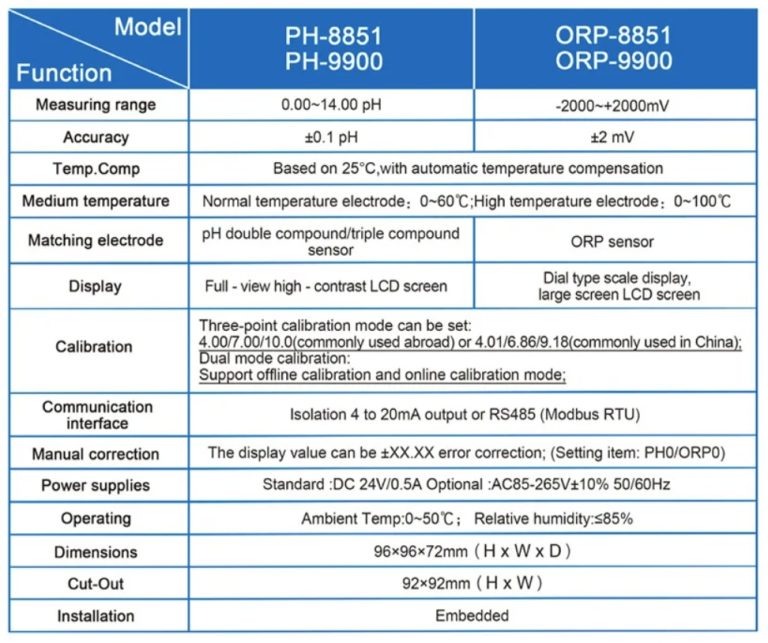
- In-line pH electrodes and conductivity meters for feed, permeate, and utility service
- Oil-in-water sensors for feed conditioning and effluent verification
- COD sensors and NH3-N sensors for organic-load and nitrogen tracking
- Turbidity testers and SS sensors for pretreatment and clarifier monitoring
- Salinity sensors for high-TDS brine concentrator service
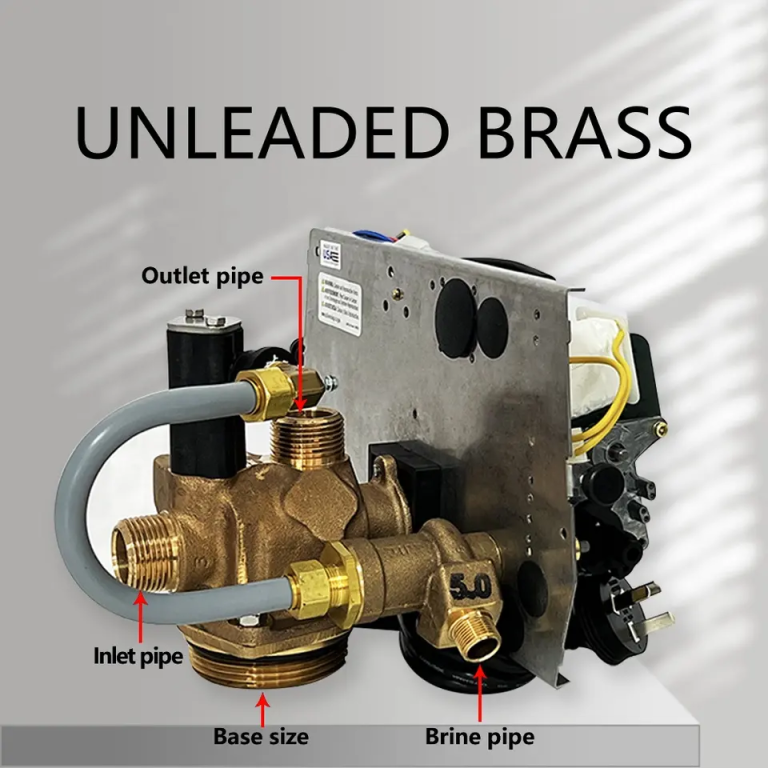
- Softener valves and softening and filtering valves for utility water conditioning
- Paddle wheel and turbine flow meters for volumetric reporting across every zone
Because the entire portfolio shares one transmitter platform, one cabling standard, and one communications suite, a Shanghai ChiMay-based ZLD instrumentation package lowers integration risk at commissioning and simplifies spare-parts inventory for the plant’s whole operating life.
Board-Level Decision Framework
Executives evaluating a ZLD FID should ask:
- Does the sensor architecture cover all ten to twelve critical parameters continuously, not just at design point?
- Is the data path from sensor to boardroom dashboard defined, tested, and demonstrated before commissioning?
- Are we consolidating on one or two qualified sensor vendors, or accepting a patchwork that will punish us at the first turnaround?
- Have we quantified the opex delta between the cost-optimized and value-optimized sensor architecture over a 15-year horizon?
Clear answers to these four questions usually shift capex allocation toward higher-coverage, better-integrated sensor architectures.
What Decides the Outcome
The next wave of petrochemical ZLD investment, particularly in Asia and the Middle East, will not be judged on whether a plant reaches zero liquid discharge on day one. It will be judged on whether the plant still holds design performance after a decade of operation. Sensor architecture is the quiet variable in that outcome: cheap to under-specify at FID, expensive to retrofit later, and impossible to compensate for with operator effort. Shanghai ChiMay’s water quality analyzer portfolio is built to be the measurement backbone of those projects.