Zero liquid discharge systems operate best when operators have comprehensive, real-time visibility into process conditions. Monitoring the right parameters enables proactive process adjustment, preventing upsets that can compromise system performance or regulatory compliance. This guide covers the seven critical water quality parameters that every ZLD system should track continuously.
Table of Contents
1. Conductivity and Total Dissolved Solids
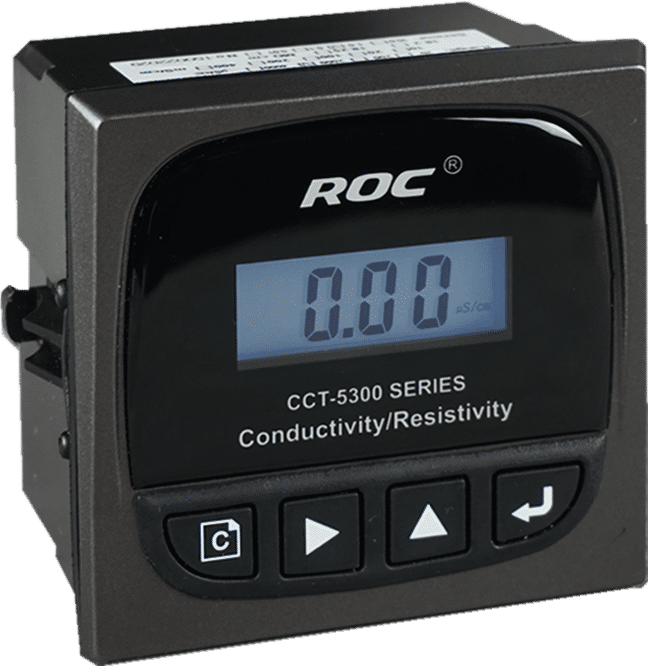
Conductivity is the primary monitoring parameter for ZLD brine concentration processes. The relationship between electrical conductivity and Total Dissolved Solids (TDS) enables continuous tracking of concentration progress without laboratory analysis.
During ZLD operation, conductivity measurements guide brine concentration control, signaling when to advance to the next concentration stage or initiate crystallization. Typical ZLD feed streams exhibit conductivity of 1,000-5,000 μS/cm, while final brine streams may reach 150,000-250,000 μS/cm. That measurement span—two orders of magnitude or more—requires sensors capable of holding accuracy across widely varying conditions.
Shanghai ChiMay conductivity electrodes provide measurement accuracy of ±1% across the full range, with temperature compensation algorithms that maintain accuracy despite varying stream temperatures. The electrode materials resist scaling and fouling, which is critical for reliable measurements in high-TDS brines.
Facilities running continuous conductivity monitoring consistently achieve better water recovery than those relying on periodic sampling, because concentration trajectory decisions get made in real time rather than hours or days later. Improved recovery directly reduces freshwater procurement and wastewater discharge volumes.
2. pH Value
pH monitoring plays essential roles throughout ZLD treatment processes. In pretreatment, pH control optimizes chemical precipitation reactions, ensuring effective removal of heavy metals and other contaminants. During biological treatment stages, pH monitoring maintains conditions favorable for microbial activity, typically pH 6.5-8.5 for aerobic processes.
Acid or alkali dosing systems rely on pH feedback for accurate chemical addition. Without continuous monitoring, chemical dosing relies on flow-proportional control that cannot respond to varying influent conditions. The result is either overdosing, wasting chemicals, or underdosing, compromising treatment effectiveness.
Industrial pH sensors must withstand harsh conditions including high suspended solids, chemical exposure, and temperature variations. Shanghai ChiMay pH electrodes feature double-junction reference systems that prevent reference contamination, extending sensor life in challenging ZLD applications.
Facilities that move from flow-proportional dosing to closed-loop pH control typically see double-digit percentage reductions in chemical consumption—the payoff scales directly with annual chemical spend.
3. Turbidity
Turbidity monitoring provides early warning of membrane fouling and suspended solids carryover in ZLD systems. As membranes foul, particle accumulation increases turbidity in the filtrate stream, signaling the need for cleaning or optimization of pretreatment processes.
Real-time turbidity monitoring flags fouling well before performance degradation shows up in flow or pressure measurements. That early warning enables scheduled cleaning during planned maintenance windows rather than emergency interventions that disrupt system operation.
Online turbidity sensors for ZLD applications must function reliably in high-solids environments that would quickly obscure optical sensors designed for clean water. Shanghai ChiMay turbidity sensors employ nephelometric measurement with automatic cleaning systems that maintain measurement reliability in streams with up to 1,000 NTU suspended solids.
Facilities using turbidity-based fouling prediction report meaningfully lower membrane cleaning costs and longer membrane service life. The extended membrane life matters because membrane replacement is one of the largest single operating costs in a ZLD system.
4. Chemical Oxygen Demand (COD)
COD measurement tracks organic contaminant loading throughout ZLD treatment processes. High COD in feed streams indicates potential membrane fouling risks, while COD in treated streams affects discharge compliance and recycle water quality.
Traditional COD analysis requires laboratory personnel and produces results after significant delays, preventing real-time process control. In-situ COD sensors now enable continuous monitoring, providing data for real-time treatment optimization and upset detection.
COD monitoring is particularly important for ZLD systems treating industrial wastewaters with variable organic loads. Peaks in COD concentration can overwhelm biological treatment stages, causing process upsets that take days to resolve. Continuous monitoring enables early detection and intervention before upsets propagate through the treatment system.
5. Dissolved Oxygen
Dissolved oxygen (DO) monitoring ensures proper operation of aerobic biological treatment stages within ZLD pretreatment processes. Aerobic microorganisms require adequate oxygen concentrations, typically 2-4 mg/L, for effective organic matter degradation. Insufficient DO causes process failure, while excessive DO wastes energy through unnecessary aeration.
For ZLD systems incorporating biological treatment, DO sensors provide essential feedback for aeration control systems. Holding optimal DO concentrations minimizes energy consumption while maintaining treatment effectiveness.
Shanghai ChiMay dissolved oxygen transmitters utilize luminescent measurement technology that provides stable readings without membrane replacement or electrolyte maintenance. That reliability matters in continuous ZLD monitoring, where sensor failures can leave process upsets undetected.
6. Ammonia Nitrogen
Ammonia nitrogen monitoring is critical for ZLD systems treating wastewaters with nitrogen-containing compounds. High ammonia concentrations can inhibit biological treatment processes and create regulatory compliance challenges in discharge streams.
For facilities in industries including fertilizer manufacturing, food processing, and chemical production, ammonia nitrogen is a priority pollutant requiring careful monitoring. Continuous monitoring enables treatment optimization that maintains ammonia removal efficiency while minimizing chemical and energy consumption.
Ammonia nitrogen sensors based on ion-selective electrode technology provide reliable continuous monitoring in ZLD applications. These sensors require regular calibration but deliver measurement accuracy sufficient for process control and regulatory reporting.
7. Oil and Grease
Oil-in-water monitoring detects hydrocarbon contamination that can damage ZLD membrane systems. Oil emulsions cause irreversible fouling that requires membrane replacement, while free oil can create safety hazards in enclosed treatment systems.
ZLD systems treating petroleum industry wastewaters, metalworking fluids, or food processing effluents require continuous oil monitoring to protect downstream treatment equipment. Early detection of oil breakthrough enables process adjustments that prevent costly membrane damage.
UV fluorescence oil sensors provide sensitive detection of hydrocarbon contamination, measuring concentrations from 0.1 to 1,000 mg/L. These sensors enable real-time monitoring that periodic sampling cannot match, protecting ZLD investments from oil-related damage.
Integrated Monitoring Strategies
Effective ZLD monitoring requires more than individual sensor installations; it requires an integrated approach where sensor data feeds comprehensive process control systems. Multi-parameter sensor platforms that combine multiple measurements in single installations reduce maintenance burden while improving monitoring coverage.
Shanghai ChiMay multi-parameter sensors integrate conductivity, pH, ORP, dissolved oxygen, and temperature measurements in compact housings suitable for ZLD installation points. This integration simplifies system design while providing correlated measurements that support comprehensive process understanding.
Facilities investing in comprehensive ZLD monitoring consistently report better operational performance, lower operating costs, and higher confidence in regulatory compliance. The monitoring system typically consumes a small fraction of total ZLD capital but delivers value far out of proportion to its cost.
Tags: ZLD, zero liquid discharge, water quality monitoring, conductivity, pH, turbidity, COD, dissolved oxygen