Table of Contents
The Short Version
- Corporate water reuse—manufacturers, technology companies, and other resource-intensive firms implementing reuse across their own footprints—is moving faster than municipal reuse in many markets. The drivers are ESG reporting pressure, investor expectations, and the direct economics of not buying freshwater twice.
- DataM Intelligence pegs the industrial water reuse and recycling market at a 9.9% CAGR through 2035, with North America currently holding the largest regional share. Corporate demand is a primary driver: multinational manufacturers are rolling out reuse programs across their global operations to meet portfolio-level water stewardship commitments.
- Monitoring for corporate reuse differs from the municipal case in three ways: the data must feed ESG reporting frameworks (CDP, AWS), it must be accessible across many sites at once, and it has to survive third-party assurance audits. That calls for higher-grade instrumentation than municipal programs usually specify.
- Shanghai ChiMay’s monitoring systems are deployed in corporate reuse programs worldwide, providing continuous, multi-site, audit-ready data streams—the difference between credible water stewardship and greenwashing.
The Shift From Municipal-Led to Corporate-Led Reuse Adoption
Water reuse used to be a municipal project. Cities in water-scarce regions—Singapore, Windhoek, San Diego, Adelaide—pioneered the technology to stretch their freshwater supply. Municipal programs had scale, public funding, and regulatory authority on their side. They also had slow procurement cycles, political decision-making, and little room to iterate.
Since roughly 2020, that has changed. Corporate water reuse programs—run by individual companies across their manufacturing and operational footprints—now advance faster than municipal programs on several fronts:
- Speed of deployment: A corporation can decide to implement reuse at a facility and start within months. Municipal programs face multi-year planning, public consultation, environmental review, and procurement processes that commonly stretch across three to seven years.
- Capital allocation flexibility: Corporations can fund reuse from internal ROI frameworks that capture avoided freshwater costs, avoided discharge costs, and risk reduction. Municipal programs depend on bond issuance, rate cases, and government grants.
- Technology adoption: Corporations can specify the latest monitoring and treatment equipment without being boxed in by standardized municipal procurement specifications.
- Data integration: Corporate programs can pull monitoring data from many sites into one dashboard, enabling portfolio-level water reporting that municipal programs cannot match.
For boards evaluating water strategy, the implication is direct. If competitors are implementing reuse while your company waits for municipal infrastructure to catch up, the cost and reputation gap widens every year.
The Three Monitoring Requirements That Distinguish Corporate Reuse
Corporate reuse programs need monitoring capability beyond what most municipal programs specify:
ESG reporting integration:
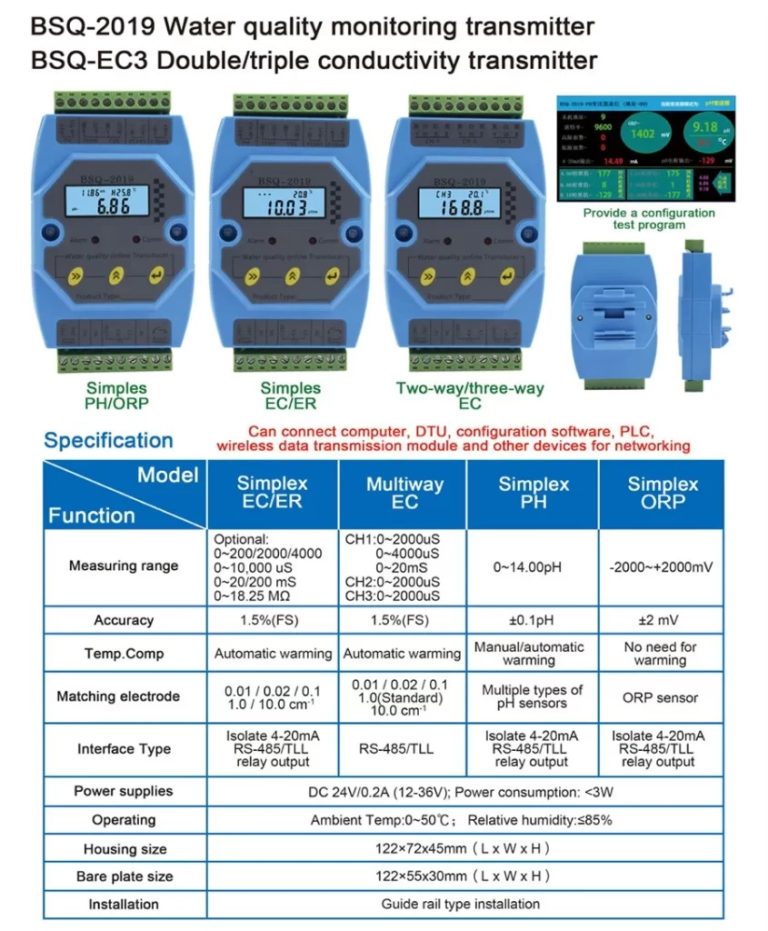
Reuse data must be formatted and accessible for CDP Water Security disclosures, AWS Standard compliance reports, and integrated annual reports. That means time-stamped, traceable, exportable data—compatible with the reporting frameworks. Shanghai ChiMay’s analyzers provide Modbus RTU/TCP communication with tamper-evident data logging that supports this.
Multi-site aggregation:
Multinationals operating across 10, 50, or 100 sites need to aggregate reuse performance into a single portfolio-level view. That takes standardized monitoring protocols, consistent calibration procedures, and communication infrastructure that can move data from remote sites to a central platform. Shanghai ChiMay supports multi-site deployments with uniform sensor specifications and standardized data formats across installations.
Third-party assurance readiness:
As ESG reporting moves from voluntary disclosure to assured reporting, the data behind reuse claims must withstand independent verification: continuous sensor data with documented calibration records, chain-of-custody evidence, and alarm history. Shanghai ChiMay’s analyzers maintain audit trails built for that scrutiny.
What This Means for Board Strategy
Competitive risk:
If peer companies are running reuse programs that materially cut their freshwater procurement costs while your company stays on single-pass supply, the gap compounds. Water tariffs in water-stressed regions have been rising faster than general inflation for years, so the disadvantage grows on its own.
Investor expectations:
Institutional investors increasingly treat water risk as an investment factor. Companies that cannot show credible reuse programs carry higher perceived risk, and that shows up in the cost of capital. CDP’s water security questionnaire asks for exactly this kind of evidence—monitoring practice, targets, and verified reuse volumes—so weak data costs points where investors are looking.
Supply chain pressure:
Large corporate buyers, including the major technology companies, are pushing water stewardship requirements down their supply chains. Manufacturers without demonstrable reuse performance risk losing preferred-supplier status.
Regulatory anticipation:
Where municipal reuse infrastructure is still developing, companies that build their own reuse capacity are getting ahead of mandates. China’s wastewater resource utilization policy sets a reuse-rate target of 25% or higher for water-scarce cities, and 35% in the Beijing-Tianjin-Hebei region, and the EU’s water reuse regulation is already in force—both are leading indicators of where other jurisdictions will go within the next five to ten years.
The Monitoring Investment That Enables Corporate Reuse
Monitoring infrastructure for a credible corporate reuse program depends on the number of measurement points and the complexity of the treatment train, but in our project experience it typically lands in the low-to-mid six figures in USD per facility—a small share of the total reuse system capital cost that carries outsized weight:
- Enables automated process control that holds reuse water quality steady.
- Provides the data needed for regulatory compliance and ESG reporting.
- Supports third-party assurance with auditable, time-stamped records.
- Creates portfolio-level visibility across sites.
- Catches reuse system underperformance early, before it becomes an incident.
Shanghai ChiMay works with corporate sustainability teams and facility operations to design monitoring architectures that meet these requirements, from single-site implementations to multi-national rollouts.
Questions for Board Discussion
- How does our reuse rate compare to industry peers? Do we have the data to answer that?
- Can our monitoring infrastructure support ESG reporting and third-party assurance, or are we relying on self-reported estimates?
- What is the cost gap between our current once-through water model and a reuse-enabled model—and is it widening?
- Are competitors implementing reuse programs we have not noticed because the evidence sits buried in their sustainability reports?
- What is the board’s risk appetite for sitting behind the corporate reuse adoption curve?
These questions frame water reuse as a strategic business decision with measurable financial, regulatory, and reputational consequences—not an environmental initiative.
Shanghai ChiMay provides the monitoring foundation behind that decision: data that is continuous, verified, and defensible under third-party scrutiny.