Table of Contents
The Chemistry Behind Digester Souring
Mesophilic anaerobic digestion depends on a fragile balance between acidogenic bacteria and methanogenic archaea. Acidogens are hardy and reproduce quickly; methanogens grow slowly and are sensitive to pH, temperature, and inhibitor concentrations. When feed conditions shift, for instance a shock load of high-strength industrial waste, acidogens race ahead and produce volatile fatty acids faster than the methanogens can convert them into methane.
The result is a downward pH trajectory, driven by acetic, propionic, and butyric acid accumulation. Once pH crosses 6.8 downward, methanogens shut down further, VFAs accumulate faster, and the digester enters a self-reinforcing souring spiral in which biogas production can collapse quickly. Recovery from a full sour event can take four to eight weeks of blending, alkalinity dosing, and reduced feeding, at a substantial cost in lost biogas revenue.
Why Grab Samples Are Not Enough
Traditional monitoring depends on daily grab samples analyzed in the plant laboratory. The lag between sampling and result is often 6-24 hours, and the sample only captures a single moment in a digester that experiences continuous chemical drift. By the time laboratory titration confirms a VFA-to-alkalinity ratio above 0.4—already past the classic stability band—the digester may be past the point where feed reduction alone can arrest the trajectory.
Continuous in-line pH tracking, calibrated for the digester’s operating temperature, closes that lag. Coupled with continuous conductivity tracking, it turns souring into a slow-moving trend visible on the SCADA screen, not a laboratory surprise.
Interpreting the pH Signal in Mesophilic Duty
Continuous digester pH is a coarse signal on its own. A useful playbook builds on the following behaviors:
- Stable digester band: healthy mesophilic digestion typically operates between pH 7.0 and 7.6, with slow drift correlated to feed alkalinity.
- Early acidification signal: a sustained downward drift of 0.1-0.2 pH units over 24 hours, without a corresponding feed change, indicates VFA build-up.
- Alarm threshold: pH 6.8 sustained for six hours is the widely accepted intervention threshold; feed rate should be cut immediately and alkalinity dosing prepared.
- Recovery signal: during recovery, pH rises slowly, often at 0.05-0.1 units per day; premature ramp-up of feeding almost always triggers a second sour event.
For this signal to be trustworthy, the pH electrode must be specified for high-solids operation, with a reference system that resists sulfide poisoning and a cleaning cycle sized for the digester’s solids content.
Conductivity as a Real-Time VFA Surrogate
Conductivity alone does not resolve VFAs directly, but it correlates strongly to total dissolved solids and ionic strength in the digester. When feed composition is reasonably stable, conductivity trends track VFA-to-alkalinity ratio movements closely enough to be used as an early-warning surrogate while the ratio remains inside the stable band—the classic FOS/TAC guidance treats roughly 0.3-0.4 as the upper edge of stable operation, with sustained readings above that pointing toward overload (https://smallops.eu/?p=10301/).
Operating experience across stable mesophilic installations shows a usable correlation between conductivity and titrated VFA, but the strength of that relationship varies from digester to digester and must be established plant by plant.
The technical requirement is to calibrate the conductivity-VFA relationship at each digester using grab-sample titrations over a one-to-two-month baseline period. Once the plant-specific curve is documented, conductivity spikes above the baseline become an actionable second signal, especially valuable when the pH electrode is in a cleaning cycle or awaiting recalibration.
Building the Control Loop
A defensible pH-and-conductivity-based souring prevention loop combines:
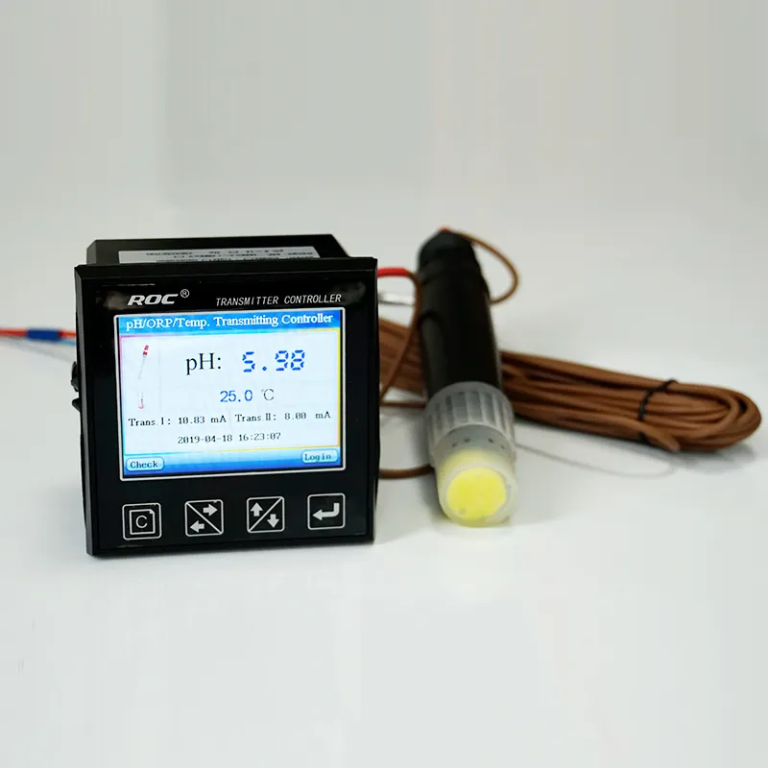
- In-line pH electrode: primary control variable, with temperature compensation and cleaning cycles matched to the digester duty.
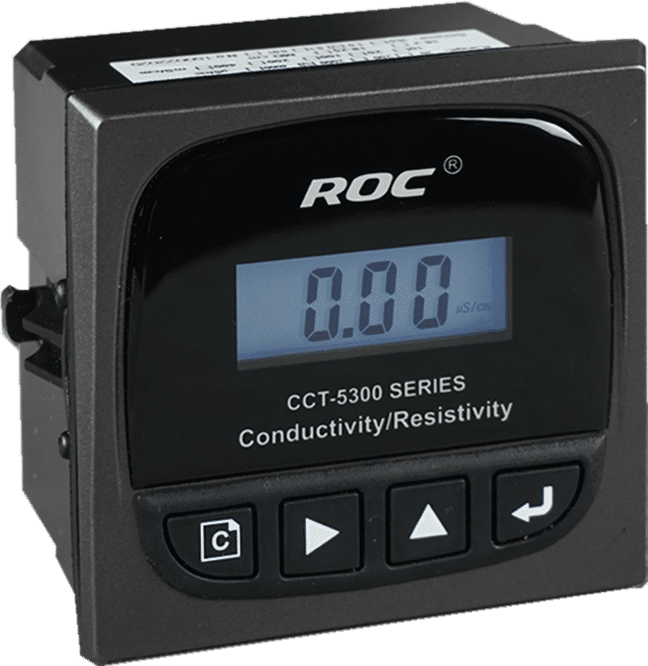
- Conductivity analyzer: secondary control variable, providing redundancy and an earlier VFA warning where the correlation has been validated.
- Dissolved oxygen transmitter: installed on any pre-aeration or thickening step to guard against oxygen ingress that would inhibit methanogens.
- Turbine flow meter: measures feed rate so that automatic feed-rate reductions can be triggered when pH or conductivity crosses defined thresholds.
Together, these sensors let the SCADA system implement a three-tier response: warning, automatic feed reduction, and operator escalation for alkalinity dosing.
Practical Alarm Configuration
A workable alarm hierarchy in mesophilic digestion typically looks like:
- Warning: pH drop of 0.15 units in 24 hours, OR conductivity rise of 8-12% above the rolling seven-day baseline. No automatic action; operator notified.
- Intervention: pH sustained below 6.9 for two hours, OR conductivity rise beyond 15% of baseline. Automatic feed-rate reduction of 25-40%, alkalinity dosing prepared.
- Alarm: pH sustained below 6.8 for six hours. Feed shut off, alkalinity dosed to target 3,000-4,000 mg/L as CaCO3, root cause investigation launched.
Each threshold should be tuned to the specific plant based on baseline data and operator experience. Reused across sister plants, the same three-tier hierarchy provides a consistent framework for on-call operators to interpret digester alarms.
Verification and Continuous Improvement
Continuous pH and conductivity data must be verified against laboratory titration on a monthly cadence for the first year of operation, then quarterly once the baseline correlation is well established. Verification data should be archived alongside the SCADA trend for regulatory reporting and for benchmarking across plants. Utilities that maintain this practice consistently report the following field observations:
- Alkalinity dosing consumption falls, because operators intervene earlier and with smaller doses.
- Unplanned feed-rate reductions decline, because true souring events are separated from routine trend noise.
- Biogas yield becomes more stable over rolling twelve-month windows.
Closing Notes for Plant Engineers
Mesophilic digester souring is an entirely preventable event, provided the plant is instrumented with pH and conductivity sensors selected for the duty, calibrated against local grab-sample data, and integrated into a tiered alarm hierarchy. Shanghai ChiMay’s in-line pH electrode and conductivity analyzer product families provide a technically sound reference stack for this control philosophy, with reference chemistries and cleaning cycles specified for the mesophilic anaerobic environment, and Modbus register maps that fit cleanly into standard biogas plant SCADA templates.