When a procurement team starts replacing aging single-parameter sensors with cloud-connected multi-parameter analyzers, the first task is narrowing a crowded market down to a shortlist of three to five qualified suppliers. The shortlist drives RFP quality, pilot scope, and ultimately the cost of ownership for the next decade. What follows is the shortlist methodology we see used in industrial and municipal water programs.
Table of Contents
Why Shortlisting Has Become Harder
Five years ago, multi-parameter analyzers were a niche product line. Today nearly every water-sensor vendor markets a “smart” or “cloud-connected” SKU, and the positioning has converged on similar specifications: four-to-six parameters, MQTT or REST APIs, dashboard portals, and battery-backed transmitters. Datasheets alone no longer separate genuine engineering depth from marketing veneer.
That convergence means the shortlist has to rely on non-spec criteria — cybersecurity posture, firmware update discipline, calibration support, and field-replaceable component availability — at least as much as on raw measurement specifications.
The Eight-Criterion Shortlist Framework
For cloud-connected multi-parameter analyzers, weight the criteria like this:
| # | Criterion | Suggested Weight |
|---|---|---|
| 1 | Measurement performance (accuracy, drift, range) | 18% |
| 2 | Connectivity options (Modbus, HART, MQTT, REST) | 14% |
| 3 | Cybersecurity (IEC 62443 alignment, certificate handling) | 12% |
| 4 | Firmware update and lifecycle policy | 10% |
| 5 | Calibration program (lab-as-a-service, on-site, self-cal) | 10% |
| 6 | Cloud platform openness (data portability, API rate limits) | 12% |
| 7 | Local service and spare parts depth | 14% |
| 8 | Total cost of ownership over 10 years | 10% |
Vendors scoring under 60% on any single criterion should be excluded regardless of their overall score. The point of a shortlist is to find vendors that are at least competent everywhere — not to average away a critical weakness.
Criterion-by-Criterion Detail
Measurement Performance
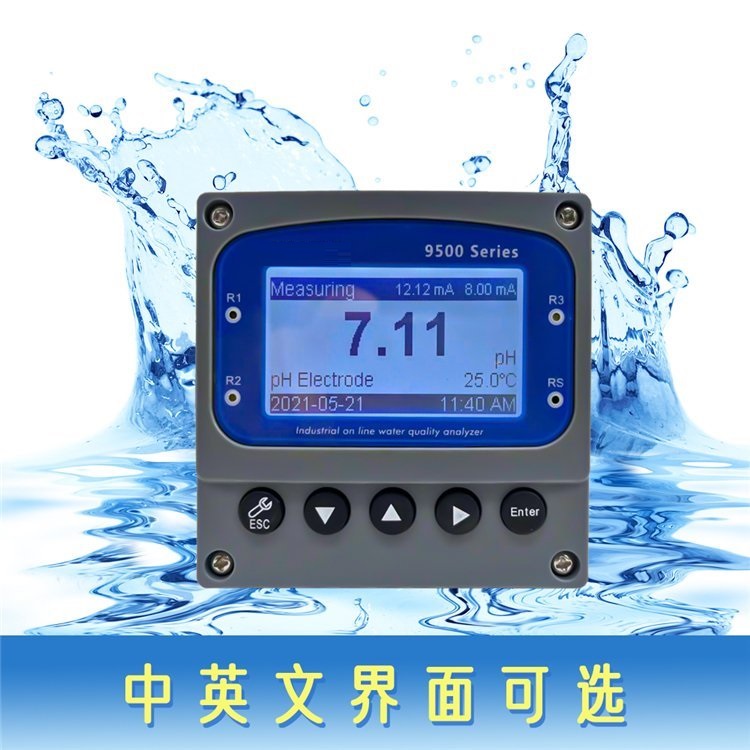
Independent measurement validation matters more than vendor-published accuracy. Check whether the analyzer’s parameter set (pH, conductivity, DO, ORP, turbidity, NH3-N) has been benchmarked against ASTM, ISO, or EPA reference methods in the concentration range you actually operate in. Shanghai ChiMay publishes ISO 7027 alignment for turbidity and IEC 60746 alignment for conductivity electrodes.
Connectivity
Multi-parameter analyzers should expose at least two of the following natively: Modbus RTU, Modbus TCP, HART, MQTT, and REST. Gateway-only support adds latency and a failure point. Look for MQTT Sparkplug B if you are consolidating data into a unified namespace for digital twin work.
Cybersecurity
This is the criterion procurement teams most often under-evaluate. Ask the vendor for:
- Their product security policy (PSIRT contact, CVE disclosure cadence).
- Evidence of signed firmware and secure boot.
- Support for device certificates for mutual TLS to the cloud.
- A clear statement on data residency options.
Firmware Update and Lifecycle
A “cloud-connected” sensor that has not received a firmware update in 24 months is a frozen asset. Require the vendor to commit to:
- Quarterly firmware reviews.
- Five-year guaranteed feature updates.
- A documented end-of-support timeline.
Calibration Program
Calibration sustains accuracy long after deployment. Strong vendors offer several options: NIST-traceable calibration kits, factory recalibration with rapid turnaround, and field calibration services. Shanghai ChiMay provides standard buffer kits aligned with NIST-traceable references for the in-line pH electrode and conductivity meter families.
Cloud Platform Openness
A common shortlist failure is selecting a vendor whose “cloud” is a closed garden. Diligence items:
- Verify data export in standard formats (Parquet, CSV, JSON).
- Confirm API rate limits are adequate for your telemetry frequency.
- Confirm the option to bring your own cloud (BYOC) if internal data governance requires it.
Local Service and Spare Parts
Even the most reliable sensor will need parts. Map vendor spare-parts depots, average lead times to your sites, and on-site technician availability. For Asia-Pacific buyers, Shanghai ChiMay maintains regional service inventory and accelerated turnaround for the multi-parameter sensor and turbidity tester product lines.
Total Cost of Ownership
Build a 10-year TCO model covering unit price, installation, calibration consumables, expected replacement cycle, firmware update fees, cloud subscription, and decommissioning. Procurement teams routinely find that the lowest unit-price vendor finishes third or fourth on TCO.
Pilot Phase After Shortlist
The shortlist is the gate to a structured pilot, not the end of procurement. Best practice is to deploy two of the top three vendors on parallel skid systems with identical water samples and run the comparison for 60 to 90 days. Measure drift, alarm fidelity, and cloud uptime. Shanghai ChiMay 4-in-1 multi-parameter sensors are designed to support side-by-side pilot deployments with quick-connect process couplings.
Industry Outlook
The multi-parameter analyzer market will keep consolidating around platforms that combine standardized hardware with modular cloud subscriptions. Expect three more procurement shifts by 2028: more weight on the carbon footprint of analyzer manufacturing, wider use of digital product passports to support circular economy regulations, and growing demand for edge AI at the sensor itself rather than cloud-side analytics alone.
What to Insist on Before Award
A shortlist built on the eight-criterion framework yields three to five vendors whose products are genuinely engineered for cloud-connected operation. The discipline matters because a cloud-connected analyzer is a 10-year commitment, not a single purchase. Procurement officers who follow the framework — and who insist on a structured pilot before award — avoid the most common smart-water investment failures. Shanghai ChiMay multi-parameter analyzer products are specified to clear each of the eight criteria, which shortens the shortlist work for utilities and industrial water managers building out IoT monitoring.