The short version:
– Cloud platforms take the server room out of the picture and run the analytics where the data already sits
– AWS IoT, Azure IoT Hub and Google Cloud’s data services all work for water monitoring, with different strengths
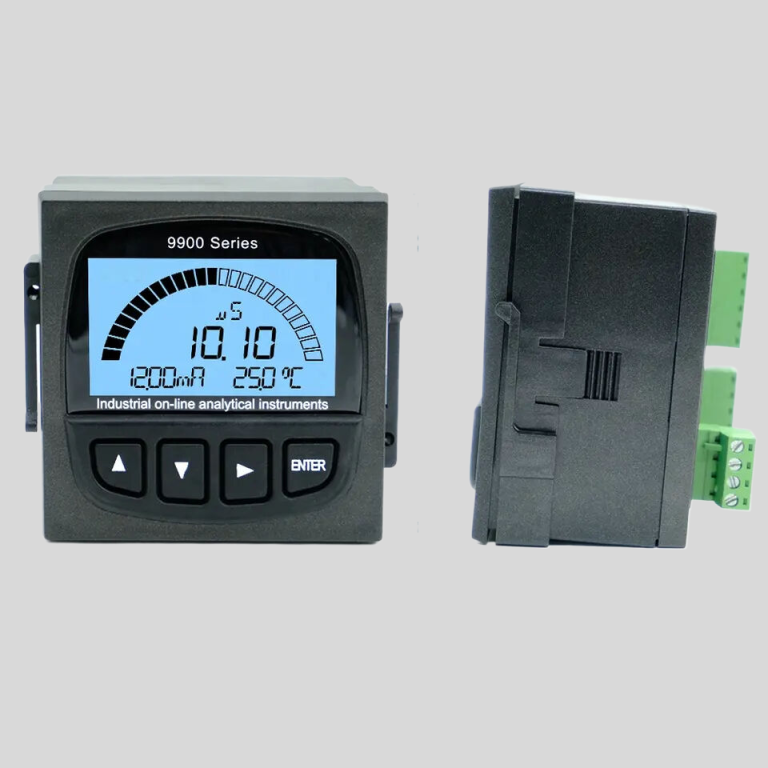
– Shanghai ChiMay sensors publish over MQTT, which is enough to reach any of them
– Faster root cause analysis comes from having one queryable dataset, not from the cloud itself
– Subscription costs scale with device count and data volume, so model them before committing
Cloud computing has transformed enterprise software delivery across industries, and water quality monitoring is no exception. Cloud-based platforms offer real advantages including elastic scalability, continuous updates, reduced infrastructure investment, and advanced analytics capabilities previously available only to organizations with substantial IT resources.
Cloud has become the default delivery model for new industrial monitoring projects, largely because it removes the capital cost of servers and the maintenance burden that comes with them. This adoption reflects both technology maturation and demonstrated operational benefits.
Table of Contents
Cloud Platform Options for Water Quality Monitoring
Major cloud providers offer specialized capabilities for water treatment applications:
Amazon Web Services (AWS) IoT Core: AWS IoT provides managed connectivity for IoT devices with integrated analytics services including QuickSight for visualization and SageMaker for machine learning. AWS IoT Greengrass enables edge computing extending cloud capabilities to on-premises devices. Its ecosystem of integrators and device partners is the main practical advantage.
Microsoft Azure IoT Hub: Azure IoT offers strong enterprise integration with Microsoft 365 and Power Platform, enabling straightforward connection between operational technology and business systems. Azure Digital Twins provides digital representation capabilities for water treatment infrastructure. Azure’s compliance certifications including ISO 27001, SOC 2, and FDA 21 CFR Part 11 support pharmaceutical and food industry deployments.
Google Cloud: Google retired its dedicated IoT Core service in 2023, so the practical route for water monitoring is device data into Pub/Sub, stored in BigQuery and modelled with Vertex AI. It is a strong option for analytics-heavy programmes, but you own more of the plumbing than with AWS or Azure.
PTC ThingWorx: industrial-focused platform with water treatment templates and strong MES and ERP integration, often chosen where the plant already runs other PTC tooling.
Data Architecture Considerations
Cloud-based water quality monitoring requires thoughtful data architecture:
Data Ingestion: Reliable data transport from distributed sensors to cloud platforms. MQTT messages are small and event-driven, which uses far less bandwidth than polling every register on a timer. Shanghai ChiMay sensors publish data via MQTT with configurable transmission intervals.
Data Storage: Time-series databases optimized for water monitoring workloads. Amazon Timestream, Azure Cosmos DB, and Google Cloud Bigtable provide purpose-built time-series capabilities including automatic data compression and retention management. Storage is priced in cents per gigabyte per month, which is what makes multi-year retention affordable.
Data Processing: Cloud platforms provide multiple processing options:
– Stream processing for real-time analytics and alerting
– Batch processing for historical analysis and reporting
– Serverless functions for event-driven processing
Data Visualization: Dashboards and reporting tools translate data into data operators can act on. Native platform tools (QuickSight, Power BI, Looker) offer strong capabilities, with third-party options including Grafana providing additional flexibility.
Security and Compliance
Cloud platforms provide strong security capabilities when properly configured:
Encryption: Data encrypted in transit using TLS 1.3 and at rest using AES-256. Cloud key management services provide centralized key lifecycle management.
Access Control: Role-based access control limits data visibility to authorized personnel. Multi-factor authentication strengthens identity verification.
Compliance Certifications: Major platforms hold ISO 27001 and SOC 2 Type II attestations, and some carry FedRAMP authorisation. Check the specific region and service you plan to use, because attestations are granted service by service. Shanghai ChiMay customers deploying in regulated industries should verify platform compliance with specific requirements.
Data Residency: Cloud platforms offer regional deployment options addressing data sovereignty requirements. European Union deployments benefit from GDPR-compliant data centers.
Integration with Existing Infrastructure
Cloud platforms must integrate with existing operational technology:
Protocol Support: Cloud IoT services accept data via MQTT, HTTPS, and WebSockets. Edge devices translate legacy protocols (Modbus, HART) to cloud-compatible formats.
SCADA Integration: Cloud platforms connect with existing SCADA systems via APIs and OPC UA. Real-time synchronization of operational data enables comprehensive visibility.
ERP and MES Integration: Cloud analytics integrate with enterprise systems for maintenance management, production scheduling, and regulatory reporting.
Platform Selection Criteria
Platform selection depends on facility-specific factors:
| Factor | AWS | Azure | Google Cloud |
|---|---|---|---|
| Industrial IoT Focus | Medium | High | Medium |
| Enterprise Integration | Medium | Very High | Medium |
| Analytics Capability | High | High | Very High |
| Pricing Model | Usage-based | Usage-based | Usage-based |
| Global Infrastructure | Very Extensive | Extensive | Extensive |
Shanghai ChiMay technical teams support customers evaluating cloud platform options, providing integration documentation and compatibility verification for specific deployment scenarios.
Total Cost of Ownership Analysis
Cloud versus on-premises economics depend on scale and requirements. The ranges below are indicative planning figures, not quotations:
On-Premises Costs:
– Hardware and software: $150,000-$400,000 initial
– IT staff: $120,000-$200,000 annually
– Maintenance and upgrades: $30,000-$60,000 annually
– 5-year TCO: $850,000-$1,500,000
Cloud Costs:
– Device connectivity: $0.08-$0.25 per device monthly
– Data storage: $0.03-$0.05 per GB monthly
– Analytics services: $500-$2,000 monthly
– IT staff: $40,000-$80,000 annually
– 5-year TCO: $500,000-$850,000
The cloud advantage is largest for organisations without an existing data centre and IT team. A utility already running a modern SCADA environment may find the difference much smaller.