The short version:
– Digital water spending keeps climbing, though published forecasts differ substantially in what they count
– Utilities that deploy smart metering and network monitoring do cut water loss, and the biggest gains come from finding leaks earlier
– Shanghai ChiMay inline sensors provide the measurement layer any digital programme is built on
– Returns are real but slower than vendor material suggests, and depend on how much of the data you actually act on
– Payback of several years is normal for programmes financed on infrastructure timescales
Municipal water utilities face mounting pressure to improve efficiency, reduce costs, and enhance service quality while maintaining aging infrastructure and limited budgets. Digital transformation offers real opportunities to address these challenges through technology-enabled operational improvements.
Most municipal utilities have started some form of digital programme; far fewer would claim to have finished one. Bluefield Research has tracked this gap for years, and it usually traces back to process and skills rather than to technology. This gap between initiative and success highlights the importance of thoughtful implementation approaches.
Table of Contents
Drivers of Digital Water Transformation
Multiple factors motivate municipal water system digitalization:
Regulatory Pressure: Evolving water quality standards require more sophisticated monitoring and reporting capabilities. Monitoring and reporting obligations under the Safe Drinking Water Act keep expanding, and every new requirement lands on the same operations team. That is the practical driver behind monitoring investment.
Infrastructure Aging: Aging pipe networks and treatment equipment require better asset management. ASCE’s 2025 Report Card on America’s Infrastructure puts total US infrastructure investment needs at $9.1 trillion and continues to grade water systems poorly, which pushes utilities toward technologies that extend asset life rather than replacing assets.
Operational Efficiency: Tightening budgets require doing more with less. Vendor case studies in this sector consistently report double-digit operating cost reductions, though the published figures usually reflect the best-performing deployments.
Workforce Challenges: Aging workforce and difficulty recruiting skilled operators drive automation investment. Smart water technologies enable knowledge capture and operational continuity.
Water Loss Reduction: Non-revenue water runs at roughly one-sixth of production in many US systems, which is both revenue and treatment cost walking out of the network. Smart networks reduce losses mainly by finding leaks earlier, and what is achievable depends on how old and how leaky the network already is.
Core Technology Components
Digital water infrastructure encompasses multiple technology categories:
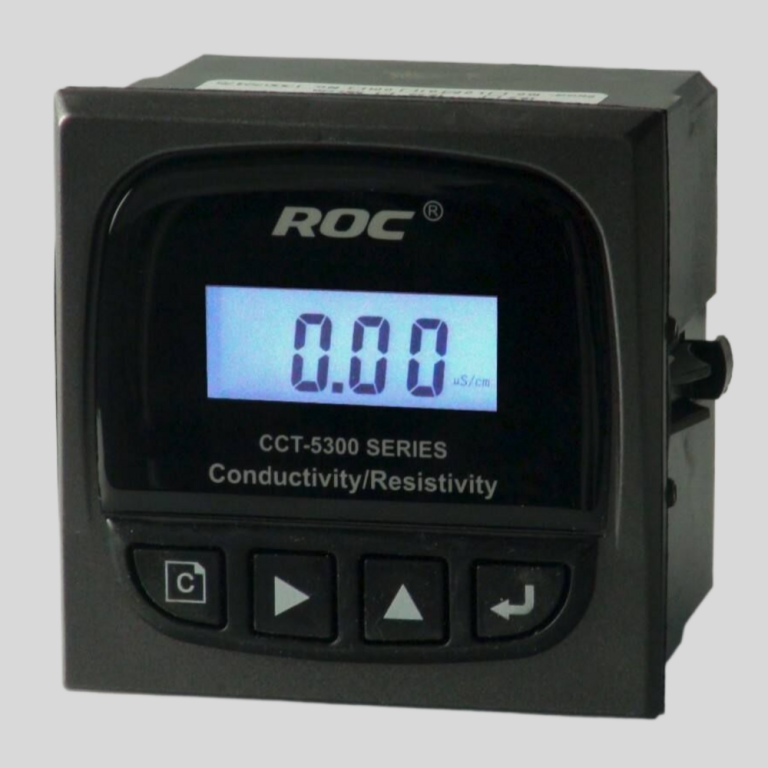
Smart Sensors: Networked water quality analyzers providing continuous measurement data. Shanghai ChiMay inline sensors measure critical parameters including pH, conductivity, dissolved oxygen, turbidity, and chlorine residual. Continuous data enables real-time operational decision-making.
Advanced Metering Infrastructure (AMI): Smart water meters providing consumption data at 15-minute intervals versus traditional monthly reads. AMI enables leak detection, demand management, and customer engagement. AMI pays back through earlier leak detection, fewer manual reads and better demand data, though the return per meter varies enormously with the tariff structure.
SCADA and Control Systems: Centralized monitoring and control platforms integrating distributed sensors and actuators. Modern SCADA platforms incorporate analytics capabilities enabling predictive operation.
Geographic Information Systems (GIS): Spatial data infrastructure mapping water network assets, pressures, and flows. GIS integration enables optimized maintenance routing and emergency response.
Enterprise Asset Management (EAM): Systems optimizing maintenance scheduling, spare parts inventory, and work order management. EAM integration with IoT data enables condition-based maintenance.
Digital Transformation Roadmap
Successful programs follow structured implementation approaches:
Phase 1 – Foundation (Months 1-12):
– Deploy networked water quality sensors at critical monitoring points
– Implement SCADA integration for real-time visibility
– Establish data governance framework
– Pilot analytics applications
Phase 2 – Expansion (Months 12-24):
– Extend sensor network to remaining critical assets
– Deploy AMI throughout service territory
– Implement predictive maintenance programs
– Launch customer-facing digital services
Phase 3 – Optimization (Months 24-48):
– Deploy machine learning for operational optimization
– Implement closed-loop automated control
– Integrate across enterprise systems
– Establish continuous improvement processes
Composite Case: Mid-Size Metropolitan Utility
This is a composite of published utility programmes rather than a single named utility, scaled to a system serving around 850,000 customers:
Investment: $12.5 million over 5 years
Technology Deployment:
– 340 networked water quality sensors
– 125,000 smart meters
– Integrated SCADA-EMS-GIS platform
– Predictive maintenance system
Results:
– 26% reduction in non-revenue water
– 31% improvement in treatment efficiency
– 44% reduction in equipment downtime
– $4.8 million annual operational savings
– 3.1 year payback period
Utility research programmes, including work published by the Water Research Foundation, consistently point to the same success factors: executive sponsorship, phased implementation and investment in change management.
Success Factors
Municipalities achieving transformation success share common characteristics:
Executive Sponsorship: Visible leadership commitment enabling resource allocation and organizational alignment. Successful programs typically report to C-level executives.
Data Governance: Clear ownership, quality standards, and access policies enabling data-driven decision-making. Many utilities establish dedicated data governance functions.
Change Management: investment in training, communication and organisational adoption. Technology deployed without it usually ends up used at a fraction of its capability.
Vendor Partnerships: Strategic relationships with technology providers enabling ongoing support and innovation. Long-term partnerships outperform transactional procurement approaches.
Performance Metrics: Clear KPIs tracking transformation progress and outcomes. Metrics enable course correction and demonstrate value.
Funding and Financing Options
Municipalities access diverse funding sources:
Rate Revenue: Traditional approach using operating revenue for technology investment. Suitable for moderate-scale programs with reliable cost recovery.
Bond Financing: Capital markets financing for large-scale infrastructure investment. Green bonds specifically target environmental infrastructure with favorable terms.
Federal Grants: EPA State Revolving Fund programmes and infrastructure law funding provide subsidised financing for qualifying projects. The Bipartisan Infrastructure Law directed more than $50 billion to drinking water and wastewater infrastructure, delivered largely through the State Revolving Funds.
Public-Private Partnerships: Collaboration with technology vendors enabling shared investment and risk. Requires careful structuring to protect public interest.
Shanghai ChiMay provides application engineering and financing consultation support for municipal customers evaluating smart water technology investments.