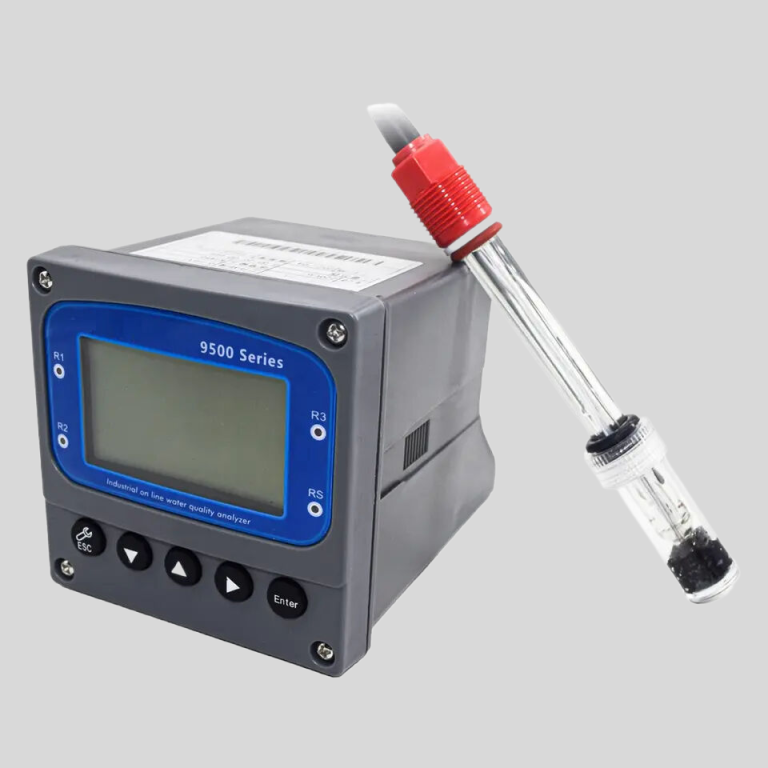
Digital twins have crossed over from pilot-project novelty to something water utilities actually budget for. The idea is simple enough: build a dynamic virtual replica of your treatment facility that mirrors real-time operations, then run scenarios against it before you change anything in the physical plant. What has made it practical is the sensor layer — plants already generating clean data from inline instruments can feed a twin without rebuilding their instrumentation from scratch.
Table of Contents
What is Digital Twin Technology for Water Treatment?
A digital twin for water treatment combines IoT sensors, machine learning algorithms, and cloud computing into a working virtual model of the treatment process. It typically pulls from infrastructure you already have — PI Systems, SCADA networks, and the instruments hanging off them.
The core components:
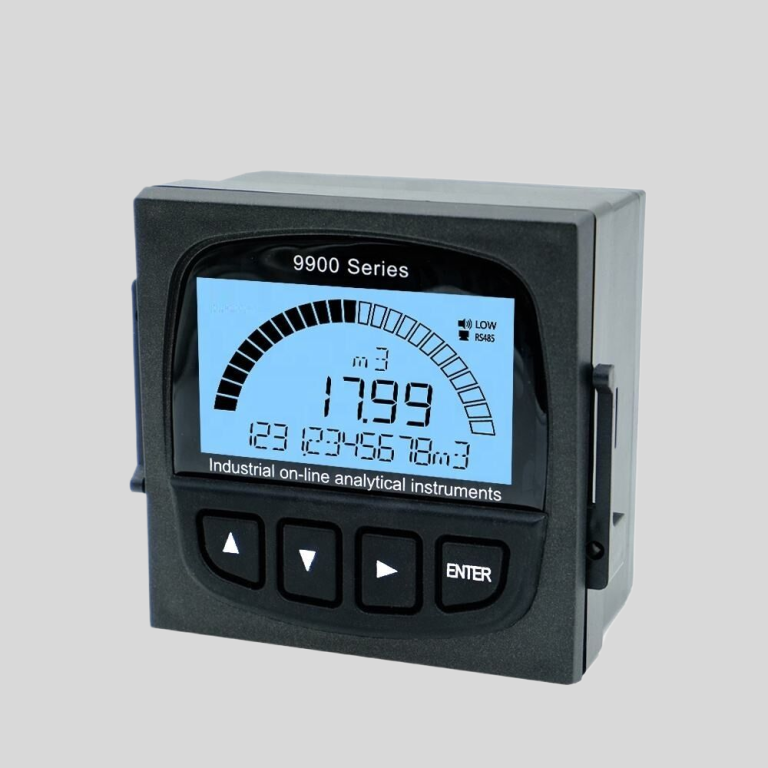
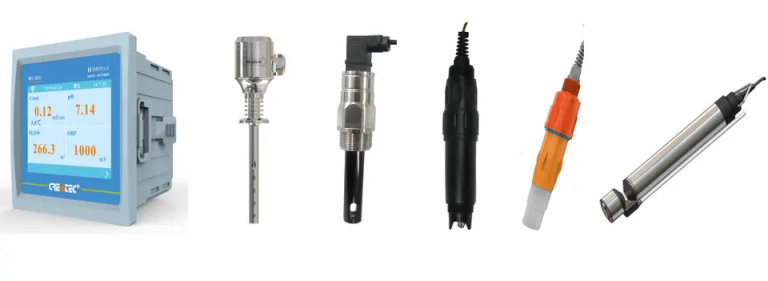
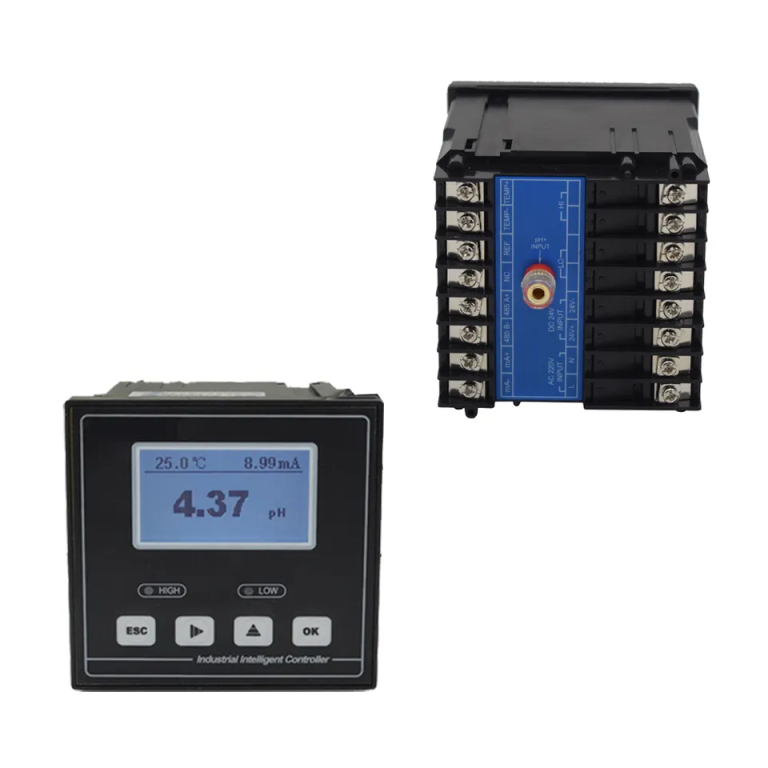
- Real-time data acquisition from inline pH meters, conductivity sensors, and dissolved oxygen transmitters
- Predictive analytics, usually LSTM-type neural networks trained on historical process data
- 3D visualization of treatment tanks, filters, and distribution networks
- Scenario simulation for operational optimization
For plant operations managers, the value is testing changes without risking the effluent permit. You can simulate a 20% throughput increase and see what it does to chemical consumption, energy usage, and effluent quality — before you commit to it on the floor.
Benefits of Implementing Digital Twins
1. Energy Optimization
Aeration systems, pumping stations, and chemical dosing are where the energy goes in most plants, and they’re also where a twin earns its keep. Operators who have wired their twins into aeration control report real energy savings — though how much depends heavily on how badly the plant was running before. A plant already tuned by a sharp operations team has less to give.
2. Chemical Efficiency
Run different dosing scenarios against the model and you can trim coagulant and disinfectant use without gambling on jar-test results alone. Less chemical spend, less sludge, fewer surprises at the outfall.
3. Predictive Maintenance
Continuous monitoring plus anomaly detection means you see equipment failures forming weeks out instead of hours out. The published work on predictive maintenance all points the same direction: unplanned downtime drops substantially once failure signatures — vibration drift, motor current changes, efficiency decay — are being tracked automatically.
Integrating Water Quality Sensors with Digital Twins
The foundation of any effective digital twin is reliable sensor data. The critical inputs:
- Inline pH sensors for acid-base monitoring
- Conductivity meters for total dissolved solids tracking
- Dissolved oxygen transmitters for aeration control
- Turbidity testers for filtration optimization
- Residual chlorine transmitters for disinfection monitoring
These connect through the protocols already standard in the industry — Modbus RTU, Profibus, OPC UA — and feed the twin in real time. If your instruments can’t talk to your historian cleanly, sort that out before you shop for a twin platform.
Implementation Considerations
Before deploying digital twin technology:
- Assess existing infrastructure — evaluate current SCADA systems and sensor networks first
- Define objectives — energy savings, quality improvement, or operational efficiency; pick one and measure it
- Start small — a single process unit, then scale what works
- Ensure data quality — the twin is only as good as its inputs. Bad sensor data produces a confident model of nothing
That last point is the one most teams underestimate. Calibrated, drift-checked sensors matter more than the choice of twin software.
The Future of Water Treatment Digital Twins
What’s coming next:
- Generative AI for automatic scenario generation
- Autonomous optimization without human intervention
- Cross-facility learning through federated machine learning
- Blockchain-verified water quality data for regulatory compliance
Utilities that get their sensor layer and data infrastructure in order now will be the ones that can actually use these tools when they mature.
The practical first step hasn’t changed: deploy high-quality inline water quality sensors that provide a solid foundation for digital twin modeling.