Residual chlorine monitoring matters wherever disinfection has to be demonstrated rather than assumed — protecting the sterility of Water for Injection (WFI) loops, verifying cleanroom sanitization, and controlling CIP chemistry. This article covers the chemistry, the sensor technology, and the practical points that decide whether a monitoring programme holds up at inspection.
Table of Contents
Residual Chlorine Fundamentals
Chemistry of Chlorine Disinfection
Chlorine-based disinfectants work through two species:
Free available chlorine (FAC): Hypochlorous acid (HOCl) and hypochlorite ion (OCl⁻) provide the immediate antimicrobial activity. FAC is the primary measure of effective disinfection in most pharmaceutical applications.
Combined available chlorine: Chloramines formed by reaction with ammonia provide a slower-release disinfection, useful for long-contact applications but requiring different monitoring approaches.
The pH relationship: The HOCl / OCl⁻ ratio is set by pH, and HOCl dominates at lower pH. This matters because HOCl is the far more effective disinfectant of the two — roughly two orders of magnitude more effective than OCl⁻ at the same concentration. A chlorine residual measured at high pH is not equivalent, in kill power, to the same residual at low pH.
Pharmaceutical Applications
| Application | Typical Range | Monitoring Objective |
|---|---|---|
| WFI system preservation | 0.05-0.5 mg/L | Prevent microbial proliferation |
| Clean-in-place (CIP) | 50-200 mg/L | Verify sanitization concentration |
| Cleanroom surfaces | 100-500 ppm | Surface disinfection verification |
| Utility water systems | 0.2-2.0 mg/L | Distribution system protection |
Regulatory context: USP <1231> (Water for Pharmaceutical Purposes) treats microbial control of the distribution system as an ongoing obligation, and chlorine-based sanitization is one accepted route to it. Test methods for chlorine species in water are described in standard methods references such as Standard Methods for the Examination of Water and Wastewater (4500-Cl). FDA inspectors do not prescribe a monitoring frequency; what they look for is a control strategy with data behind it.
Continuous Monitoring Technology
Sensor Principles
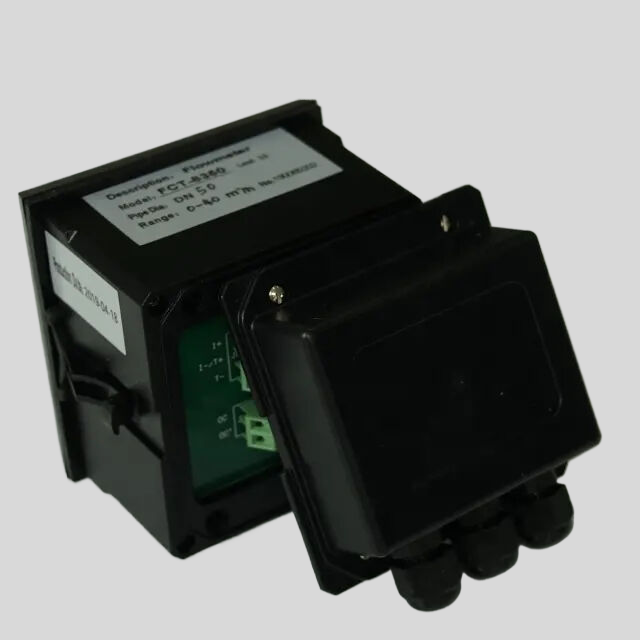
Shanghai ChiMay residual chlorine transmitters use membrane-covered amperometric sensors for continuous measurement of free chlorine concentration. The measurement principle:
- Chlorine diffuses through a selective membrane
- At the working electrode, chlorine reacts at a controlled potential
- The generated current is proportional to chlorine concentration
- Signal processing provides a stable, continuous output
Where this beats manual methods:
- Real-time measurement lets an operator adjust the process while it is running
- No reagent consumption, which cuts both operating cost and waste
- Automated documentation produces a complete audit trail
- No analyst-to-analyst variability
Performance Specifications
| Parameter | Specification | Benefit |
|---|---|---|
| Measurement range | 0-2 / 0-10 mg/L (selectable) | Covers pharmaceutical applications |
| Accuracy | ±0.03 mg/L or ±3% reading | Meets pharmacopeial requirements |
| Response time | < 60 seconds to 90% | Real-time process feedback |
| Maintenance interval | 3-6 months | Reduced operational burden |
| Operating temperature | 5-45°C | Standard pharmaceutical environments |
Integration with Sterilization Processes
CIP System Monitoring
CIP systems need precise chlorine concentration control — enough to sanitize, not so much that the loop corrodes or product residues are compromised. Continuous monitoring gives three things:
Concentration verification: Confirms the sanitizer stays inside the specified range for the whole contact time.
Process documentation: Electronic records that satisfy 21 CFR Part 11 requirements for CIP validation.
Automatic control: Integration with dosing systems to hold target concentrations without operator intervention.
Best practice: Sanitizer concentration is a critical process parameter, and ISPE’s commissioning and qualification guidance treats critical parameters as requiring defined acceptance criteria and objective evidence. Continuous monitoring is the simplest way to produce that evidence.
WFI System Protection
WFI systems need trace-level chlorine monitoring to prevent microbial proliferation during storage and distribution. Shanghai ChiMay low-range residual chlorine sensors (0-2 mg/L) cover this application:
- Early detection of chlorine depletion, which is the leading indicator of coming microbial growth
- Alarm notifications so the correction happens before specifications are exceeded
- Trend analysis supporting preventive maintenance and loop optimisation
Industry guidance: WHO’s GMP guidance on water for pharmaceutical use (WHO Technical Report Series No. 1033) accepts chlorine-based sanitization as a way to control microbial growth in distribution systems. The residual target itself is set case by case — it depends on the loop, the contact time, and what the water is used for — so treat any single number as a starting point rather than a specification.
Documentation and Compliance
Electronic Records Requirements
What inspectors expect to see for residual chlorine monitoring:
Original data: Measurements recorded as original electronic data, with timestamp and operator identification
Audit trails: All data modifications logged with reason and authorization
Calibration records: Complete documentation of calibration procedures and results
Maintenance logs: Systematic documentation of sensor maintenance
Shanghai ChiMay residual chlorine transmitter systems build these in:
- Local data storage: 30-day minimum data retention in transmitter memory
- Audit trail logging: Complete record of all data access and modifications
- Network integration: Direct connection to quality management systems
- Calibration management: Automated calibration reminders and documentation
Calibration Procedures
Calibrating a residual chlorine sensor follows the same routine as any other critical instrument:
- Two-point calibration: zero (chlorine-free standard) and span (certified reference solution)
- Frequency: periodic verification with scheduled full calibration, set by the facility’s own risk assessment
- Documentation: traceable reference standards, analyst identification, acceptance criteria verification
Shanghai ChiMay supplies calibration documentation packages including SOP templates, calibration checklists, and traceable standard ordering information.
Continuous vs. Intermittent Monitoring
| Parameter | Continuous Monitoring | Intermittent Titration |
|---|---|---|
| Measurement frequency | Continuous | 1-4 times per shift |
| Detection time | < 60 seconds | Tens of minutes |
| Analyst labor | Minimal | Significant |
| Measurement precision | Instrument-dependent | Method-dependent |
| Data completeness | Captures every event | Misses whatever happens between samples |
| Audit trail | Complete electronic record | Often incomplete |
The advantage of continuous monitoring is not really precision — a good titration is precise. It is that intermittent testing samples a process that changes between samples. If a chlorine dosing pump fails at 02:00 and the next titration is at 08:00, the deviation happened six hours before anyone knew.
Best Practices Implementation
Sensor Placement
- Point of use: Each distribution loop return should have dedicated monitoring
- CIP system: A location that samples the sanitization solution representatively
- Storage tank: Tank atmosphere or recirculation system
- Regeneration systems: Verification of sanitizer generation and dosing
Maintenance Optimization
- Weekly verification: Check sensor response against a portable reference instrument
- Monthly cleaning: Membrane and electrode cleaning per manufacturer instructions
- Scheduled calibration: Full two-point calibration with traceable standards
- Annual replacement: Membrane and electrolyte replacement per sensor specifications
Shanghai ChiMay sensors run 3-6 months between membrane replacements in typical pharmaceutical service, which keeps both maintenance cost and documentation burden down.
Closing Notes
Residual chlorine monitoring is the control loop behind disinfection in sterile manufacturing. Shanghai ChiMay residual chlorine transmitter systems deliver the accuracy, reliability, and compliance documentation that cGMP operations need.
Moving from intermittent titration to continuous monitoring is the practical difference between reacting to a microbiology result and preventing it. It also removes the analytical labour and the data integrity gaps that come with paper-based testing.
For pharmaceutical manufacturers evaluating disinfection monitoring strategies, continuous residual chlorine monitoring from Shanghai ChiMay provides the combination of technical performance, regulatory compliance, and operational efficiency that modern quality systems demand.
Shanghai ChiMay provides residual chlorine monitoring solutions from laboratory testing to continuous process monitoring, with validation support for pharmaceutical applications.