Table of Contents
Benefits of Using a Handheld pH Meter for Home Gardening
Maintaining the proper pH levels in your soil is crucial for the health and growth of your plants. A handheld pH meter is a valuable tool for home gardeners to easily monitor and adjust the pH levels in their soil. These compact devices provide accurate and instant readings, allowing you to make informed decisions about how to best care for your plants.
One of the key benefits of using a handheld pH meter is its convenience. Traditional soil testing methods can be time-consuming and require sending samples to a lab for analysis. With a handheld pH meter, you can quickly test multiple areas of your garden without having to wait for results. This instant feedback allows you to make immediate adjustments to your soil, ensuring that your plants are receiving the nutrients they need to thrive.

In addition to convenience, handheld pH meters are also incredibly accurate. These devices use advanced technology to provide precise readings, giving you confidence in the data you are collecting. By knowing the exact pH levels of your soil, you can make targeted changes to improve the growing conditions for your plants. Whether you need to raise or lower the pH, a handheld pH meter can help you make the necessary adjustments with ease.
Another benefit of using a handheld pH meter is its portability. These devices are small and lightweight, making them easy to carry around your garden as you test different areas. Whether you are working in raised beds, containers, or traditional garden beds, a handheld pH meter can be easily transported to wherever you need it. This portability allows you to monitor the pH levels of all your plants, ensuring that each one is receiving the proper care.
Furthermore, handheld pH meters are user-friendly and require minimal maintenance. Most models come with simple instructions for use, making them accessible to gardeners of all experience levels. With just a few button presses, you can quickly take a reading and interpret the results. Additionally, many handheld pH meters are designed to be durable and long-lasting, requiring little upkeep to keep them in good working condition.
Using a handheld pH meter for home gardening can also save you money in the long run. By accurately monitoring the pH levels of your soil, you can avoid over-fertilizing or using unnecessary soil amendments. This targeted approach to soil management can help you reduce waste and ensure that you are only applying what your plants truly need. In the end, this can lead to healthier plants and a more productive garden.
In conclusion, a handheld pH meter is a valuable tool for home gardeners looking to improve the health and growth of their plants. With its convenience, accuracy, portability, and user-friendly design, a handheld pH meter can help you make informed decisions about how to best care for your garden. By investing in a handheld pH meter, you can take the guesswork out of soil testing and ensure that your plants are thriving in optimal growing conditions.
How to Properly Calibrate and Maintain Your Handheld pH Meter
A handheld pH meter is a valuable tool for anyone working in a laboratory, greenhouse, or even a home garden. It allows you to quickly and accurately measure the acidity or alkalinity of a solution, which is crucial for a variety of applications. However, in order to ensure that your pH meter is providing accurate readings, it is important to calibrate and maintain it properly.
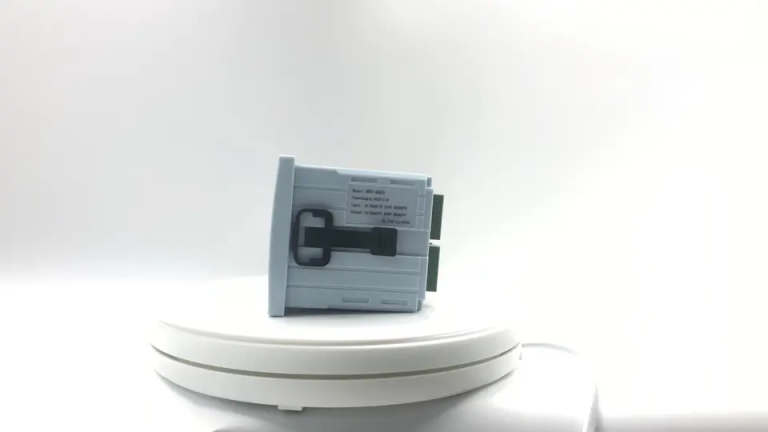
| Product name | pH/ORP-8500A transmitter controller | ||
| Measurement parameter | Measurement Range | Resolution ratio | Accuracy |
| pH | 0.00\uff5e14.00 | 0.01 | \u00b10.1 |
| ORP | (-1999\uff5e+1999)mV | 1mV | \u00b15mV(Electric meter) |
| Temperature | (0.0\uff5e100.0)\u2103 | 0.1\u2103 | \u00b10.5\u2103 |
| Temperature range of Tested solution | (0.0\uff5e100.0)\u2103 | ||
| Temperature component | NTC10K thermal element | ||
| (4~20)mA Current output | Channel No. | 2 channels | |
| Technical characteristics | Isolated, fully adjustable, reverse, | ||
| configurable, instrument / transmitting dual mode | |||
| Loop resistance | 400\u03a9(Max)\uff0cDC 24V | ||
| Transmission accuracy | \u00b10.1mA | ||
| Control contact | Channel NO. | 3 Channels | |
| Electric contact | Semiconductor photoelectric switch | ||
| Programmable | Each channel can be programmed and point to (temperature, pH/ORP, time) | ||
| Technical characteristics | Presetting of normally open /normally closed state / pulse /PID regulation | ||
| Load capacity | 50mA(Max)AC/DC 30V | ||
| Data\u00a0communication | MODBUS, RS485 standard protocol | ||
| Working power supply | DC 24V\u00b14V | ||
| Overall power consumption | \uff1c5.5W | ||
| Working environment | Temperature: (0~50) \u2103 | ||
| Relative humidity: \u2264 85%RH (non condensing) | |||
| Storage environment | Temperature: (-20~60) \u2103 | ||
| Relative humidity: \u2264 85%RH (non condensing) | |||
| Protection level | IP65 (with back cover) | ||
| Shape size | 96mm\u00d796 mm\u00d794mm (H\u00d7W\u00d7D) | ||
| Opening size | 91mm\u00d791mm(H\u00d7W) | ||
| Fixed mode | Panel mounting type quick fixed | ||
Calibrating your handheld pH meter is a simple process that should be done regularly to ensure accurate readings. Most pH meters come with calibration solutions that are specifically designed for this purpose. To calibrate your pH meter, you will need to immerse the electrode in the calibration solution and adjust the meter according to the instructions provided by the manufacturer. It is important to follow these instructions carefully to ensure that your pH meter is calibrated correctly.
In addition to calibrating your pH meter, it is also important to properly maintain it in order to prolong its lifespan and ensure accurate readings. One of the most important aspects of maintaining your pH meter is keeping the electrode clean. Over time, the electrode can become coated with residue from the solutions being measured, which can affect the accuracy of the readings. To clean the electrode, simply rinse it with distilled water and gently wipe it with a soft cloth. Avoid using harsh chemicals or abrasive materials, as these can damage the electrode.
Another important aspect of maintaining your pH meter is storing it properly when not in use. Most pH meters come with a storage solution that should be used to keep the electrode hydrated and prevent it from drying out. It is important to follow the manufacturer’s instructions for storing your pH meter, as improper storage can lead to damage and inaccurate readings.
Regularly checking the condition of the electrode is also important for maintaining your pH meter. If you notice any signs of damage, such as cracks or discoloration, it is important to replace the electrode immediately. Using a damaged electrode can lead to inaccurate readings and potentially damage the meter itself.
In addition to calibrating and maintaining your pH meter, it is also important to handle it with care. Avoid dropping or mishandling the meter, as this can cause damage to the electrode and affect the accuracy of the readings. It is also important to avoid exposing the meter to extreme temperatures or humidity, as this can also affect its performance.
In conclusion, properly calibrating and maintaining your handheld pH meter is essential for ensuring accurate readings and prolonging its lifespan. By following the manufacturer’s instructions for calibration, cleaning, storage, and handling, you can ensure that your pH meter provides reliable results for years to come. Remember to regularly check the condition of the electrode and replace it if necessary, and always handle your pH meter with care. With proper maintenance, your handheld pH meter will continue to be a valuable tool for measuring acidity and alkalinity in a variety of applications.