title: “Turning 15–25% Energy Savings Into a Bankable Water Utility Case: A Shanghai ChiMay Strategy Note”
date: 2026-07-13
perspective: C-Level / Decision Maker
theme: AI & Digital Twin-Driven Water Operations
Table of Contents
Why 15–25% Savings Is Not Automatically a Bankable Number
A percentage saving quoted in a conference slide is not the same as a percentage saving that a bank will lend against. Bankability requires that the saving be measured against a documented baseline, verified by an independent party, and demonstrated over a period long enough to represent seasonal and operating variability.
Water utilities that intend to finance their AI programs through green loans, sustainability-linked loans, or municipal bonds must build the evidence chain that turns a claimed saving into a financed saving. That evidence chain begins with the sensor layer.
Structuring the Baseline
The savings baseline is the operating profile of the plant before AI enablement. Financing structures typically require:
- At least 12 months of pre-AI operating data, ideally 24 months to cover seasonal variability.
- Documented weather and influent data, so that normalization is possible when comparing pre- and post-AI performance.
- Clear definitions of the energy, chemical, and effluent variables being measured.
- Independent baselining, often conducted by an engineering consultancy under an agreed-upon procedure.
Utilities that lack this baseline discipline typically discover, during due diligence, that they cannot prove the saving even when it is real. The financing structure then defaults to a smaller, less contested number.
Instrumentation Requirements to Prove the Saving
Proving an energy saving requires that the plant measure:
- Electrical energy consumption at the level of individual blowers, pumps, and mixers.
- Aeration airflow at the process zone level.
- Effluent quality at the ammonia, nitrate, phosphate, dissolved oxygen, and suspended solids level.
- Chemical dosing at the coagulant, disinfectant, and pH adjustment level.
- Influent flow and quality to normalize the saving against loading.
The sensor field that supports this measurement stack is the same sensor field that feeds the AI model, which is why financing structures increasingly evaluate the sensor field with the same rigor as the AI platform.
Verification Regimes That Banks Accept
Common verification regimes include:
- International Performance Measurement and Verification Protocol (IPMVP): the reference framework for energy performance verification, adapted to water treatment.
- ISO 50001: energy management systems standard, providing a governance structure for the verification program.
- Sustainability-linked loan verification: an independent verifier confirms progress against agreed KPIs, typically annually.
- Green loan due diligence: the lender’s technical advisor reviews baseline, measurement, and verification.
Each of these regimes assumes access to sensor evidence at the granularity that a modern digital twin already collects, which is why AI-enabled plants are generally better positioned for green financing than legacy plants of similar scale.
Comparative Analysis of Financing Structures
- Municipal bond financing: the lowest cost of capital, but it requires rating agency comfort with the savings claim. Rating agencies increasingly ask about sensor evidence.
- Sustainability-linked loan: interest rate steps up or down based on KPI performance. The KPI evidence is typically the sensor field.
- Green loan: proceeds are ring-fenced for the AI program. Due diligence focuses on the sensor evidence chain.
- Public-private partnership: the private operator finances the AI enablement and recovers cost from operating savings. The concession contract specifies the sensor evidence requirements.
Utilities should choose the financing structure whose evidence requirements they can meet cleanly. Attempting a green bond without a mature sensor evidence chain is a common cause of failed or delayed transactions.
Governance Practices That Support Bankability
Utilities whose AI programs achieve favourable financing outcomes share a few governance practices:
- A dedicated performance measurement and verification team, separate from operations.
- Documented normalization procedures for weather, influent load, and process changes.
- Independent verification of the baseline and the annual savings.
- Board-level oversight of the sensor evidence chain.
- Regular engagement with lenders and rating agencies to preview the evidence.
Comparative Analysis of Bankability Failure Modes
Most bankability problems trace to a small number of failure modes:
- Weak baseline: the pre-AI period is too short, too coarse, or undocumented. Lenders respond by discounting the savings claim, sometimes heavily, and the financing is sized on the discounted number.
- Sensor evidence gaps: the instrumentation that supports the claim is not audit-grade, or calibration records are incomplete. Verifiers issue qualified opinions and financing terms tighten.
- Normalization disputes: the utility and the verifier disagree about how weather and influent load should be adjusted for. Savings realization is delayed, and sustainability-linked KPIs are missed.
- Chemical saving underreporting: the program delivers chemical savings as well as energy savings, but only the energy line is measured. The financing structure captures only the energy line.
Instrument Design Choices That Support Bankability
Instrument suppliers can materially support their customers’ bankability. Design choices that matter include:
- Per-serial-number calibration certificates, so that any analyzer in the field can be tied to a traceable record.
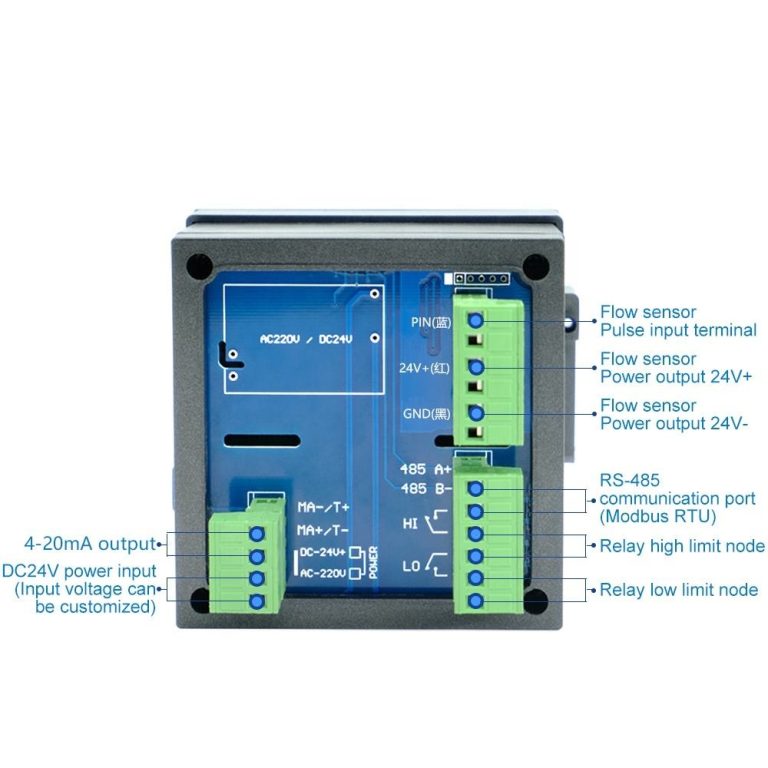
- Register-level diagnostics, so that drift, fouling, and calibration state are visible to the utility’s own historians and to verifiers.
- Documented drift and fouling performance, so that data quality can be characterized rather than assumed.
- Standardized digital communication, so that evidence extraction does not depend on one integrator.
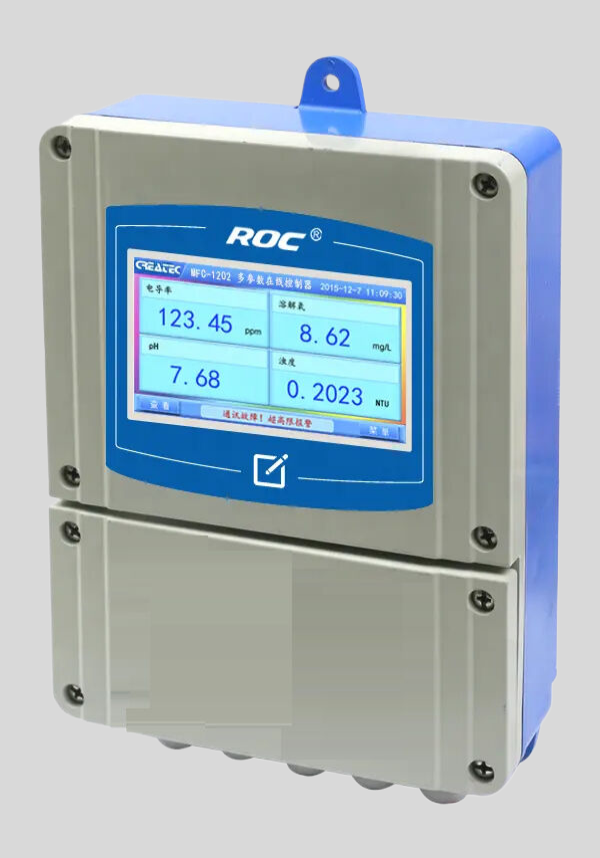
Shanghai ChiMay analyzer families are designed around these four choices, which is what makes them straightforward to include in the technical evidence pack that accompanies a green loan or sustainability-linked loan application in the water sector.
Executive Checklist Before Approaching Lenders
Executives should be able to answer yes to each of the following before approaching lenders on an AI water program:
- Is the pre-AI baseline documented for at least 12 months with the required granularity?
- Can every reported saving be traced to audit-grade measurement?
- Is a verification regime such as IPMVP or ISO 50001 in place?
- Are normalization procedures documented and approved?
- Is governance for performance measurement and verification separate from operations?
Closing Note
An energy saving is only bankable when it is measured, verified, and defensible. The engineering is usually the easy part; the documentation is where water programs lose financing terms. Building the sensor evidence chain before approaching lenders is cheaper than rebuilding a baseline afterwards, and it is the difference between an operating result and a financed one.