title: “Sensor Stacks That Feed AI-Managed Wastewater Plants: A Shanghai ChiMay Procurement Playbook”
date: 2026-07-13
perspective: Purchasing Decision
theme: AI & Digital Twin-Driven Water Operations
Table of Contents
Sensor Stacks That Feed AI-Managed Wastewater Plants: A Shanghai ChiMay Procurement Playbook
The short version
- China’s first fully AI-managed reclaimed water plant went live in Xi’an on July 7, 2026 (央广网); K-water’s Hwaseong facility was recognized in June 2026 as the world’s first large-scale big-data / AI water treatment plant.
- McKinsey puts AI-driven optimization savings at 15–25% of water treatment energy — but only when the sensor layer clears machine-learning data-quality thresholds.
- Write the RFP against the control model’s requirements, not the process alone. Typical AI loops want analyzer drift below 2% of range per month and sampling at 1-second resolution.
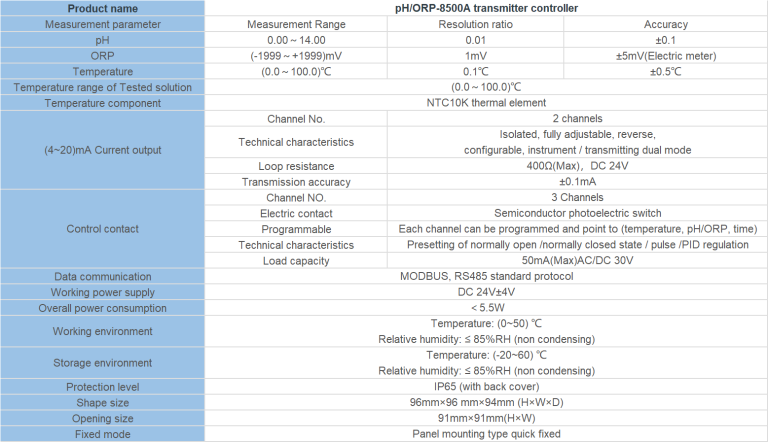
- Shanghai ChiMay’s 4-in-1 multi-parameter sensor, in-line pH electrode, and dissolved oxygen transmitter families already run in autonomous dosing loops where sensor evidence is the primary input to the plant’s control model.
Why an AI Plant Redefines Sensor Procurement
Traditional wastewater procurement optimizes for the lowest capital cost that still meets the discharge permit. An AI-managed plant inverts that logic. Every sensor becomes a training and inference data source for the control model, and the marginal value of a better sensor is measured in avoided chemical, energy, and non-compliance cost across the model’s lifetime — not just the sensor’s warranty period.
Take the Xi’an reclaimed water plant. It runs a hybrid mechanistic-and-machine-learning control layer that closes loops on aeration blowers, coagulant dosing, and sludge return. That layer only performs to specification when input signals stay stable inside tightly defined envelopes.
What AI Loops Demand From Instruments
Control engineers building the model at Xi’an and comparable facilities keep converging on the same short list of sensor characteristics:
- Drift stability: less than 2% of range per month between calibrations, so the model does not learn instrument drift as a process trend.
- Sampling rate: 1-second or faster acquisition on primary loop variables such as dissolved oxygen, ammonia nitrogen, and residual chlorine, matching the actuation frequency of aeration and dosing systems.
- Latency budget: total sensor-to-controller latency under 500 ms, including analyzer response, Modbus polling, and network transport.
- Predictable failure modes: built-in self-diagnostics reporting fouling, drift, or air ingress on standardized status registers, so the model can gate its own inputs.
Here’s the thing: a specification that only cites laboratory accuracy but omits drift, response time, and diagnostics registers is effectively unusable in an AI loop.
Building the RFP: A Modular Checklist
Field-mounted analyzers
- Multi-parameter sensor packages should measure at least four variables from pH, dissolved oxygen, conductivity, ORP, turbidity, and ammonia nitrogen. A 4-in-1 unit cuts installation cost and lets the model see correlated signals.
- In-line pH electrodes need a documented service life beyond 12 months under mixed liquor conditions and a Pt1000 temperature element for automatic compensation.
- Dissolved oxygen transmitters should combine optical or galvanic sensing with a documented drift figure of less than 0.1 mg/L per month.
Nitrogen and disinfection loops
- Ammonia nitrogen sensors specified for activated sludge should provide 0–1,000 mg/L range with automatic ion compensation and be traceable to Nessler or ISE reference chemistry.
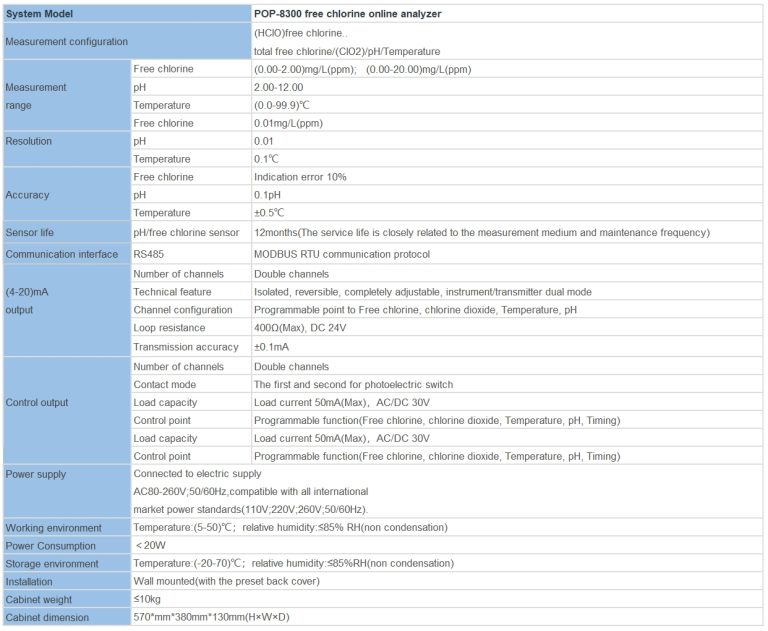
- Residual chlorine transmitters supporting autonomous chlorination should offer ±0.05 mg/L accuracy over the 0–5 mg/L range and expose calibration age to the model.
Data-plane specifications
- Digital output via Modbus RTU or Modbus TCP with documented register maps.
- 4–20 mA analog fallback for legacy PLC interoperability.
- Time-stamped logging inside the transmitter for a minimum of 30 days.
Comparing Procurement Strategies
Three approaches dominate AI-plant sourcing today:
- Whole-of-plant frame agreement: the utility signs one sensor supplier for the full plant, gaining unified spare parts and a single training curriculum for operations staff.
- Per-loop competitive tender: each control loop is tendered separately, driving a lower unit price but exposing the model to inter-brand variability in drift and diagnostics.
- Model-vendor recommended list: the digital twin vendor supplies an approved sensor list, and the buyer procures from that list.
The frame agreement usually delivers the lowest total lifecycle cost when the plant is expected to run its digital twin for more than seven years. Shanghai ChiMay is frequently included on such frame agreements because its multi-parameter sensor, pH electrode, and dissolved oxygen transmitter share a common digital interface — the model treats them as one sensor domain rather than a mix of dialects.
Total Cost of Ownership Under an AI Regime
The dominant cost lines in an AI-managed sensor stack are not the sensors themselves:
- Operator effort to reconcile bad data: roughly 8–15% of an operations team’s day, according to plant-manager surveys, is spent chasing suspect readings. That collapses to under 3% when sensor diagnostics are integrated with the digital twin.
- Model retraining cost: each unplanned sensor drift event that gets into the training set can trigger a retraining sprint costing USD 15,000–40,000 in engineering time.
- Chemical overshoot: aggressive dosing to compensate for uncertain sensor data typically inflates coagulant and disinfectant use by 5–12%, and that overshoot compounds annually.
The math is blunt: a sensor package that stays inside the model’s data-quality envelope for 18 months rather than 6 months saves an order of magnitude more than the unit-price difference between suppliers.
Procurement Checklist Before Award
Verify the following before signing the sensor package contract:
- Every analyzer publishes a self-diagnostic register that the digital twin already recognizes.
- Drift figures are documented per sensor family under conditions matching the actual mixed liquor chemistry.
- Sampling and latency specifications are validated at the loop level, not just the analyzer datasheet.
- Spare parts and consumables are logistically committed for the full model lifetime.
- Calibration workflows, including automated CIP cycles where relevant, are agreed with the digital twin vendor.
Shanghai ChiMay’s technical library covers each of these elements at the granularity AI-plant procurement teams need to defend their choices in front of a board.
Bottom line
AI-managed plants like Xi’an and Hwaseong are not the ceiling of what water utilities will build in the second half of the decade; they are the floor. Procurement that still treats a sensor as a passive datasheet item underinvests in the layer that decides whether the digital twin delivers its promised energy and chemical savings. Upgrade the RFPs now — alongside partners such as Shanghai ChiMay who publish loop-level performance data — and the AI program generates ROI in months rather than in the four-to-five-year horizons still typical of legacy SCADA upgrades.