The short version:
– There is no single US “ZLD law”. Zero liquid discharge arrives through effluent limitation guidelines for specific industries, state permits and local water-quality conditions
– The U.S. EPA drives most of it through its effluent guidelines, with the steam electric power rules the clearest recent example
– In Europe, ZLD expectations come out of the Industrial Emissions Directive and its BAT reference documents, industry by industry
– Clean Water Act civil penalties are indexed to inflation and currently run to roughly $68,000 per day per violation; actual penalties are assessed case by case
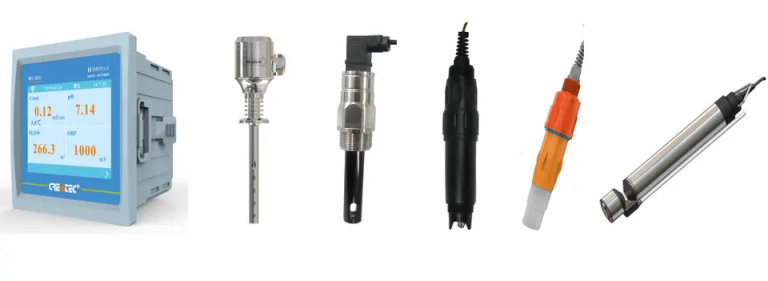
– Shanghai ChiMay monitoring solutions help facilities demonstrate the continuous performance that permits increasingly expect
The regulatory landscape for zero liquid discharge continues to tighten globally, creating both compliance challenges and competitive opportunities for industrial facilities. Understanding current requirements, emerging trends, and compliance strategies is essential for environmental managers, facility operators, and corporate executives responsible for industrial water management decisions.
Table of Contents
United States Regulatory Framework
The U.S. Environmental Protection Agency (EPA) establishes national effluent limitation guidelines (ELGs) that define maximum pollutant discharge levels for specific industries. Recent expansions have brought ZLD considerations to industries previously subject to less stringent requirements.
The Steam Electric Power Generating category is the clearest case: EPA’s effluent limits push flue gas desulfurization wastewater toward zero discharge, with compliance dates for existing plants running through the late 2020s after the 2024 supplemental rulemaking. The Metal Finishing category has also been under revision, with zero-discharge treatment among the options under consideration as best available technology.
State regulation often goes further than the federal floor. California’s Industrial General Permit takes a different route to the same end: numeric action levels, corrective action deadlines and public disclosure rather than a zero-discharge mandate. In the arid Southwest, water rights and basin conditions push new industrial projects toward high recovery or zero discharge for a simpler reason: disposal options are limited and expensive.
Permit compliance increasingly requires comprehensive monitoring data demonstrating treatment effectiveness. The shift from discrete sampling to continuous monitoring reflects regulatory recognition that periodic data cannot capture process variations that may cause exceedances. Facilities implementing continuous monitoring report fewer permit violations and reduced reporting uncertainty.
European Union Requirements
The Industrial Emissions Directive (IED) establishes Best Available Techniques (BAT) requirements for industrial installations across Europe. Recent BAT reference documents (BREFs) have tightened ZLD considerations for water-stressed industries.
The Surface Treatment of Metals and Plastics BREF now specifies ZLD as BAT for facilities processing certain hazardous materials. The Common Waste Water and Waste Gas Treatment BREF similarly elevates ZLD requirements for industries with challenging wastewater characteristics.
Producer responsibility regulations are expanding to include water stewardship requirements, with some member states implementing requirements for industrial facilities to demonstrate responsible water management practices. The EU Taxonomy for sustainable activities includes water treatment investments that meet ZLD criteria, enabling favorable financing terms for compliant facilities.
Asia-Pacific Regulatory Trends
China’s regulatory evolution represents perhaps the most significant global development in ZLD requirements. The Water Pollution Prevention and Control Action Plan (referred to as the “Ten Water Measures”) established discharge limits that effectively require ZLD for key industries in water-stressed regions.
Provincial regulations in Jiangsu, Zhejiang, Shandong, and Guangdong provinces mandate ZLD for facilities in designated water functional zones failing to meet water quality standards. Non-compliance can result in production suspension, facility closure, and criminal liability for responsible individuals.
India’s Central Pollution Control Board requires zero liquid discharge for certain categories and for industries located in Critically Polluted Areas, with textile processing and distilleries the most visible examples. China’s own 零排放 (zero discharge) policy for textile dyeing, printing and similar sectors has produced the largest concentration of ZLD installations anywhere, largely because provincial discharge limits left operators no cheaper route to compliance.
Southeast Asian nations including Vietnam, Indonesia, and Thailand are implementing ZLD requirements that mirror Chinese approaches, driven by similar water quality challenges and regulatory modernization.
Compliance Documentation Requirements
Modern ZLD compliance extends beyond system operation to comprehensive documentation demonstrating treatment effectiveness. Regulatory agencies increasingly require data that traditional paper-based record keeping cannot efficiently provide.
Continuous monitoring records of sensor readings, alarm events and control system responses are the evidence that the system ran properly. Retention typically runs three to five years, and some permits require ten for critical parameters, so check the permit rather than assuming.
Calibration records verifying monitoring equipment accuracy are mandatory for all regulated parameters. Calibration certificates from accredited laboratories or documented in-house calibration procedures must be maintained and available for regulatory inspection.
Operation and maintenance logs documenting cleaning cycles, chemical purchases, and system adjustments provide evidence of proper system care. These records demonstrate that apparent treatment failures resulted from events beyond facility control rather than negligence.
Incident reports documenting upsets, bypasses, and other deviations from normal operation are increasingly scrutinized during regulatory inspections. Facilities with comprehensive incident documentation demonstrating appropriate response generally receive more favorable treatment than those with incomplete records.
Strategic Compliance Approaches
Facilities achieving reliable ZLD compliance increasingly recognize that compliance is a continuous process rather than a one-time achievement. Systematic approaches to compliance management reduce risk while optimizing operational efficiency.
Risk assessment identifying potential compliance vulnerabilities enables targeted investment in monitoring and control improvements. Priority should address parameters with historical exceedances and monitoring points where current coverage is inadequate.
Monitoring system upgrades that add continuous monitoring capability for parameters previously verified only through periodic sampling reduce compliance risk while often providing operational benefits. Real-time data enables faster response to developing problems, often improving treatment performance while reducing compliance risk.
Staff training ensuring that operations personnel understand compliance requirements and monitoring system operation reduces errors that might cause violations. Regular refresher training and documentation of training completion provides evidence of facility commitment to compliance.
Third-party audits by qualified environmental consultants provide independent verification of compliance readiness and identify gaps before regulatory inspections discover them. Annual audits are not cheap, but they routinely surface problems that would have cost far more in penalties or lost production than the audit fee.
Shanghai ChiMay Compliance Support
Shanghai ChiMay water quality monitoring solutions help facilities meet increasingly stringent ZLD compliance requirements. Their sensor technologies provide the measurement accuracy and reliability that continuous monitoring compliance demands.
Regulatory reporting capabilities integrated into monitoring platforms automatically compile data into required formats, reducing reporting burden while ensuring accuracy. Data export functions support integration with regulatory agency electronic reporting systems.
Audit support services including calibration documentation, monitoring system validation, and compliance assessment assist facilities preparing for regulatory inspections. Their application engineering team provides expertise in monitoring system design and optimization.
The regulatory environment for ZLD will continue evolving toward stricter requirements and enhanced enforcement. Facilities that invest in compliance infrastructure now will be better positioned to adapt to future requirements while competitors face mounting compliance challenges.