Zero liquid discharge (ZLD) is the most demanding operating point of industrial wastewater management: a systematic approach that eliminates liquid effluents by recovering and reusing virtually all water from industrial processes. As regulatory pressures intensify and water scarcity becomes increasingly acute, understanding ZLD technology has become essential for facility managers, environmental engineers, and industrial decision-makers.
Table of Contents
The Fundamentals of Zero Liquid Discharge Systems
Zero liquid discharge systems operate on a fundamental principle: transform liquid wastewater into solid waste and purified water that can be recirculated within the facility. This closed-loop approach not only eliminates environmental liability but also transforms wastewater from a disposal problem into a resource recovery opportunity.
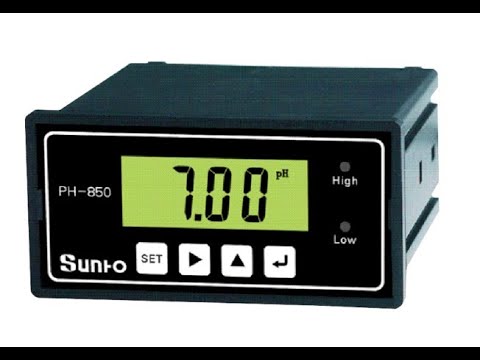
Modern ZLD systems typically comprise three primary stages. The first stage involves pretreatment and volume reduction, where conventional physical and chemical processes remove suspended solids, oils, and bulk contaminants while cutting overall wastewater volume substantially. During this phase, pH sensors and turbidity sensors play critical roles in monitoring treatment effectiveness and ensuring proper chemical dosing.
The second stage centers on brine concentration, where advanced membrane processes such as reverse osmosis and nanofiltration concentrate dissolved solids to maximum levels. Conductivity electrodes serve as the primary monitoring tool during this phase, enabling operators to track Total Dissolved Solids (TDS) concentrations that can reach 200,000 mg/L or higher. One caution: the relationship between conductivity and TDS at these concentrations is matrix-specific and increasingly non-linear, so continuous conductivity monitoring works best when paired with periodic laboratory TDS verification and stream-specific calibration curves.
The final stage involves brine crystallization or evaporative crystallization, where the concentrated brine is transformed into solid waste suitable for landfill disposal or, in some cases, valuable mineral recovery. This stage requires precise monitoring of temperature, pH, and conductivity to ensure complete crystallization while maximizing energy efficiency.
Water Quality Monitoring Requirements for ZLD
Effective ZLD operation depends on comprehensive water quality monitoring throughout all process stages. Each monitoring point provides critical data for process control, quality assurance, and regulatory compliance documentation.
At the pretreatment stage, multi-parameter sensors measuring pH, oxidation-reduction potential (ORP), turbidity, and conductivity provide real-time feedback on treatment effectiveness. These sensors enable automated chemical dosing systems to maintain optimal treatment conditions while minimizing chemical consumption—sensor-based process control consistently outperforms manual dosing on chemical economy.
During brine concentration, high-temperature conductivity sensors must withstand operation at elevated temperatures while maintaining measurement accuracy across a wide concentration range. The critical measurement challenge involves tracking concentration from typical feedwater conductivity of 1,000-5,000 μS/cm to final brine concentrations exceeding 100,000 μS/cm—a span of roughly two orders of magnitude that demands wide-range sensors and multi-range calibration strategy.
Dissolved oxygen sensors also play important roles in ZLD systems, particularly for monitoring aerobic treatment processes and preventing anaerobic conditions that can cause corrosion and odor problems. Similarly, oil-in-water sensors detect hydrocarbon contamination that could damage membrane systems or contaminate recovered water streams.
Economic Considerations and ROI
The capital investment for ZLD systems spans a wide range—from the high hundreds of thousands of dollars for compact trains to several million dollars for large, complex systems—so the economics must be built up case by case rather than from generic figures. The main recurring credits are freshwater procurement avoided and discharge fees eliminated, plus avoided compliance costs.
The water-balance arithmetic is straightforward: a facility processing 100,000 gallons per day at a 95% recovery rate reuses roughly 34-35 million gallons of water per year that would otherwise be purchased and discharged. At typical industrial water rates and per-load discharge fees—both of which have trended upward for years—that volume shift alone often justifies the monitoring and control layer many times over. Payback compresses further where discharge permits are difficult to renew, disposal costs are rising, or water scarcity adds a supply-security premium to every avoided gallon.
Technology Trends Shaping ZLD Implementation
Several technological developments are making ZLD more accessible and economically attractive for industrial facilities.
Solar-powered evaporation systems are gaining traction for remote installations where grid power availability is limited. These systems combine natural evaporation with advanced brine management to achieve zero discharge with minimal purchased energy; early adopters report meaningfully lower operating costs than conventional thermal ZLD where solar input substitutes for fuel-fired evaporation.
Membrane distillation represents another emerging technology, combining thermal and membrane processes to achieve very high salt rejection while operating below 80°C, which enables heat recovery from low-grade industrial process streams.
Artificial intelligence and machine learning are increasingly being applied to ZLD process optimization. These systems analyze sensor data patterns to predict fouling events, optimize cleaning schedules, and adjust operating parameters for maximum efficiency. Facilities applying AI-based optimization report double-digit percentage gains in energy efficiency and measurable extensions in membrane service life.
Implementing ZLD: A Practical Approach
Facilities considering ZLD implementation should approach the project systematically. The first step involves comprehensive wastewater characterization, analyzing flow rates, pollutant concentrations, and seasonal variations to properly size system components.
Monitoring system design should incorporate redundancy at critical measurement points. Primary monitoring sensors provide continuous data for process control, while backup sensors ensure data availability during calibration and maintenance activities. All sensors should be traceable to national standards to support regulatory compliance documentation.
Shanghai ChiMay provides a comprehensive range of water quality monitoring solutions specifically designed for ZLD applications. Their conductivity electrodes feature wide measurement ranges suitable for tracking brine concentration from initial feed through final crystallization, while their multi-parameter sensors integrate multiple measurements in a single installation point, reducing installation complexity and maintenance requirements.
The transition to zero liquid discharge represents a significant commitment, but for facilities facing tightening regulations or water scarcity challenges, it offers a pathway to sustainable operations. With proper planning, appropriate monitoring technology, and systematic process optimization, achieving true zero liquid discharge is increasingly within reach for industrial facilities worldwide.