The Short Version:
– ZLD compliance requires comprehensive sensor coverage across all treatment stages
– Continuous sensor-based monitoring cuts the monitoring labor that laboratory sampling approaches demand
– Integrated multi-parameter systems provide correlated data for process control
– Sensor reliability directly impacts ZLD system availability—and in a large plant, downtime is expensive by the hour
– Shanghai ChiMay offers complete water quality monitoring solutions designed for ZLD applications
Achieving zero liquid discharge while holding regulatory compliance requires reliable, continuous water quality monitoring throughout the treatment process. The right monitoring solutions keep the system optimized while producing the documentation regulatory reporting demands. This guide presents ten monitoring solutions worth considering for ZLD implementation.
Table of Contents
1. High-Range Conductivity Monitoring Systems
Conductivity measurement is the foundation of ZLD brine concentration monitoring. From initial feed characterization through final crystallization control, conductivity data drives operational decisions that directly affect water recovery rates and system efficiency.
High-range conductivity monitoring systems must measure accurately from 1,000 μS/cm in feed streams to over 200,000 μS/cm in concentrated brines. That 200:1 range is beyond what standard conductivity instrumentation built for conventional wastewater can deliver.
Advanced conductivity monitoring systems use four-electrode measurement technology that holds accuracy despite the electrode fouling and polarization common in high-ionic-strength solutions. Temperature compensation algorithms correct for varying stream temperatures across operating conditions.
Electrode material selection has a real impact on reliability. Stainless steel electrodes perform adequately at moderate concentrations; graphite electrodes resist scaling and fouling better in high-TDS brines. For the most punishing applications, Hastelloy electrodes provide maximum corrosion resistance and service life.
2. Industrial pH Measurement Platforms
Industrial pH measurement anchors chemical treatment optimization across ZLD processes. From acid neutralization to precipitation control, accurate pH measurement keeps chemical reactions effective while holding consumption costs down.
Rugged industrial pH electrodes designed for wastewater service use double-junction reference systems that keep sulfide and heavy metal ions—common in industrial wastewaters—out of the reference. Glass bulb compositions optimized for high-ionic-strength service hold measurement stability where standard electrodes fail quickly.
Automated pH sensor cleaning systems significantly extend maintenance intervals, with ultrasonic cleaning and brush cleaning options suited to different severity levels. Facilities running automated cleaning report substantially less sensor-related maintenance labor.
3. Nephelometric Turbidity Sensors
Nephelometric turbidity monitoring gives early warning of suspended solids events and membrane fouling in ZLD service. The technique—detecting light scattered by suspended particles—offers better sensitivity than transmissometric approaches at low turbidity.
Advanced turbidity sensors employ multi-angle detection for improved accuracy in colored streams and reduced interference from window fouling. Automatic cleaning systems using compressed air or water jets keep measurement reliable in high-solids service.
For ZLD membrane protection, turbidity sensors should cover 0-1,000 NTU with 0.1 NTU resolution at the low end. That combination handles both membrane fouling detection and filtrate quality verification.
4. Luminescent Dissolved Oxygen Sensors
Luminescent dissolved oxygen sensors provide low-maintenance DO measurement for ZLD biological treatment monitoring. Unlike electrochemical sensors that need electrolyte replacement and membrane service, luminescent sensors run for extended periods with minimal intervention.
The measurement principle relies on oxygen quenching of luminescent emission, which changes in proportion to dissolved oxygen concentration. No consumable materials, no membrane to service, lower ongoing operating cost.
Temperature compensation is essential for accurate DO measurement—oxygen solubility varies strongly with temperature. Advanced sensors integrate temperature measurement and compensation algorithms that hold accuracy across the operating range.
5. UV Absorption COD Monitors
In-situ COD monitors using UV absorption provide continuous organic loading data without sample extraction or reagent consumption. The technique correlates UV absorption at specific wavelengths with COD concentration, enabling real-time process monitoring.
Advanced UV COD monitors incorporate dual-wavelength measurement that corrects for suspended solids and color interference. Multi-parameter correlation algorithms improve accuracy for specific wastewater characteristics, with measurement accuracy around ±10% across varying conditions.
The absence of reagents eliminates chemical handling and consumable cost, which makes UV COD monitors attractive for continuous monitoring duty.
6. Ion-Selective Ammonia Sensors
Ion-selective ammonia sensors based on gas-permeable membrane technology provide reliable continuous ammonia monitoring for ZLD applications. The measurement principle separates ammonia gas through a membrane into an internal electrolyte, where it changes pH in proportion to ammonia concentration.
Proper sensor maintenance means periodic calibration with standard solutions and membrane replacement at manufacturer-specified intervals. In return, the continuous data supports treatment optimization that manual sampling cannot match.
Facilities processing nitrogen-rich wastewaters benefit most from continuous ammonia monitoring: real-time optimization of nitrification/denitrification cuts aeration and carbon-dosing costs compared with flow-proportional control.
7. UV Fluorescence Oil-in-Water Sensors
UV fluorescence oil sensors detect hydrocarbon contamination with sensitivity beyond most other field techniques. The principle: UV light excites fluorescent compounds in the oil, and the sensor reads the characteristic emission wavelengths, with detection limits as low as 0.1 mg/L.
For ZLD protection, install oil sensors upstream of membrane systems for early warning of hydrocarbon breakthrough. Detecting an oil event enables process adjustment or membrane isolation before irreversible fouling occurs.
Intrinsically safe sensor designs are available for hazardous areas where explosive atmospheres may occur, so monitoring coverage can extend into areas with flammable vapors.
8. Multi-Parameter Sensor Platforms
Multi-parameter sensor platforms integrate multiple measurements in single installations, which suits ZLD monitoring well. Correlated measurements from co-located sensors support a fuller picture of the process, while fewer installation points simplify maintenance.
Advanced multi-parameter platforms support Modbus, HART, and Profibus communication, enabling integration with plant distributed control systems. Real-time data transmission feeds the automated process control that keeps ZLD performance on target.
Shanghai ChiMay multi-parameter sensors combine conductivity, pH, ORP, dissolved oxygen, and temperature measurements in compact housings rated for industrial wastewater service. The integrated design simplifies installation while covering the core parameter set.
9. Automated Sampling and Laboratory Systems
Continuous sensors provide real-time monitoring; automated sampling systems back them up with laboratory analysis for quality assurance and regulatory documentation. Discrete sample collection at timed intervals—or triggered by sensor events—provides verification data for the continuous monitoring system.
Modern automated samplers feature refrigerated preservation that maintains sample integrity between collection and analysis. Sample tracking systems maintain the chain-of-custody documentation regulatory compliance requires.
Laboratory analysis should include periodic verification of continuous sensor accuracy against reference methods. Weekly or monthly verification comparing sensor readings to laboratory results keeps data quality honest through the ZLD campaign.
10. Data Management and Reporting Platforms
Comprehensive data management systems turn raw sensor data into actionable information and regulatory documentation. Advanced platforms run data validation algorithms that flag sensor failures and measurement anomalies before they reach operations.
Regulatory reporting modules compile monitoring data into required formats automatically, cutting compliance burden while keeping reports accurate. Integration with regulatory agency systems enables electronic submission in place of manual reporting.
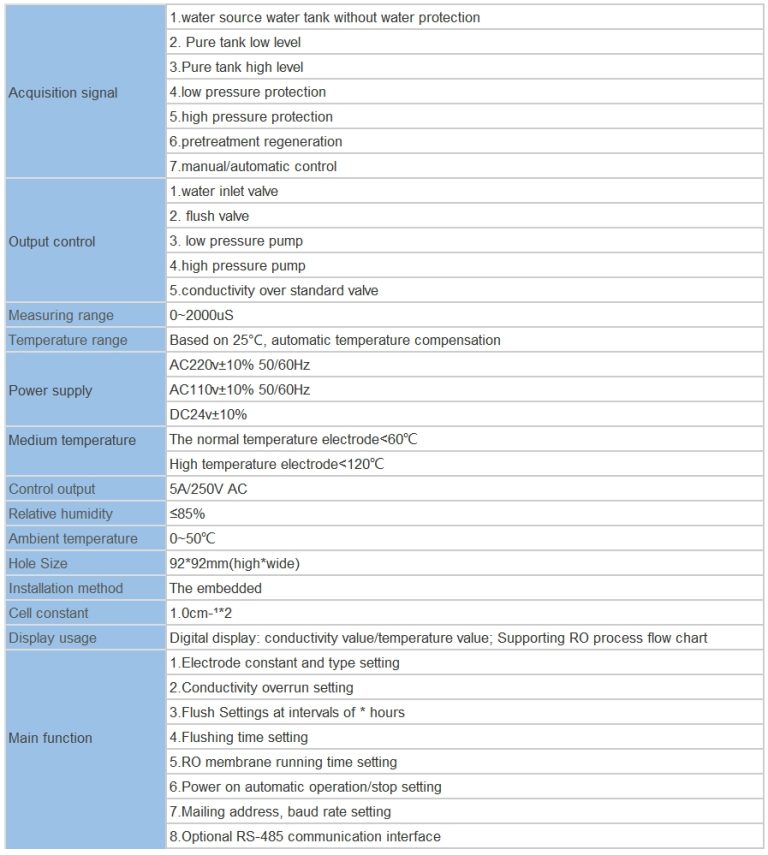
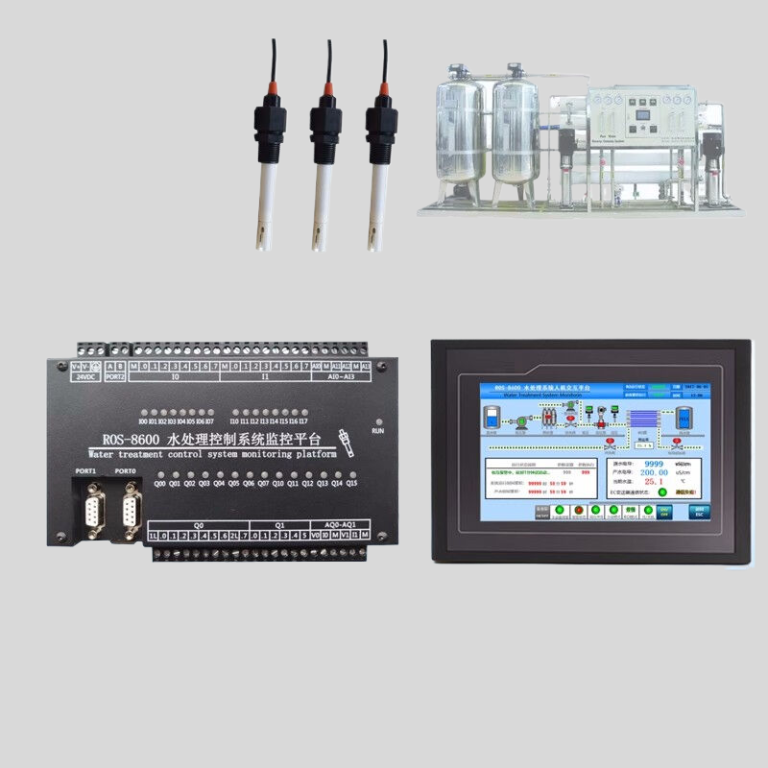
Shanghai ChiMay provides complete water quality monitoring solutions designed for ZLD applications. The sensor portfolio covers the critical parameters, and the integrated system approach delivers reliable, compliant monitoring that supports optimized ZLD operation.
Quality monitoring pays for itself through improved system performance, lower operating cost, and regulatory confidence. For facilities committed to true zero liquid discharge, comprehensive monitoring is the enabling technology—everything else in the plant depends on being able to see what the water is doing.