The trajectory of zero liquid discharge (ZLD) technology and adoption is being shaped by converging forces: advancing technology, tightening regulations, water scarcity concerns, and evolving economics. Understanding where ZLD is headed over the next five years provides valuable insight for facilities considering investments in wastewater recovery systems.
Table of Contents
Market Growth and Adoption Projections
Water reuse is transitioning from a niche environmental practice to mainstream industrial water management. Research houses that track the sector consistently point to strong double-digit annual growth in water reuse and ZLD-related spending through 2030, driven primarily by industrial users. Within industrial reuse, ZLD systems represent an increasing share as regulatory requirements tighten and the technology’s economics improve.
Geographically, growth concentrates where water scarcity and regulatory stringency intersect. Asia-Pacific—led by Chinese and Indian industrial effluent requirements—is widely expected to account for the largest share of new ZLD capacity through 2030, while North American and European growth focuses on technology upgrades and expansion into new industrial sectors.
Across water-stressed regions the direction is clear: ZLD requirements or strong economic incentives are moving from exceptional cases toward the default expectation for new industrial capacity. Facilities planning multi-year capital programs should treat that shift as a planning assumption rather than a remote possibility.
Technology Evolution
Membrane Technology Advances
Reverse osmosis membrane technology continues advancing in the direction of higher salt rejection at lower operating pressure; each increment in that direction translates directly into reduced energy consumption and improved economics for ZLD concentration stages.
Forward osmosis is emerging as a complementary technology for ZLD brine concentration. The technology uses osmotic pressure differences to draw water through semipermeable membranes, potentially enabling concentration to higher levels than conventional reverse osmosis with lower energy input.
Membrane distillation combines thermal and membrane processes and is moving toward broader commercial deployment. Reported salt rejections are very high, and ongoing development focuses on reducing membrane costs and extending membrane life—the two factors that currently limit its economics.
Digital Integration and AI
Artificial intelligence and machine learning are moving from pilot projects into routine practice in ZLD operations. Where the baseline is manual or fixed-setpoint control, published results commonly show double-digit percentage gains in energy efficiency and system availability.
Predictive maintenance algorithms analyze sensor data patterns to forecast equipment failures before they occur, cutting unplanned downtime sharply for equipment such as high-pressure pumps and crystallizer internals where failure costs are highest.
Digital twin technology enables virtual modeling of ZLD systems, allowing operators to test operational changes and optimization strategies in simulation before implementing them in actual systems. This capability accelerates learning and reduces the risk of operational errors.
Cloud-based monitoring and analytics provide remote visibility into ZLD system performance, enabling centralized expertise to support distributed operations. Machine learning models trained on data from multiple installations can identify optimization opportunities that individual facilities might miss.
Emerging Business Models
Brine Mineral Recovery
The concentrated brines generated by ZLD systems contain valuable mineral resources that traditional disposal approaches waste. Emerging brine mineral recovery technologies are making resource recovery economically attractive.
Lithium extraction from brine streams is attracting significant investment as electric vehicle demand drives lithium consumption. ZLD brines from lithium-bearing streams can carry lithium at concentrations of direct recovery interest—in favorable cases high enough that extraction competes with mined sources. Project economics swing with lithium carbonate prices, which have been highly volatile, so recovery business cases must be stress-tested against price cycles rather than built on spot values.
Rare earth element recovery from industrial brines represents another emerging opportunity. ZLD systems processing wastewaters from mining, electronics manufacturing, and chemical production may contain valuable rare earth elements that conventional treatment discards.
Sodium chloride and calcium carbonate recovery for industrial reuse is already economically viable in some applications. Recovered salts can replace purchased chemicals, reducing operating costs while eliminating disposal liabilities.
Distributed ZLD Systems
Traditional ZLD systems have been economically justified only for large facilities with substantial wastewater volumes. Modular and distributed ZLD systems are making zero discharge achievable for smaller facilities.
Containerized ZLD systems provide turnkey solutions that can be deployed rapidly and expanded incrementally. Standardized modules enable facilities to start with treatment capacity matching current needs and add capacity as operations grow.
Centralized treatment networks serving multiple smaller facilities distribute ZLD capital costs across multiple users, improving economics while ensuring proper system operation through professional management. This model is gaining traction in industrial parks and municipal areas with multiple smaller generators.
Regulatory Evolution
Environmental regulations governing industrial wastewater will continue tightening through 2030. The direction of regulatory evolution is clear, even if specific requirements remain uncertain.
Mandatory ZLD requirements will expand to cover additional industrial categories and geographic areas. Regulations will increasingly require ZLD for facilities in water-stressed regions, regardless of industrial category.
Water quality standards for reuse will become more stringent, requiring ZLD systems to achieve higher water quality for recovered water applications. These standards will drive adoption of advanced treatment technologies including advanced oxidation and membrane processes.
Extended producer responsibility programs may expand to include water stewardship requirements. Facilities that demonstrate responsible water management through ZLD implementation may receive favorable treatment in permitting and compliance contexts.
Economic Optimization
The economics of ZLD will continue improving as technology advances and regulatory pressure increases the cost of non-compliance. Key economic trends include the following.
Capital cost reductions are projected as manufacturing scale, standardized modular designs, and increased competition simplify engineering and construction.
Operating cost reductions from energy efficiency improvements and AI-based process optimization will improve ZLD economics against conventionally controlled baselines.
Resource recovery revenue from mineral extraction will partially offset treatment costs, potentially improving ZLD economics to the point where some installations generate net positive returns. The extent of revenue generation will depend on brine composition and commodity prices.
Strategic Implications for Industrial Facilities
Facilities considering ZLD investments should recognize that delays in implementation will likely result in higher costs and greater competitive disadvantage as regulations tighten. Strategic planning should consider the following.
Technology selection should emphasize flexibility and upgradability, as ZLD technology will continue advancing rapidly. Systems designed for incremental improvement will enable facilities to incorporate advances without wholesale replacement.
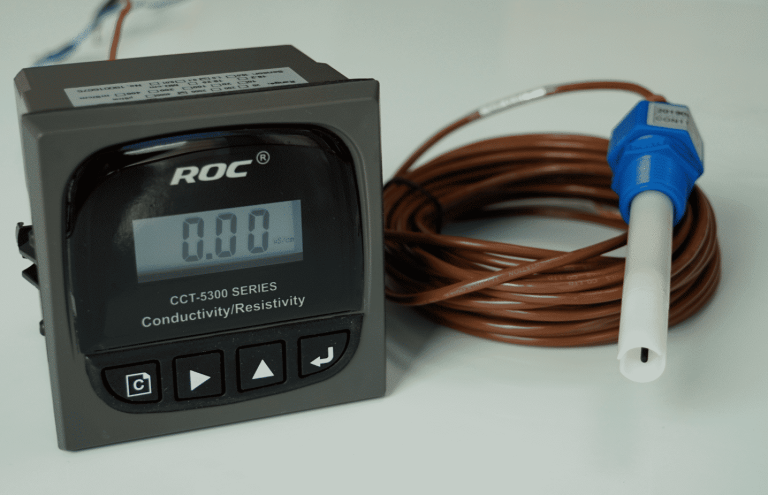
Monitoring investment should anticipate expanded regulatory requirements for continuous monitoring and data documentation. Shanghai ChiMay water quality monitoring solutions provide the measurement reliability and compliance documentation capabilities that ZLD operations increasingly require.
Partnership strategies should consider relationships with technology providers, engineering firms, and operational support services that can assist throughout the ZLD system lifecycle. The complexity of ZLD operation benefits from specialized expertise that most industrial facilities lack internally.
For facilities weighing ZLD investments, the practical conclusion is straightforward: the technology set is maturing, the regulatory direction is unambiguous, and the economics improve with every incremental recovery credit. Delay raises both compliance risk and retrofit cost. Facilities that invest strategically now will be better positioned to navigate the transition to zero liquid discharge than those waiting for perfect certainty.