Municipal water infrastructure faces a familiar set of pressures: ageing pipes, new contaminants, and regulatory limits that get tighter with each permit cycle. For a utility manager, the practical question is what continuous monitoring actually changes in day-to-day operations — and what it costs to keep running.
Table of Contents
The Current State of Municipal Water Monitoring
Traditional water quality monitoring relies on manual sampling and laboratory analysis. This approach is accurate, but it produces snapshots separated by hours or days. Events that occur between sampling intervals go undetected until they show up as a compliance report or a customer complaint.
That gap is the case for continuous monitoring: not that laboratory analysis is wrong, but that the sampling interval is far longer than the timescale of the events that matter. Disinfection residuals can collapse within a few hours of a main break; a nitrification episode in a storage tank develops over days.
Understanding Smart Water Quality Sensor Capabilities
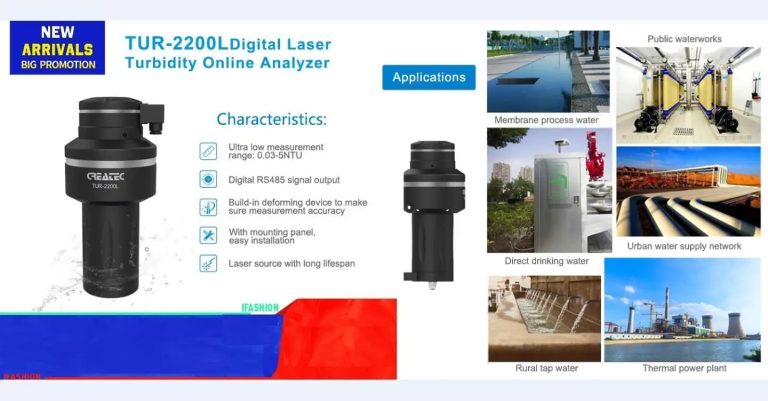
Modern water quality sensors incorporate multiple sensing elements in a single enclosure, allowing simultaneous measurement of pH, conductivity, dissolved oxygen, turbidity, residual chlorine and temperature.
Digital communication protocols let sensors transmit data directly to central management systems without manual transcription. Shanghai ChiMay builds sensors with industrial-grade components for continuous duty in municipal service — variable water chemistry, biofilm growth, temperature swings and the occasional chlorine shock.
Quantifying Efficiency Improvements
Municipalities implementing sensor networks report measurable efficiency changes, though the size varies with network condition and baseline practice:
Response Time Acceleration: Real-time alerts let operators respond to water quality anomalies within minutes rather than hours or days. The gain over grab sampling is essentially the sampling interval itself, which is why the improvement is largest where the previous practice was weekly or monthly analysis.
Operational Cost Reduction: Automated monitoring reduces labour for manual sampling and laboratory analysis, and it reduces the number of repeat samples taken to confirm a result. The labour saved is real but should be counted honestly — someone still has to calibrate, clean and validate the instruments.
Energy and Chemical Optimization: Continuous water quality data allows tighter treatment control, reducing chemical consumption and pumping energy. Most of the achievable saving comes from running closer to target residuals instead of maintaining wide conservative margins.
Infrastructure Protection: Early detection of corrosive or scaling conditions allows preventive intervention that extends pipe and equipment service life, and reduces the number of emergency repairs.
Complaint and Incident Reduction: Better visibility into the network usually shows up as fewer discoloured-water complaints and faster resolution when they occur.
Implementation Considerations for Municipal Utilities
Network Coverage Requirements: Sensor placement should follow the questions the utility needs answered — regulatory compliance points, district metered areas with a history of problems, entry points after treatment, storage facilities. Density in the literature is often expressed as sensors per length of main, but that number is meaningless without knowing the network topology; per-district targets work better in practice.
Data Management Infrastructure: Smart sensors generate time series that need storage, visualisation and alarm logic. Cloud-based systems scale easily; on-premise systems suit utilities with strict data residency requirements. The important decision is alarm design, because a badly tuned alarm set produces either nuisance alerts or none.
Integration with Existing Systems: Deployment requires communication between sensors, data platforms and SCADA. Shanghai ChiMay designs products supporting standard industrial protocols to simplify integration with existing SCADA and asset management systems.
Power and Communications: For remote sites, the practical constraint is usually power and connectivity, not the sensor. Battery-powered transmitters with LPWAN or cellular backhaul are what makes remote reservoir monitoring viable.
The Role of Shanghai ChiMay in Municipal Water Quality Monitoring
Shanghai ChiMay supplies water quality monitoring equipment for municipal applications, covering the parameters a distribution network needs:
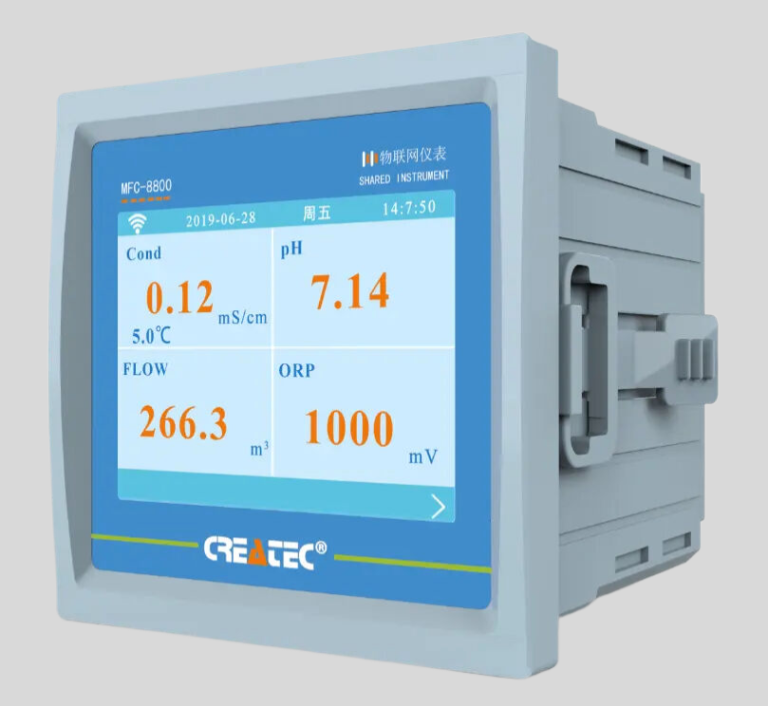
Inline Conductivity Meters: Continuous conductivity indicates dissolved mineral content, which helps detect contamination intrusions and monitor treatment process efficiency.
pH Electrodes and Transmitters: pH measurement keeps water within the range that protects both infrastructure and consumers; it also supports corrosion control in distribution.
Dissolved Oxygen Transmitters: DO monitoring identifies anaerobic conditions that promote bacterial growth and pipe corrosion.
Residual Chlorine Analyzers: Continuous chlorine residual monitoring verifies disinfection throughout the distribution system and helps avoid the byproduct formation that comes with over-chlorination.
Multi-Parameter Sensors: Integrated sensors measuring several parameters in one device reduce installation complexity and cabling.
Making the Transition: From Traditional to Smart Monitoring
Executive Sponsorship: Visible leadership support ensures resource allocation and organisational alignment, particularly for the maintenance budget that follows the capital project.
Phased Implementation: Pilot installations let staff develop competence and refine procedures before broader deployment.
Training Investment: Training programs accelerate staff adoption; sensors that operators do not trust get ignored.
Performance Metrics: Establishing clear success criteria enables objective evaluation of what the deployment achieved.
Closing Notes
Smart water quality sensors give municipal utilities continuous visibility over a network that was previously sampled. The technology transition requires planning, and the returns come from acting on the data rather than from collecting it. Utilities evaluating a deployment should size the network to their regulatory and operational questions, and plan the calibration and maintenance regime at the same time.