Understanding the Basics of pH and pH Meters
pH meters are essential tools in various industries, including agriculture, food and beverage production, and environmental monitoring. These devices measure the acidity or alkalinity of a solution by determining the concentration of hydrogen ions present. Understanding how a pH meter works is crucial for obtaining accurate and reliable measurements.
At the core of a pH meter is a glass electrode that is sensitive to hydrogen ions. When immersed in a solution, the glass electrode generates a voltage that is proportional to the pH of the solution. This voltage is then converted into a pH reading by the meter’s internal circuitry.
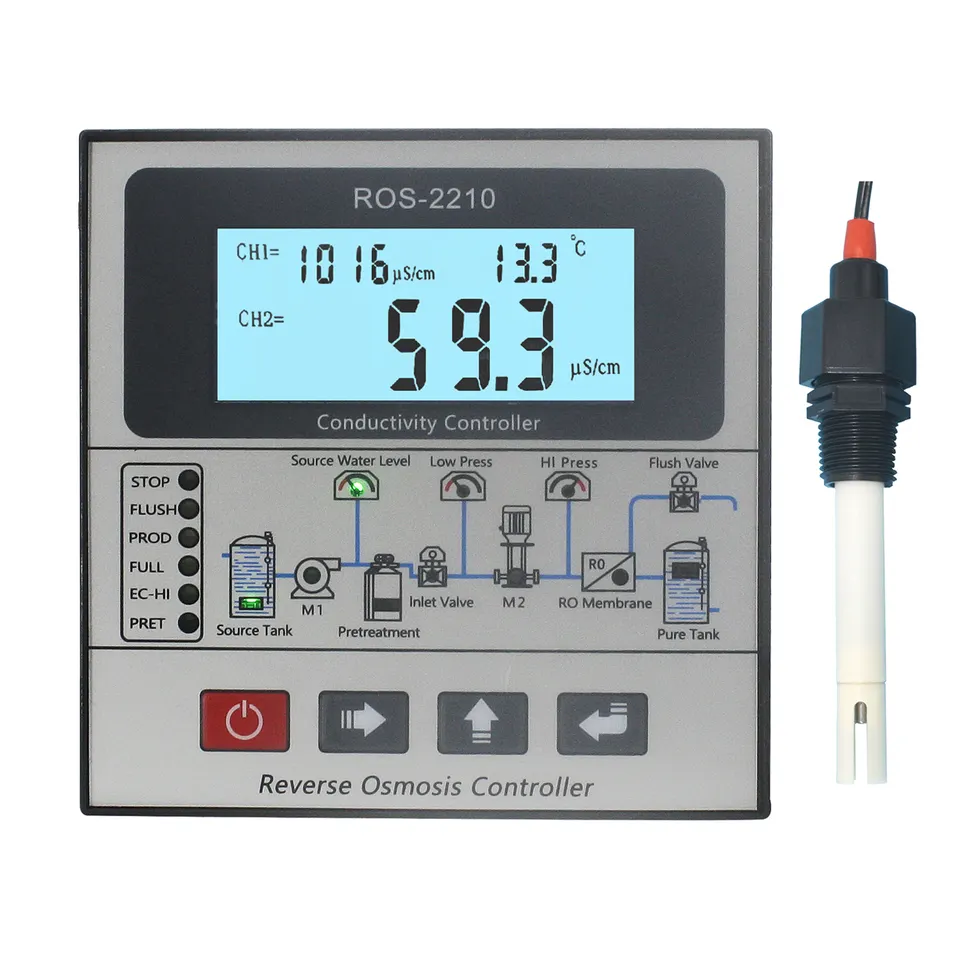
To ensure accurate measurements, pH meters must be calibrated regularly using buffer solutions with known pH values. Calibration adjusts the meter’s internal settings to account for any drift or changes in the electrode’s sensitivity over time. Most pH meters allow for calibration at multiple points to improve accuracy across a wider pH range.
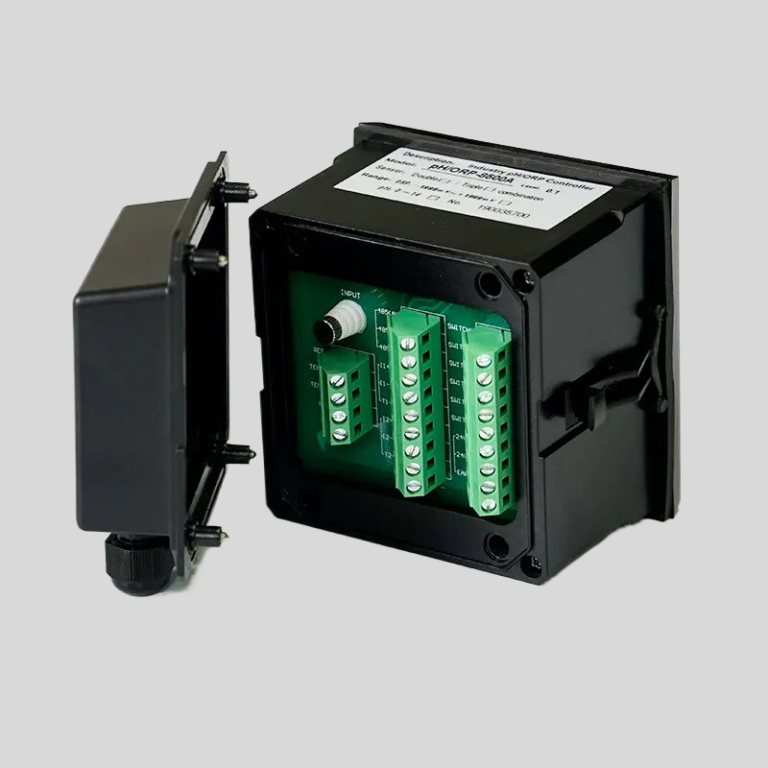
| Model | pH/ORP-510 pH/ORP Meter |
| Range | 0-14 pH; -2000 – +2000mV |
| Accuracy | \u00b10.1pH; \u00b12mV |
| Temp. Comp. | Manual/Automatic temperature compensation; No Comp. |
| Oper. Temp. | Normal 0\uff5e60\u2103; High temp 0\uff5e100\u2103 |
| Sensor | pH double/triple sensor; ORP sensor |
| Display | LCD Screen |
| Communication | 4-20mA output/RS485 |
| Output | High/Low limit dual relay control |
| Power | AC 220V\u00b110% 50/60Hz or AC 110V\u00b110% 50/60Hz or DC24V/0.5A |
| Working Environment | Ambient temperature:0\uff5e50\u2103 |
| Relative humidity\u226485% | |
| Dimensions | 48\u00d796\u00d7100mm(H\u00d7W\u00d7L) |
| Hole Size | 45\u00d792mm(H\u00d7W) |
| Installation Mode | Embedded |
In addition to the glass electrode, pH meters also contain a reference electrode that provides a stable reference point for the measurement. The reference electrode is typically filled with a solution of known pH, such as potassium chloride. By comparing the voltage generated by the glass electrode to the reference electrode, the pH meter can accurately determine the pH of the solution being tested.
One of the key factors that can affect the accuracy of pH measurements is temperature. pH meters are often equipped with temperature compensation features to account for changes in temperature that can impact the electrode’s sensitivity. Some pH meters also allow for manual temperature adjustments to ensure accurate readings in different environments.
When using a pH meter, it is important to properly prepare the electrode by rinsing it with distilled water and storing it in a storage solution when not in use. This helps to maintain the electrode’s sensitivity and prolong its lifespan. It is also important to handle the electrode with care to avoid damage that could affect its performance.
In addition to measuring pH, some pH meters also offer additional features such as automatic calibration, data logging, and connectivity options for transferring data to a computer or mobile device. These advanced features can streamline the measurement process and improve efficiency in various applications.Overall, understanding how a pH meter works is essential for obtaining accurate and reliable pH measurements. By knowing the basic principles behind pH meters and how to properly use and maintain them, users can ensure that their measurements are accurate and consistent. Whether in a laboratory setting or out in the field, pH meters play a crucial role in monitoring and controlling pH levels in a wide range of industries.