- Smart water meters address non-revenue water from both ends: they measure more accurately and they make losses visible in near real time
- AMI reduces operating cost chiefly by eliminating manual reading and speeding up leak response
- Continuous data shifts leak detection from weeks to hours
- Frequent meter data produces a data volume that needs deliberate platform design, not just a bigger server
- Reported savings depend on the utility’s starting non-revenue water level and its field response capability
Table of Contents
Introduction
Municipal water distribution faces a compounding set of pressures — aging pipe, population growth, and climate variability that makes supply less predictable. ASCE’s 2025 Infrastructure Report Card grades U.S. drinking water infrastructure C− and highlights the funding gap between what systems need and what they are spending. A large share of treated water is still lost between the treatment plant and the customer.
Smart water meters change how utilities see that network. Where mechanical meters require a manual visit and produce one reading per billing period, digital meters transmit continuously, giving utilities the data to make decisions about operations, maintenance, and capital allocation.
Understanding Smart Water Meter Technology
Advanced Measurement Capabilities
Modern smart water meters use electromagnetic or ultrasonic transit-time measurement to hold ±1-2% accuracy across their service life. Mechanical meters degrade as they wear. The International Water Association (IWA) has documented that mechanical meters commonly under-register by 3-10% as they age, and the shortfall is concentrated at low flow rates — which is where most residential consumption happens. That gap is revenue a utility never sees.
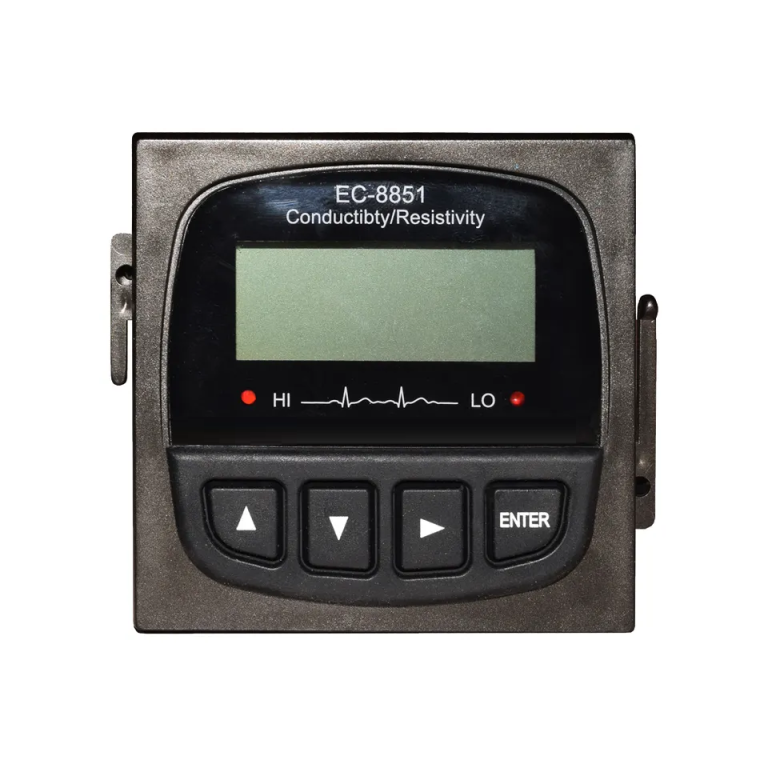
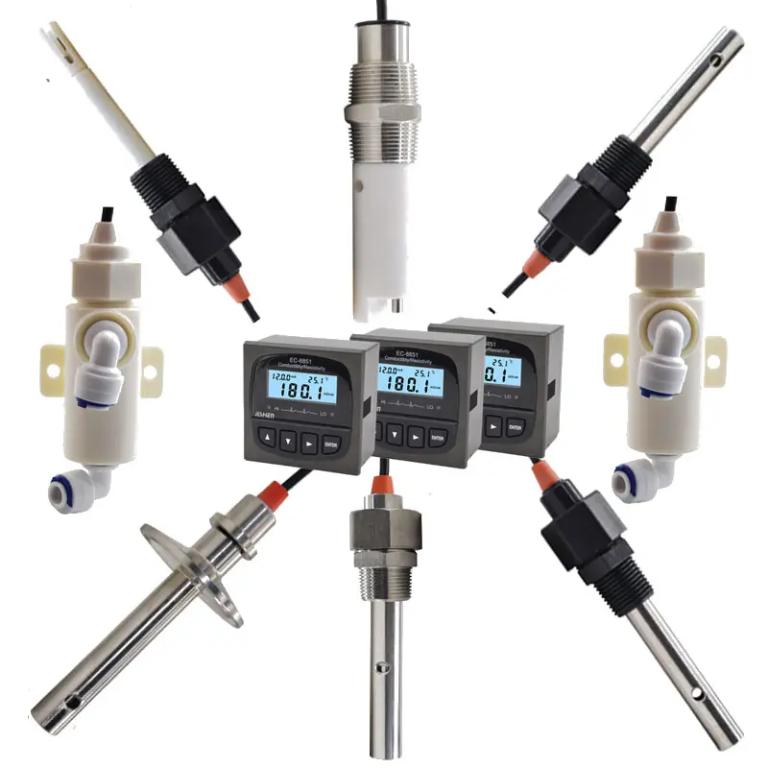
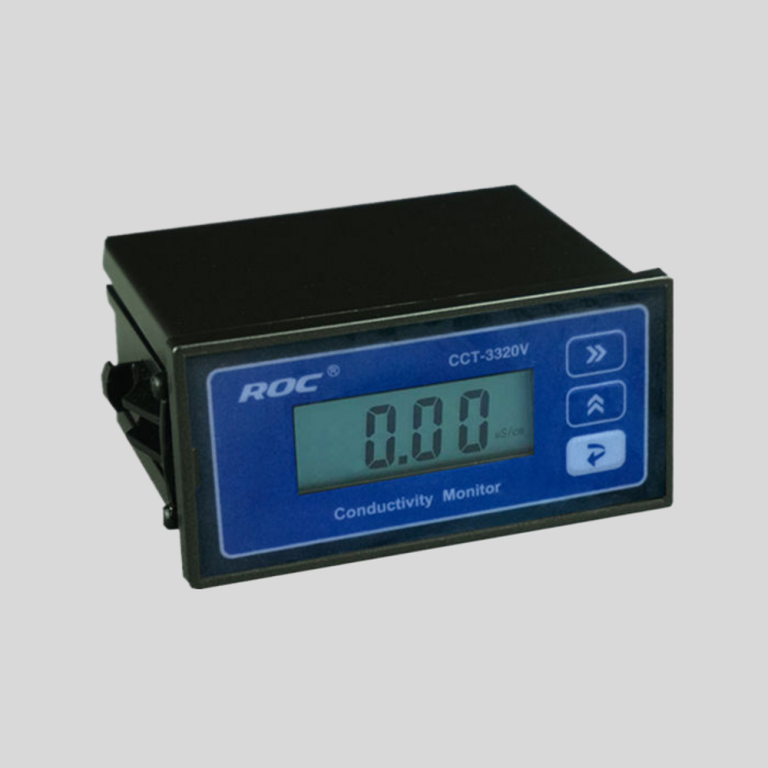
ChiMay’s inline conductivity meters complement smart metering by providing water quality data alongside consumption. These sensors track total dissolved solids (TDS), conductivity variation, and potential contamination events, adding a quality dimension that consumption data alone cannot provide.
Communication Protocols and Integration
Smart water meters use several communication routes:
- Advanced Metering Infrastructure (AMI): Two-way communication between the utility and each endpoint
- RF mesh networks: Coverage in dense urban environments
- Cellular IoT (NB-IoT/LTE-M): Connectivity where building a mesh is impractical
- Power Line Communication (PLC): Where existing electrical infrastructure is available
One clarification worth making: the EU’s 80% smart metering coverage target applies to electricity and gas, not to water. Water utilities are adopting the same technology without that mandate, usually because meter reading cost and non-revenue water make the case on their own.
Operational Efficiency Gains
Leak Detection and Infrastructure Management
Traditional leak detection relies on periodic surveys and customer complaints, which means losses continue until someone notices. Smart meters change that by enabling continuous flow monitoring at customer and district metered area (DMA) level.
When flow stays above the expected threshold during low-demand hours — typically 02:00-05:00 — the system raises a leak alert. Utilities running smart meter networks report:
- Faster leak detection, cutting the time a leak runs from weeks to hours
- Better maintenance scheduling because condition is visible before failure
- Fewer emergency repairs as a result of early intervention
The size of these improvements tracks closely with how quickly the utility’s field crews respond. Data that arrives in an hour and sits in a queue for a week saves nothing.
Demand Management and Conservation
Smart meters provide the granular consumption data that demand management strategies need. Time-of-use pricing informed by smart meter data produces modest peak demand reductions in pilot programmes, with the effect strongest where the pricing signal is meaningful and sustained.
ChiMay’s online turbidity testers and residual chlorine transmitters complement smart metering by ensuring that conservation measures do not compromise water quality. When distribution anomalies occur, integrated sensors alert operators before quality parameters slip below acceptable thresholds.
Economic Impact and Return on Investment
Revenue Enhancement
Water utilities have historically struggled with non-revenue water (NRW) — the water produced and lost before it reaches a paying customer. Global NRW losses are measured in the tens of billions of dollars annually, and the figure is dominated by a relatively small number of systems with very high loss rates.
Smart metering addresses NRW through several mechanisms:
| Loss Category | Smart Meter Impact |
|---|---|
| Metering inaccuracies | Meter-class accuracy held across service life |
| Data gaps | Continuous monitoring eliminates estimated reads |
| Unauthorized consumption | Anomaly detection identifies abnormal patterns |
| Physical leaks | Rapid detection shortens the loss period |
Case Study: Singapore’s Smart Water Initiative
PUB Singapore began its smart water meter programme with a small pilot, publishing daily consumption data to participating households, then expanded in phases across districts from 2021. Reported outcomes from the programme include:
- Modest reductions in household consumption where customers received consumption feedback
- Better network visibility supporting PUB’s existing pressure management and leak detection work
- Improved customer engagement through the accompanying mobile application
PUB’s rollout is best read as evidence that phased deployment with a pilot first is workable at scale, rather than as a template for a fixed savings percentage. Singapore’s network is unusually well maintained and well mapped; utilities elsewhere should expect a different baseline.
Challenges and Considerations
Implementation Barriers
Infrastructure Costs: Installation costs typically fall in the $150-400 per meter range depending on technology and site conditions. A utility serving 100,000 customers faces capital investment in the tens of millions across the full rollout — a material budget item that has to compete with pipe replacement.
Cybersecurity Concerns: Connected devices add attack surface to operational networks. The National Institute of Standards and Technology (NIST) recommends defence-in-depth approaches including encryption, authentication, and network segmentation.
Data Management: Meter data volumes scale with polling frequency. A utility with a million meters on frequent polling produces gigabytes per day, and the total grows quickly with interval reads. Platform design — retention policy, aggregation, and what actually needs to be stored at full resolution — matters more than raw storage capacity.
Hybrid Approaches
Many utilities phase the deployment:
- Phase 1: Deploy smart meters in high-loss areas and commercial zones
- Phase 2: Expand to residential areas with validated economic models
- Phase 3: Integrate advanced analytics and optimisation platforms
This lets a utility prove value, refine its processes, and build internal capability before committing the full budget.
Future Outlook
Technology Convergence
Smart water meters are evolving from consumption measurement toward distribution intelligence:
- Acoustic sensing enables pipe condition assessment without excavation
- Pressure transient monitoring supports burst prediction, with lead time that depends on pipe material and the quality of the baseline record
- Machine learning optimises pump schedules and valve operations
- Digital twin integration enables scenario modelling and system simulation
Regulatory Evolution
Regulatory frameworks are adapting to smart meter capabilities:
- AMI mandates are spreading, though mostly in electricity
- Data privacy regulations require careful handling of consumption patterns, which are revealing about occupancy and habits
- Interoperability standards are emerging to prevent vendor lock-in
Closing Notes
Smart water meters change what a municipal utility can see and therefore what it can do. Continuous, accurate data enables operational efficiency that mechanical metering simply cannot support.
The economics depend on the utility’s baseline. Where non-revenue water is high and meter reading is expensive, the returns are usually strong. Where NRW is already low, the case rests more on service quality and information than on recovered water.
For utilities facing aging infrastructure, constrained budgets, and rising service expectations, smart metering is the practical first step. The question is less whether to deploy it than how fast the rollout can be sequenced.