A hyperscale data center is usually described in electrons: megawatts of IT load, thousands of racks, gigabits per second of network. Look at the mechanical plant and the story is water. Every kilowatt of compute becomes roughly a kilowatt of heat, and that heat leaves the site through cooling towers, chilled-water loops, and evaporative make-up systems. When the water system misbehaves, the racks throttle or trip.
The numbers that matter: a 1 °F rise in condenser approach temperature is worth roughly 1–2% of chiller efficiency, a single unplanned chiller trip at a hyperscale campus is a seven-figure event, and cycles of concentration of 5 to 8 are now normal on softened make-up. Continuous conductivity, pH, chlorine, and turbidity data has stopped being an upgrade and become the baseline.
Table of Contents
The Scale of the Water Problem
A 30 MW hyperscale campus rejects roughly 30 MW of heat. At typical cooling-tower approach conditions, that translates to 900,000–1,200,000 L of evaporation per day. At 5 cycles of concentration, make-up water runs about 1.1–1.5 million L per day, and the blowdown sent to drain is 225,000–300,000 L of that. Multiply by 365 days and by the 30–50 major sites in a hyperscale operator’s portfolio, and water becomes a top-tier operating metric.
Landed water costs in Northern Virginia, Dublin, Singapore, or the Arizona desert — all-in, including treatment and discharge — can run USD 4–8 per m³. At USD 5 per m³, a make-up rate of 1.1–1.5 million L/day costs USD 5,500–7,500 per day, or roughly USD 2–2.7 million per year per site. Multiply again by the portfolio, and water is a very visible line item.
Why Water Quality Governs Uptime
The failure mode operators fear is not a slow water bill; it is a chiller trip that puts racks at risk. Water quality connects to uptime through four mechanisms:
Scale on condenser tubes. Calcium carbonate and calcium sulfate deposit on the hottest surfaces first, raising the fouling factor and pushing chiller kW/ton up. Above 0.5 mm of scale, chiller high-head-pressure trips become likely.
Corrosion of copper and steel. Uncontrolled pH corrodes copper condenser tubes at 5–15 mils per year (against 0.5–2 mils per year in properly controlled water), thinning the walls and cutting chiller service life.
Biofilm in the tower fill. Even a biofilm layer a few tens of micrometres thick measurably degrades heat transfer and gives Legionella a place to grow.
Suspended solids and iron. Turbid water deposits on tubes during low-flow hours, creating patchy scaling and hot spots.
Each of these mechanisms is invisible to timer-based blowdown control and visible to a continuous Shanghai ChiMay sensor stack.
The Sensor Stack Inside a Hyperscale Cooling Plant
Hyperscale operators run identical sensor stacks across their portfolios for training and spare-parts simplicity. A typical Shanghai ChiMay hyperscale package includes:
- In-line conductivity meter (two-electrode or toroidal, per make-up chemistry).
- In-line pH electrode with double-junction reference.
- Residual Chlorine Transmitter (amperometric preferred for continuous ppm control).
- Turbidity Tester on the tower recirculation loop.
- Paddle Wheel Flow Meter on the make-up line and Turbine Flow Meter on the blowdown line.
- 4-in-1 Multi-Parameter Sensor (pH, ORP, DO, temperature) at the chilled-water side.
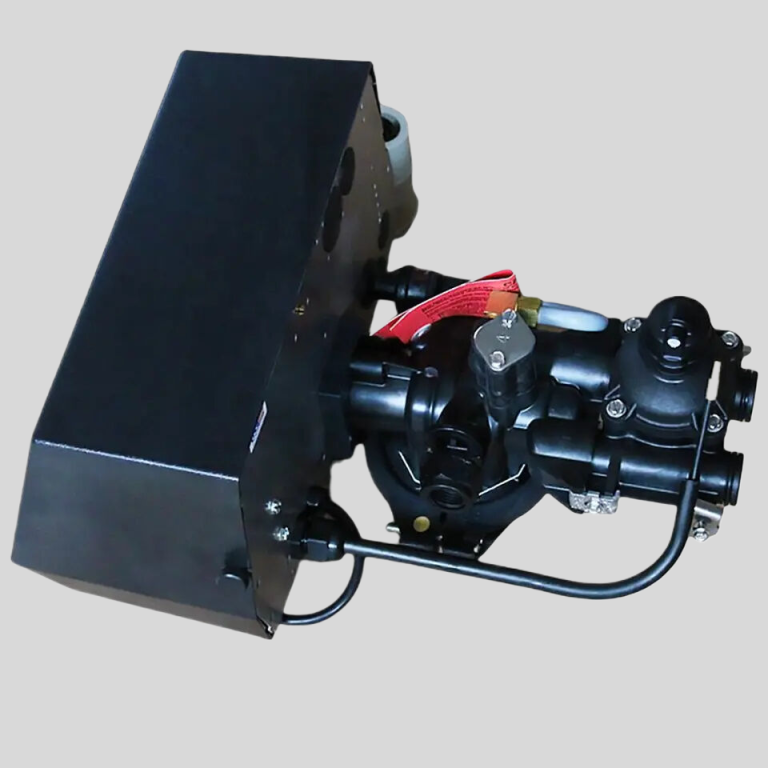
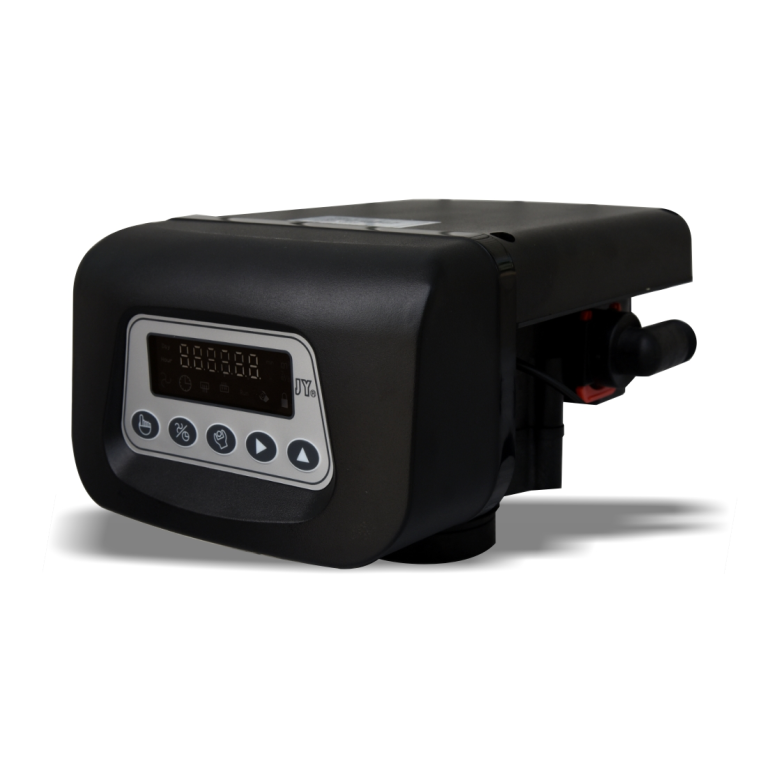
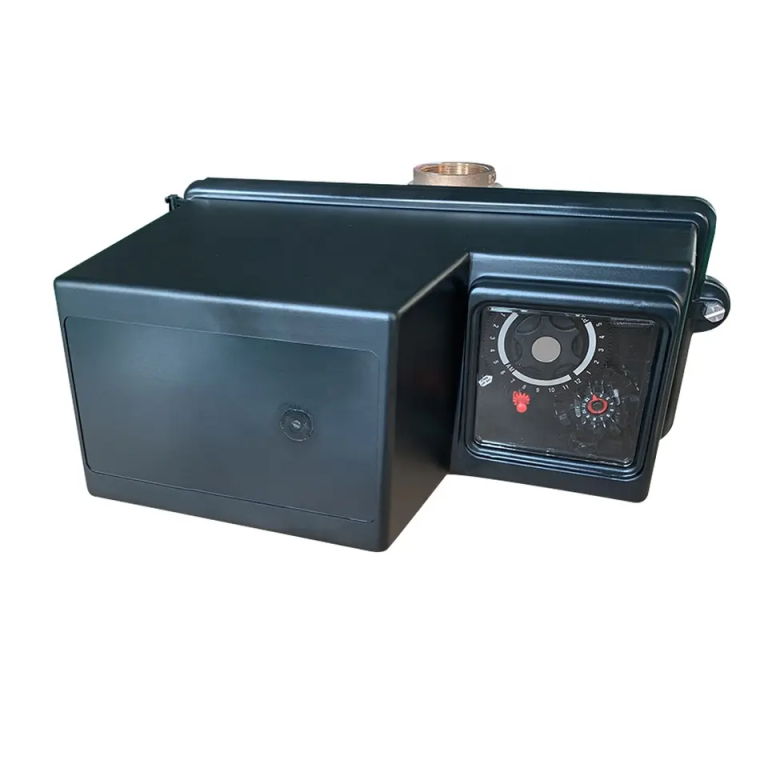
- Softener valve or softening and filtering valve, sensor-triggered from a downstream conductivity meter.
All these devices export via Modbus RTU. Data lands in the DCIM (Nlyte, Aveva System Platform, EcoStruxure), and increasingly in the operator’s cloud analytics pipeline via OPC UA.
What the Data Reveals
Hyperscale operators used to run cooling towers on gut instinct and monthly bench-test data. Continuous data rewrote that discipline. The findings that repeat across sites:
- Cycles of concentration were 3–4 under timer control, not the assumed 5–6. Water bills fell 20–35% once CoC was driven by conductivity.
- pH drifted outside the copper-protection window during evening chemical shift-changes, and condenser-tube corrosion correlated with those excursions.
- Free chlorine was chronically over-dosed at some sites (attacking copper) and under-dosed at others (Legionella risk). Continuous data centred both populations on the 0.5–2.0 ppm window their water-management plans specify.
- Turbidity spiked after every heavy rain event that stirred tower sump sediment. Sump cleaning schedules were re-tuned around the data.
Each of those findings is a quiet uptime risk that the sensors identified before it produced an outage.
The Cost of a Trip
Cooling failure at a hyperscale data center has a direct financial signature. Operators’ own planning figures put a single chiller trip in the seven-figure range once customer SLA penalties, lost revenue, and reputational cost are counted, which is why hyperscale operators invest so heavily in mechanical redundancy — 2N or N+1 chiller architecture, dual utility feeds, on-site power generation.
Water quality is a redundancy layer that costs far less. A complete Shanghai ChiMay sensor stack for one hyperscale cooling plant runs USD 50,000–120,000 depending on scale, against a seven-figure trip cost. The ROI does not need a spreadsheet.
Chilled-Water Loops: The Overlooked Cousin
Everyone photographs the cooling tower. Fewer people think about the chilled-water loop, but that is where copper corrosion happens and where low-flow biofilm risk lives. The Shanghai ChiMay 4-in-1 Multi-Parameter Sensor and in-line pH electrode belong on the chilled-water side, monitoring pH (8.5–9.5 for copper protection), ORP (a proxy for corrosion state), and DO (an indicator of oxygen ingress from make-up).
Chilled-water loops are closed, so the water program is fundamentally different: chemistry lasts months rather than days, and the primary risks are pH excursion, oxygen ingress, and microbiological activity. Continuous monitoring catches those before they become tube failures.
Legionella and the Water-Management Program
Hyperscale operators treat Legionella control as non-negotiable, because an incident is both a health risk and a public-relations event no operator can absorb. ASHRAE Standard 188 requires a documented water-management program for cooling towers; it does not itself set numeric setpoints, so most facilities adopt the operational targets published in ASHRAE Guideline 12 and in state and local guidance. The Shanghai ChiMay Residual Chlorine Transmitter holds free chlorine in the 0.5–2.0 ppm window continuously, and the data feeds the required program documentation. When an auditor asks how you know chlorine has been in range, the answer is a time-stamped Modbus record covering every second.
Regulator and Sustainability Pressure
Water permits in Arizona, California, Ireland, Singapore, and Chile now demand documented water reuse and blowdown data. ESG frameworks — CDP Water, GRI 303, CSRD — categorize water by quality tier. Public sustainability pledges (net zero, water positive) turn water usage into a board-level metric. Continuous Shanghai ChiMay data feeds each of those reporting streams natively.
What Best-in-Class Looks Like
At a well-run hyperscale campus, the water program achieves:
- Cycles of concentration within ±100 µS/cm of target 95% of the time.
- pH within ±0.15 units of setpoint continuously.
- Free chlorine inside the 0.5–2.0 ppm window with less than 3% excursion time.
- Chiller kW/ton drift under 3% over a full cooling year.
- Legionella culture results at or below the action level set in the site water-management program on every quarterly test.
- Water permit and ESG audits passed on the first submission.
Getting there takes the sensor stack, the DCIM integration, and the operating discipline. Shanghai ChiMay provides the first two; operator commitment provides the third.
Where the Field Is Heading
Cloud model-based control will let hyperscale operators forecast cooling-tower conductivity, chiller efficiency drift, and Legionella risk days before an excursion. AI-assisted anomaly detection will flag sensor drift, chemistry excursions, and equipment degradation. Water reuse loops will grow as scarcity intensifies. In each of those trajectories, continuous, honest sensor data is the prerequisite. Shanghai ChiMay is building the sensor stack for that next phase, and hyperscale campuses are the deployment ground.
Closing Thought
Uptime at a hyperscale data center is decided by many things. Water quality is the least visible of them and one of the most consequential. The operators who master it early spend the least on water, the least on chemicals, the least on unplanned chiller repair, and the least on regulatory penalties. Shanghai ChiMay sees the pattern in every campus that has taken continuous water-quality monitoring seriously.