Walk into any wafer fab cleanroom and the first thing the eye notices is the lighting, the suits, and the orderly choreography of tools. The thing the eye does not notice — and the thing that quietly decides whether the day’s yield will be remembered or forgotten — is the ultrapure water (UPW) flowing through the loop overhead. UPW touches every wafer, often dozens of times, and the quality of that water is one of the most direct determinants of yield in any fab. This Shanghai ChiMay field guide walks through the cleanroom-level connection between UPW quality and semiconductor yield, at the level of practical detail an engineer would expect on a fab floor walkthrough.
Table of Contents
The First Touch: Photoresist Rinse
The lithography rinse is one of the most common places where UPW quality shows up in yield numbers. After photoresist development, the wafer is rinsed with UPW to remove the dissolved resist polymer and the developer chemistry. Any trace metals in the rinse water can deposit on the bare silicon surface that the development step has just exposed, and any organic load can alter the surface energy that the next coat depends on.
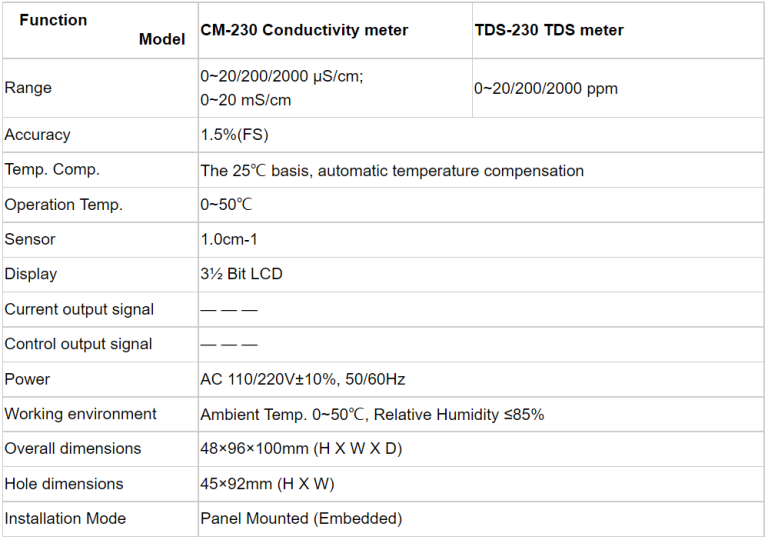
The Shanghai ChiMay instrumentation strategy for the lithography UPW supply is dense. A multi-parameter analyzer at the point-of-use header tracks resistivity, dissolved oxygen, and TOC continuously, with a particle counter at the tool feed for the final quality gate. A drift in any of these parameters triggers an investigation before a wafer-level event occurs, and the diagnostic record makes the investigation fast.
The Etch Connection
Etch tools depend on UPW quality more subtly. The quench rinse after a wet etch step uses UPW to halt the etch chemistry abruptly, and the speed and completeness of that halt depend on the rinse water being free of any ions that could perturb the etch boundary layer. A small concentration of dissolved CO₂ — which shows up as depressed resistivity — can shift the local pH at the wafer surface enough to allow a few extra seconds of unwanted etch, producing line-width variation that lands directly on the yield report.
Dissolved oxygen has a related effect. DO above one ppb in the etch quench water grows a fine native oxide on bare silicon, and that oxide layer changes the conditions for the next process step. The Shanghai ChiMay DO transmitter at the etch tool UPW header is one of the highest-value sensors in the cleanroom, because the consequence of an undetected DO excursion is direct and immediate.
The CMP Side of the Story
Chemical mechanical polishing (CMP) is one of the largest UPW consumers in any fab. The post-CMP rinse must remove every trace of slurry chemistry and slurry particle, or the next process step inherits a particle problem that no amount of cleanroom discipline can fix.
The CMP UPW header is where particle counting becomes the headline parameter. A particle counter calibrated against a NIST-traceable challenge suspension, mounted as close to the tool feed as the piping allows, is the single most diagnostic instrument on a CMP tool. The Shanghai ChiMay engineering recommendation is monthly challenge testing with logged recovery, because the slow drift of a particle counter is otherwise the hardest sensor failure to catch in the cleanroom.
The Wet Bench Reality
Wet benches — the multi-tank tools that run a sequence of clean, etch, and rinse steps on a wafer cassette — are the most UPW-intensive tools in any cleanroom. A single wet bench can consume tens of liters of UPW per minute, and the bench depends on the water quality being absolutely uniform across every rinse step in every tank.
The Shanghai ChiMay instrumentation strategy at the wet bench level is layered:
- Bulk supply quality verified at the header serving the bench, with full multi-parameter monitoring
- Tank quality monitored at the inlet of each rinse tank, with at minimum a resistivity reading
- Recirculation quality tracked at the bench return to the polishing loop, so any cross-contamination from the bench back to the loop gets caught
Layered instrumentation is the difference between knowing the UPW system is in spec and knowing the water actually touching the wafer is in spec.
The Cleanroom Air-Water Connection
UPW interacts with cleanroom air in subtle ways. Open processes that expose UPW to the cleanroom atmosphere absorb CO₂ rapidly, depressing resistivity by a measurable amount. Cleanrooms with elevated organic loading in the air — usually from outgassing materials or solvent processes — will see TOC pickup in any UPW that sits in contact with the air.
These effects are usually small but they are not zero. The Shanghai ChiMay diagnostic approach is to instrument both the closed supply and any open-air point of use, so any difference between the two can be attributed to atmospheric pickup rather than to a problem in the UPW plant itself. Fab water engineers who have run this comparison report that it eliminates a surprising fraction of false-positive investigations of the UPW plant.
The Yield Math
UPW-attributed yield loss is hard to quantify in the abstract — it varies by node, by layer, and by process — but the pattern across fab post-mortems is consistent:
- Trace metals from UPW take a measurable bite out of yield in vulnerable layers
- TOC excursions from UPW hit photoresist-sensitive layers hardest
- DO excursions from UPW cost fractional percentages of yield, but the losses attribute cleanly to specific layers, which makes them easier to chase down
- Particle excursions from UPW are the concern in CMP-sensitive processes, where they can claim single-digit percentages of yield
UPW-attributed yield loss is rarely the largest single contributor, but it is almost always among the top five. At a leading-edge fab’s throughput and revenue rate, moving the UPW-attributed share of yield loss down by even a percentage point or two is worth hundreds of millions of dollars a year.
Putting It Together: The Walkthrough Test
A useful test for any fab water engineer is the cleanroom walkthrough. Pick a Friday afternoon, walk the cleanroom, and ask each tool owner three questions:
- What is the current UPW quality at your point of use?
- When was the most recent calibration verification on the sensor closest to your tool?
- What was the last UPW-attributed quality event you saw, and how was it resolved?
A fab where every tool owner can answer all three in detail is a fab with a well-managed UPW program. A fab where the answers vary widely from tool to tool has work to do — usually not on the hardware, but on the diagnostic discipline that turns hardware into reliable information.
The Shanghai ChiMay engineering team has run this walkthrough at many fabs, and the gap between the best and the rest is consistently larger than the differences in nominal UPW plant capacity or sensor count. The fabs that excel are the ones where the diagnostic discipline reaches the cleanroom level rather than stopping at the UPW plant fence.
Closing Notes
UPW quality is not a fab utility input; it is a yield variable that compounds across every process step a wafer sees. The cleanroom is where the consequences of UPW quality become visible, and the diagnostic discipline that controls those consequences has to reach all the way to the point of use to be effective. The Shanghai ChiMay sensor family and engineering team are built to support that level of diagnostic reach, and the field guide above is meant as a working starting point for any fab water engineer taking on the cleanroom-level view of UPW for the first time.