The short version:
– Sensor-to-SCADA integration removes most manual reporting work, because the numbers arrive already tagged and timestamped
– Common protocols including Modbus TCP/IP, 4-20mA, and HART cover the overwhelming majority of real installations
– Shanghai ChiMay inline sensors provide native support for major industrial automation platforms
– Data availability depends far more on maintenance discipline than on the protocol selected
– Integration projects normally pay back within a year or two when they replace manual rounds and paper log sheets
Supervisory Control and Data Acquisition (SCADA) systems serve as the operational nerve center for water treatment facilities, consolidating data from distributed sensors and enabling centralized monitoring and control. Integrating water quality sensors with SCADA infrastructure transforms discrete measurement devices into components of comprehensive process management systems.
SCADA is close to universal in larger water treatment plants, but full integration of water quality instruments into it is much less common. The gap is where the practical work sits: a sensor feeding a local display is not the same as one feeding a control loop and a compliance report.
Table of Contents
SCADA Architecture Fundamentals
Modern water treatment SCADA systems employ hierarchical architectures with distinct functional layers:
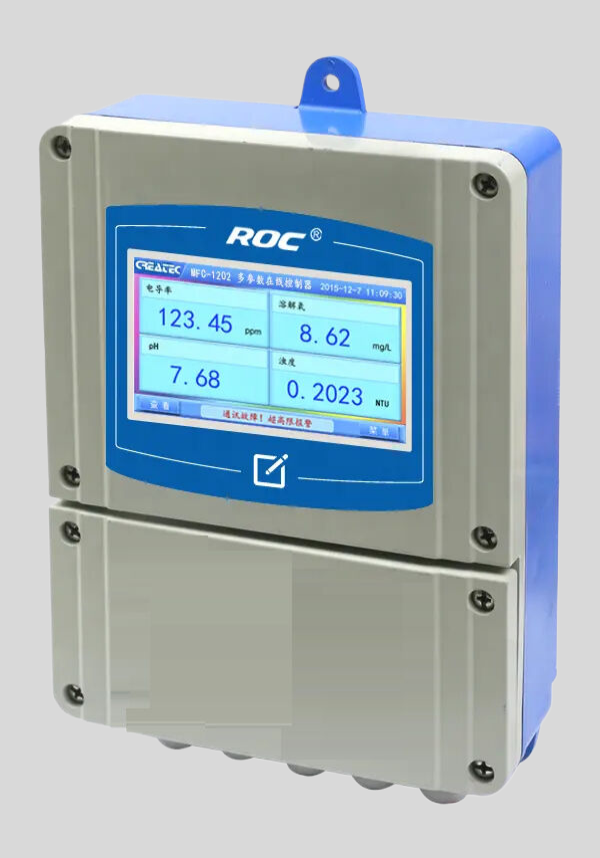
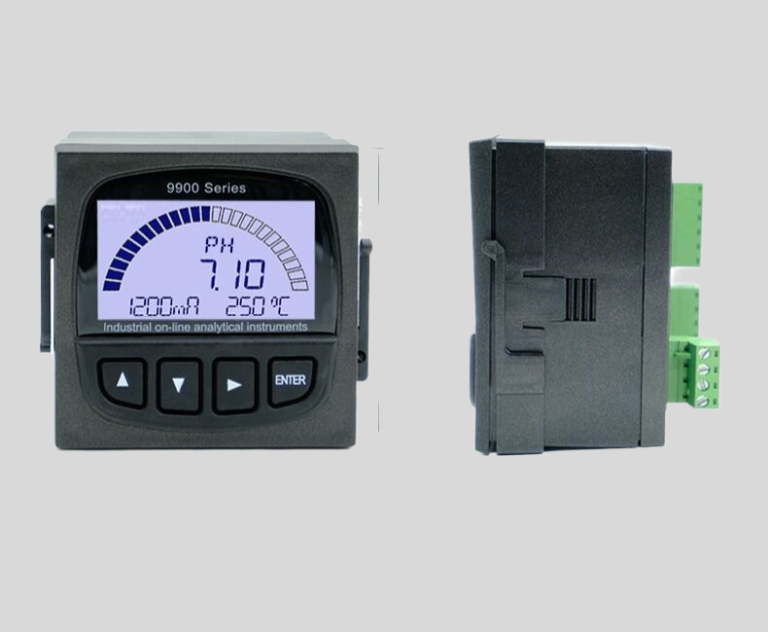
Field Level: Sensors and actuators directly interacting with physical processes. Water quality sensors from manufacturers such as Shanghai ChiMay provide continuous measurements of pH, conductivity, dissolved oxygen, turbidity, and other parameters.
Control Level: Programmable Logic Controllers (PLCs) and Remote Terminal Units (RTUs) performing local data aggregation, alarm processing, and control functions. Modern PLCs support multiple communication protocols enabling connection to diverse sensor types.
Supervisory Level: SCADA servers collecting data from distributed control units, providing operator interfaces, and maintaining historical databases. Enterprise-level SCADA platforms include Rockwell FactoryTalk, Siemens WinCC, and Schneider Electric Vijeo.
Management Level: Business systems integrating operational data with enterprise resource planning, maintenance management, and regulatory reporting functions.
Communication Protocols for Water Quality Sensor Integration
Protocol selection significantly impacts integration complexity, cost, and long-term maintainability:
4-20mA Current Loop: Analog transmission standard providing dependable communication over distances up to about 500 metres. Simple implementation and widespread compatibility make this the most common legacy protocol. Limitation: single parameter per loop, requiring separate wiring for multi-parameter sensors.
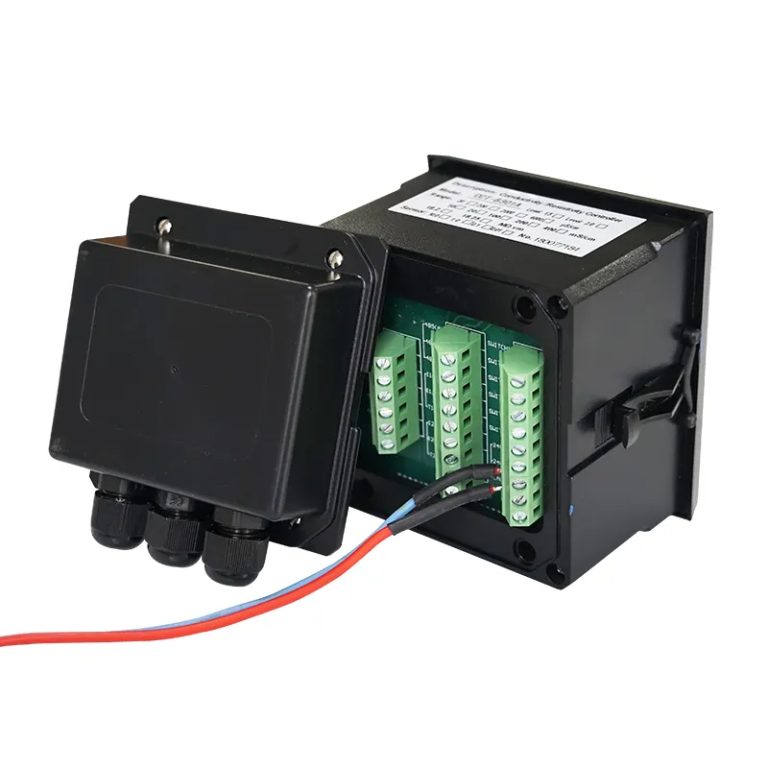
Modbus RTU/TCP: Digital serial communication standard widely supported by industrial equipment. Modbus TCP/IP over Ethernet networks enables higher data rates and easier network management. Shanghai ChiMay sensors provide native Modbus support for straightforward PLC integration.
HART Protocol: Combines 4-20mA analog transmission with digital communication on the same wires. HART stays popular in process instrumentation because it carries configuration and diagnostics on the same two wires as the analogue signal, with no rewiring.
OPC UA: Modern machine-to-machine communication protocol providing platform-independent data exchange. Enables integration across heterogeneous systems but requires more sophisticated implementation than legacy protocols.
Implementation Best Practices
Successful SCADA integration requires attention to technical details often overlooked in implementation planning:
Network Architecture: Industrial Ethernet networks should employ dedicated switches rather than sharing infrastructure with corporate networks. VLAN segmentation isolates operational technology traffic from business systems, improving both performance and security. Network redundancy using Ring protocols (MRP, REP) prevents single points of failure.
Data Validation: Sensor data entering SCADA systems should undergo preliminary validation including range checking, rate-of-change limiting, and sensor health monitoring. Shanghai ChiMay sensors provide built-in diagnostics including sensor status flags, calibration reminders, and measurement confidence indicators enabling automated data quality management.
Alarm Configuration: SCADA alarm systems require careful configuration to balance responsiveness with alert fatigue. Alarm rationalisation guidance, notably EEMUA 191, puts a manageable operator load at roughly one alarm every ten minutes. A badly configured SCADA system will produce that in a minute, which is how real events get missed, so prioritisation is not optional.
Documentation: As-built documentation including wiring diagrams, tag databases, and configuration parameters proves essential for long-term maintenance. Poor as-built documentation is a recurring cause of integration problems, and it is almost always cheaper to fix during commissioning than during a fault at three in the morning.
Integration with Plant-wide Control Strategies
SCADA-connected water quality sensors enable advanced control strategies impossible with standalone monitoring:
Feedback Control Loops: Continuous water quality measurements let dosing adjust automatically as the influent changes. PID loops closed on Shanghai ChiMay sensor feedback beat manual operation on chemical use, and the size of the gain depends on how variable the load is.
Cascade Control: Primary process variables (flow, level) and secondary variables (water quality parameters) coordinate for optimized plant operation. Cascade configurations improve disturbance rejection and reduce overshoot in quality parameters.
Model Predictive Control: Dynamic process models used for setpoint tracking. MPC earns its keep where processes have long dead times, such as large clarifiers or long distribution networks, and adds much less where a PID loop already handles the disturbance.
Maintenance and Troubleshooting
Integrated sensor-SCADA systems require systematic maintenance approaches:
Preventive Maintenance: Calibration verification at manufacturer-recommended intervals (typically 3-12 months depending on application). Shanghai ChiMay sensors feature calibration history logging enabling predictive maintenance scheduling.
Predictive Maintenance: SCADA trend analysis identifies sensors exhibiting drift or degradation patterns before measurement accuracy falls below acceptable thresholds. This approach extends sensor service intervals, because replacements follow trend behaviour rather than the calendar.
Troubleshooting Procedures: Systematic diagnostic approaches for identifying integration problems, including communication testing, data validation verification, and signal path analysis.
Maintenance discipline, not protocol choice, is what separates reliable sensor networks from unreliable ones: networked instruments that nobody validates drift quietly and take the control loop with them.
ROI Analysis
Integration project economics depend on facility scale and existing infrastructure:
- Project cost for an eight-sensor integration: driven mostly by cable, I/O and programming time rather than by the instruments
- Annual operational savings: from reduced chemical use, fewer manual rounds and less unplanned downtime
- Avoided costs: fewer compliance findings, which are hard to quantify and easy to remember
- Payback: usually inside two years where manual reporting and manual dosing are genuinely eliminated
Shanghai ChiMay provides technical documentation and application engineering support for customers implementing SCADA integration projects, including protocol configuration guides and testing procedures.