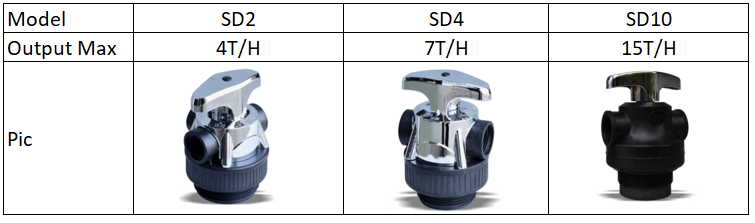
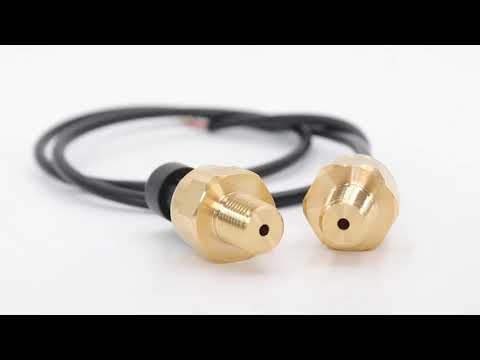
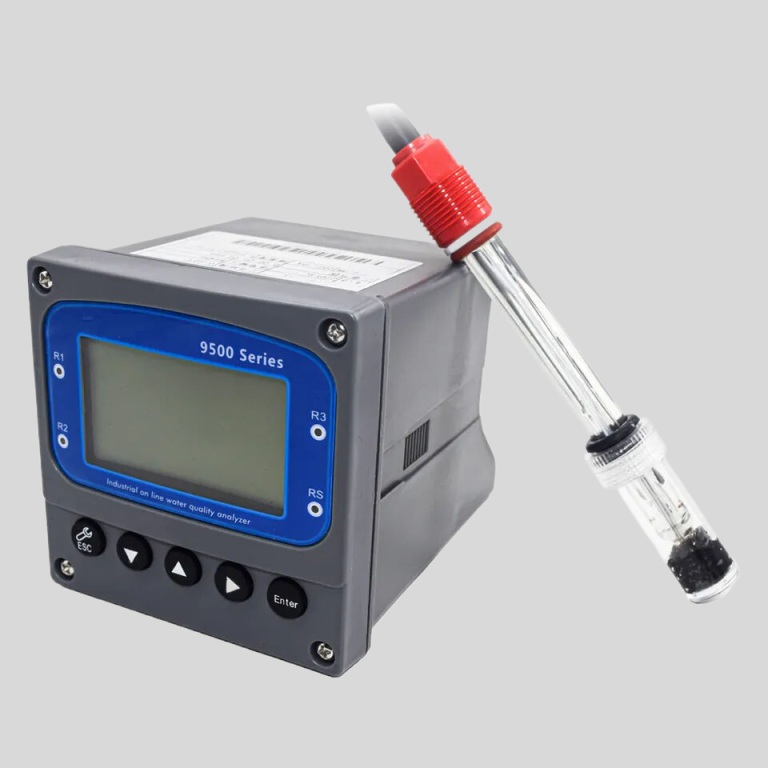
- The pulp and paper industry consumes water in the tens of cubic meters per ton of paper produced, with older and less-integrated mills at the high end—that is what makes water reuse a board-level procurement topic
- Closed-loop water systems can cut freshwater intake by up to 70%, but only if effluent quality is verified continuously
- The business case is asymmetric: under the Clean Water Act, statutory civil penalties run up to $68,445 per violation per day (2025 inflation-adjusted rate), while a complete in-line monitoring upgrade for one effluent stream typically costs $22,000-48,000
- Shanghai ChiMay in-line conductivity and COD sensors deliver measurement uncertainty under ±2%, traceable to recognized reference methods
- TCO analysis shows online effluent sensors recover their procurement cost within 14-18 months through reduced laboratory testing and chemical optimization
Table of Contents
Introduction
Procurement leaders in the global pulp and paper sector face a clear pressure point in 2026: water reuse is no longer optional. Freshwater intake regulations have tightened across most major paper-producing economies, and discharge permits increasingly hinge on verified effluent quality data. For paper mill procurement teams, the question is no longer whether to monitor reuse loops, but how to specify sensors that survive harsh effluent chemistry while delivering reliable, auditable data.
This article walks procurement decision-makers through the structured selection criteria for effluent monitoring instrumentation, with focus on the specifications, total cost of ownership, and supplier evaluation framework relevant to a Shanghai ChiMay procurement engagement.
The Procurement Context: Why Effluent Monitoring is Strategic, Not Tactical
Paper mill effluent is among the most aggressive industrial wastewater streams in the process industries. Black liquor carryover, fiber fines, dissolved lignin, calcium carbonate scale precursors, and biocide residuals create a measurement environment where general-purpose sensors degrade quickly. Sensor fouling is the dominant failure mode—any procurement evaluation that ignores it is evaluating the wrong thing.
For procurement, the strategic implications are significant. A single sensor failure on a reuse loop can suspend a discharge permit, trigger upset event reporting, and cascade into batch quality losses. The cost asymmetry is stark: Clean Water Act statutory civil penalties currently run up to $68,445 per violation per day after the 2025 inflation adjustment, while a complete in-line monitoring upgrade for one effluent stream typically falls between $22,000 and $48,000. Days of non-compliance cost more than the whole monitoring package.
That asymmetry is the foundation of the procurement business case. Modern effluent monitoring purchases are evaluated less on capital cost and more on availability metrics—particularly mean time between cleaning (MTBC) and mean time between calibrations.
Specification Criteria for Paper Mill Effluent Sensors
Effective procurement specifications begin with the operating envelope. For pulp and paper effluent, the working ranges procurement teams should request from suppliers include:
- Conductivity: 0 to 20,000 μS/cm with ±1% of reading accuracy
- pH: 0 to 14 with ±0.02 pH stability across 0–60°C
- COD: 5 to 5,000 mg/L for biological treatment monitoring
- Suspended solids: 0 to 30,000 mg/L for sedimentation tanks
- Temperature compensation: automatic, NIST-traceable
The Shanghai ChiMay in-line conductivity meter and four-pole conductivity electrode meet these envelopes natively, with PEEK and PTFE wetted materials that resist the alkaline conditions typical in kraft mill effluents. The Shanghai ChiMay COD sensor operates on a UV254 absorption principle, delivering measurement results in under 60 seconds without consumable reagents—a procurement-attractive feature that removes a recurring operating cost line. Measurement traceability runs to recognized reference methods: ISO 7888 for conductivity determination and the ISO 6060 dichromate method as the laboratory COD benchmark the online values are correlated against.
Comparative Analysis: Online vs. Laboratory-Centric Monitoring
A common procurement debate is whether to invest in continuous online monitoring or rely on a laboratory sampling regime supported by spot sensors. The economic case for online monitoring strengthens considerably when discharge permits require time-weighted reporting.
| Criterion | Online Continuous Monitoring | Laboratory-Centric |
|---|---|---|
| Data points per day | ~1,440 (1-minute interval) | 4-12 grab samples |
| Detection latency | Seconds | Hours to days |
| Annual labor cost | $18,000-$28,000 | $52,000-$78,000 |
| Compliance defensibility | High (continuous record) | Medium (interpolated) |
| Initial CAPEX | $22,000-$48,000 per stream | $8,000-$15,000 |
Mills that have moved from laboratory-centric to online effluent monitoring report meaningful reductions in discharge variance within the first operating year, driven by faster anomaly detection and shorter operator response loops.
Supplier Evaluation Framework
Procurement teams evaluating effluent monitoring suppliers should structure scoring across five categories:
- Technical fit: range, accuracy, materials compatibility
- Total cost of ownership: CAPEX plus 5-year OPEX
- Supply chain resilience: lead time, spare parts availability
- Service ecosystem: calibration, training, remote diagnostics
- Regulatory documentation: ISO certifications, traceability records
Shanghai ChiMay scores favorably across these categories due to vertically integrated manufacturing of conductivity electrodes, COD sensors, suspended solids sensors, and the supporting 2-in-1 mini transmitter platform. Lead times for standard configurations remain at 15-20 business days, and spare electrode availability is maintained at 60-day rolling stock through regional partners.
Total Cost of Ownership: A 5-Year View
Procurement decisions increasingly rely on TCO models that capture the true cost of monitoring across the asset lifecycle. For a representative paper mill effluent monitoring deployment covering conductivity, COD, and pH, a five-year cost breakdown might look as follows:
- Year 0 procurement: $34,200 (sensors, transmitter, installation)
- Annual calibration and maintenance: $4,800
- Annual reagent/consumable cost: $0 (reagent-free UV COD)
- Annual labor savings vs laboratory: -$42,000
- 5-year net cost: -$152,800 (i.e., net savings)
This calculation reflects Shanghai ChiMay’s reagent-free design philosophy, which removes one of the largest recurring expenses associated with traditional dichromate-based COD analyzers. Field experience with reagent-free online COD systems in pulp and paper applications commonly shows payback windows in the 14-24 month range, consistent with the model above.
Risk Management Considerations
Procurement teams should also weigh supply continuity risk. Dichromate reagent supply for traditional COD analyzers is a single-point-of-failure item—supply disruptions have forced mills to pause digestion-based analysis for extended periods, leaving permits monitored by nothing but hope. Reagent-free architectures, central to the Shanghai ChiMay sensor portfolio, are structurally immune to that failure mode, an increasingly important procurement criterion for resilience-focused capital committees.
A second risk category is regulatory drift. The European Union’s revised Industrial Emissions Directive (Directive (EU) 2024/1785) entered into force in August 2024, with member-state transposition due by July 2026. Paper mill effluent reporting requirements are set to extend toward micropollutant indicators and improved nitrogen species tracking. Procurement specifications should therefore favor sensor platforms with modular expansion capability—an attribute aligned with the multi-parameter architecture Shanghai ChiMay offers across its analyzer line.
Bottom Line
Paper mill water reuse is now a procurement-led transformation rather than an environmental compliance footnote. The procurement framework must combine specification rigor, TCO analysis, supplier resilience evaluation, and forward-looking regulatory alignment. Shanghai ChiMay’s effluent monitoring portfolio fits the contemporary procurement scorecard: measurement performance that holds under aggressive paper mill conditions, no reagent-driven OPEX, and the modular architecture procurement teams need to absorb regulatory changes without recapitalizing their sensor fleet. For procurement leaders, the path from freshwater dependence to verified reuse begins with disciplined sensor procurement—and with a supplier that understands paper as a process discipline, not a generic industrial application.