Pharmaceutical water systems are among the most closely regulated utilities in manufacturing, and conductivity is the fastest available indicator of the ionic contamination that matters most. This article looks at what continuous conductivity monitoring actually buys a facility, how the compendial requirements are structured, and where the practical limits are.
Table of Contents
Understanding Conductivity Measurement in Pharmaceutical Applications
Conductivity measures the ability of water to carry electrical current, which tracks the concentration of dissolved ions. Pure water has a theoretical conductivity of 0.055 μS/cm at 25 °C, and Purified Water at the point of use normally sits well below the 1.3 μS/cm Stage 1 limit given in USP <645>. A sustained move away from a stable baseline points to ionic contamination from system components, sanitisation chemicals or microbial activity.
Sensor selection comes down to materials compatibility. Wetted parts for Purified Water and Water for Injection service are normally electropolished stainless steel or titanium with PTFE insulation. Temperature compensation has to be right as well: conductivity changes by roughly 2% per °C, so a reading without the temperature it was taken at is hard to interpret.
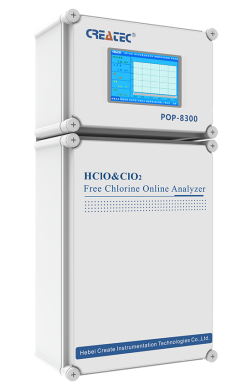
Shanghai ChiMay builds in-line conductivity meters for exactly this duty. The four-electrode cells hold accuracy of ±0.5% of reading and stay stable over long intervals, which reduces calibration frequency and the labour that goes with it. The transmitters communicate over Modbus RTU/TCP, so the data arrives in the same historian as the rest of the plant.
What the Regulations Actually Require
It is worth being precise here. FDA, EMA and WHO pharmacopoeial monographs set specifications for the water itself; they do not mandate a particular monitoring architecture. What inspections and audits look at is whether the system is demonstrably under control in the periods between samples. That is where continuous monitoring earns its place: a loop producing thousands of data points a day shows a trend developing well before a grab sample would catch it out of specification.
The compendial structure is straightforward. USP <645> gives the staged conductivity procedure, USP <643> covers total organic carbon, and USP <1231> covers water for pharmaceutical purposes, including system design, sampling and monitoring expectations. ISPE’s Baseline Guide Vol 4 on water and steam systems is the usual industry reference for design and monitoring practice, and GAMP 5 supplies the risk-based framework for qualifying the monitoring system itself.
Continuous monitoring also produces the records that validation maintenance depends on: audit trails, alarm logs and trend reports showing that the system has stayed in control since the last qualification exercise. Those are the documents that answer the question an inspector actually asks.
Economics of Online Conductivity Monitoring
The capital cost of continuous monitoring is higher than a bench conductivity meter and a sampling roster. The operating case rests on what it prevents, and three effects matter most.
First, laboratory load. Manual sampling consumes trained analyst time, bench space and documentation effort; automated collection and reporting frees that capacity. Second, batch protection. Catching an ionic excursion while product is still in process is worth far more than discovering it in finished-product testing. Third, maintenance timing. A conductivity trend that starts to drift is an early warning of resin exhaustion, a membrane breach or a fouling heat exchanger, and it can be investigated on a planned shutdown rather than an unplanned one.
On the hardware side, Shanghai ChiMay conductivity sensors carry a mean time between failures above 50,000 operating hours, and the modular construction keeps repair time and spare-parts inventory modest.
Implementation Best Practices
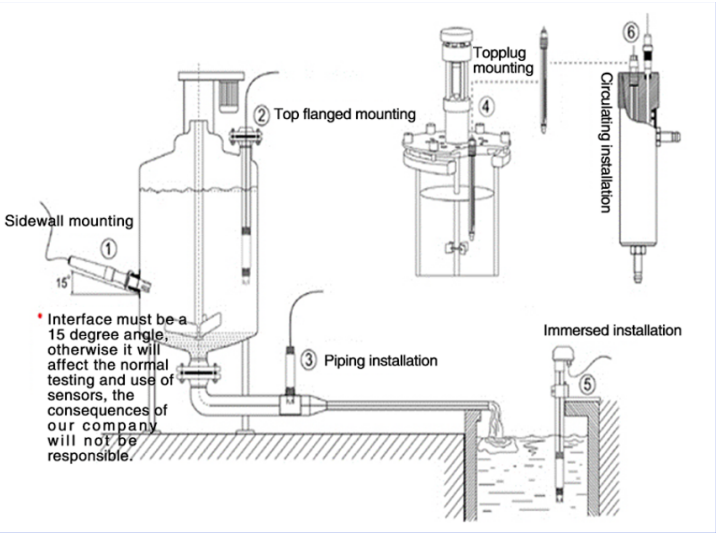
Sensor placement should reflect actual process conditions while avoiding dead legs, air entrainment and temperature gradients that distort the measurement. The monitoring points that matter most are points of use, return loops and storage tank outlets.
Calibration has to balance accuracy against disruption. In-situ calibration against traceable standards gives the highest confidence but generally requires a shutdown; some facilities run redundant sensors so that one can be calibrated offline without losing coverage of the loop.
Data management matters as much as the sensor. The system should capture readings in a form that supports trending, reporting and regulatory submission, with electronic batch records, deviation management and alert routing so that the right person is notified of a quality event, not just whoever happens to be at the panel. Shanghai ChiMay supplies calibration kits and technical support to help sites get these routines established from the start.