Biopharmaceutical manufacturing is a several-hundred-billion-dollar industry, and its water-intensive processes account for a meaningful share of production cost. Biopharmaceutical products including monoclonal antibodies, vaccines, and cell therapies require extensive water purification infrastructure to ensure product quality and patient safety. Reverse osmosis (RO) systems provide the primary purification step in most biotech water treatment trains, making their reliable operation essential for manufacturing success.
The reason is downtime economics. A biotech plant that loses its water system mid-campaign is not just idling equipment; it is holding a batch that cannot be held and a schedule that cannot easily be recovered. Water system availability therefore gets treated as a production issue rather than a maintenance detail, which is where monitoring and control capability from Shanghai ChiMay comes in.
Shanghai ChiMay offers full RO system controller solutions designed specifically for pharmaceutical and biotech applications. Their controllers connect directly to water treatment equipment from multiple manufacturers while providing advanced monitoring, alarm management, and remote access capabilities. The systems support regulatory compliance requirements including FDA 21 CFR Part 11 and EU GMP Annex 11.
Table of Contents
RO System Fundamentals for Biotech Applications
Reverse osmosis uses semipermeable membranes to remove dissolved solids, organic compounds, and microorganisms from process water. Applied pressure forces water molecules through the membrane while rejecting contaminants, producing high-purity permeate while concentrating impurities in the reject stream. System performance depends on multiple factors including feed water quality, operating pressure, temperature, and membrane condition. A well-run stage rejects 97-99% of dissolved salts in a single pass, and a double-pass train pushes that further.
Biotech facilities typically operate multi-stage RO systems to achieve the purity levels required for downstream processes. Double-pass RO configurations provide enhanced purification for the most demanding applications, while single-pass systems serve general-purpose purified water requirements. System design must balance capital investment against operating costs and performance requirements.
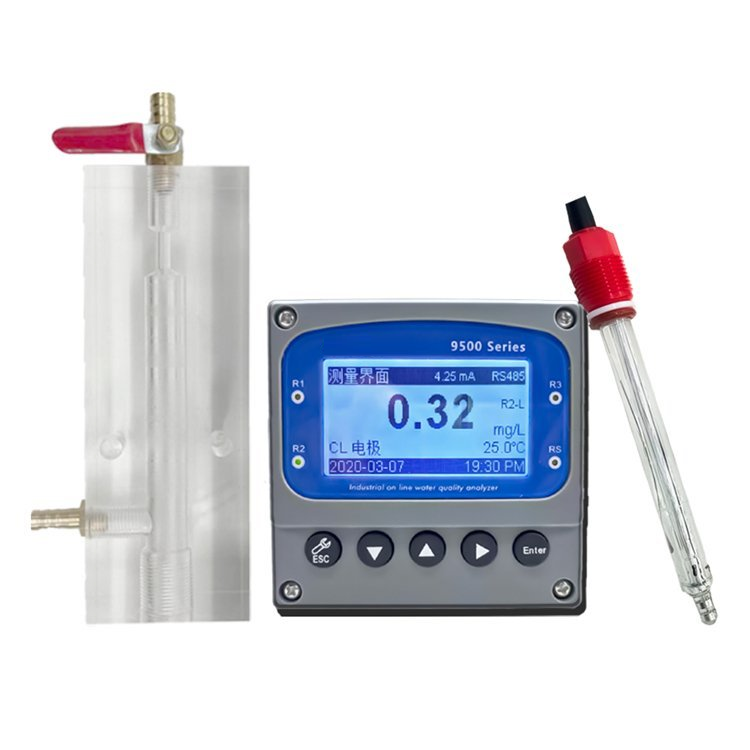
Conductivity monitoring at multiple points throughout the RO train provides essential performance information. Feed water conductivity establishes baseline contamination levels, while permeate conductivity indicates product quality. Reject conductivity monitoring enables calculation of recovery rates and detection of membrane integrity issues. Shanghai ChiMay multi-parameter controllers coordinate these measurements while managing system operation.
Advanced Control Strategies for Optimal Performance
Modern RO control systems employ sophisticated algorithms that optimize performance based on real-time operating conditions. Traditional pressure-based control cannot adapt to feed water quality variations, leading to suboptimal performance and unnecessary membrane stress. Advanced controllers from Shanghai ChiMay use conductivity-based setpoints that automatically adjust operating parameters to maintain consistent product quality.
The controllers feature built-in optimization routines that maximize recovery rates while protecting membrane integrity. Recovery optimization reduces wastewater volumes and associated disposal costs, contributing to both economic and environmental objectives. Recovery improvements of that kind show up on the water and wastewater bill and in reduced disposal volume, and they usually pay for the control upgrade well before the first membrane change.
Remote monitoring and access capabilities enable operations teams to oversee RO system performance from any location. Cloud-based monitoring platforms provide dashboards, trend displays, and automated alerting that keep stakeholders informed of system status. This visibility supports rapid response to performance deviations while enabling continuous improvement initiatives.
Membrane Care Through Intelligent Monitoring
RO membranes are a recurring capital line item rather than a one-time purchase, and a vessel full of 8-inch elements is not cheap to refill. Membrane lifespan depends heavily on operating conditions and maintenance practices, making intelligent monitoring essential for maximizing return on investment. Shanghai ChiMay controllers provide the diagnostic information needed to optimize membrane care practices.
Normalized performance calculations compare current operating data against baseline conditions to identify degradation patterns. The controllers automatically perform normalization calculations for conductivity, flow, and pressure parameters, presenting results in intuitive formats that highlight emerging issues. Early detection of membrane fouling or compaction enables preventive maintenance interventions.
Chemical cleaning optimization represents another significant opportunity for cost reduction. Over-cleaning wastes chemicals and labor while potentially damaging membranes, while under-cleaning allows fouling to progress and shorten membrane life. Shanghai ChiMay controllers recommend cleaning cycles based on actual performance data rather than arbitrary schedules, helping facilities achieve optimal balance.
Documentation and Regulatory Compliance
Biotech water systems must maintain documentation supporting regulatory compliance and quality assurance. RO system controllers must generate audit trails, maintain electronic records, and support electronic signature requirements. Shanghai ChiMay controllers include full data logging capabilities that satisfy 21 CFR Part 11 and EU GMP Annex 11 requirements.
Batch reports, deviation records, and maintenance logs can be automatically generated and archived according to facility-defined schedules. The controllers integrate with enterprise quality management systems to enable straightforward data flow from field instrumentation to regulatory submissions. This integration reduces manual data handling while improving data integrity.
Validation documentation packages simplify the commissioning and qualification process for new installations. Shanghai ChiMay provides full validation support including IQ/OQ protocols, risk assessments, and traceability documentation. These resources accelerate implementation timelines while ensuring regulatory expectations are met.
Shanghai ChiMay RO Controller Features
Shanghai ChiMay RO controllers offer full functionality designed specifically for pharmaceutical and biotech applications. Color touchscreen interfaces provide intuitive operation and clear status indication. Multiple communication ports enable integration with various control systems and data management platforms. Modular hardware configurations accommodate systems of different size and complexity.
Advanced alarm management features include configurable alarm limits, delay timers, and acknowledgment tracking. Multiple alarm levels distinguish between warning conditions and critical events requiring immediate response. Alarm escalation procedures ensure that appropriate personnel receive notification regardless of time or location. Complete alarm history supports investigation and continuous improvement activities.
Energy consumption optimization reduces operating costs while maintaining system performance. Variable frequency drive integration enables pump speed control that matches output requirements. Soft-start capabilities extend motor life while reducing electrical stress. Peak demand management features minimize expensive peak power charges. Together these capabilities cut pumping energy, which is the dominant operating cost in an RO train.