Table of Contents
Why Flow Metering Is Now a Compliance Line Item
Agricultural water metering used to be optional in many jurisdictions. In 2026 it is a compliance requirement across much of the arid American West, most of the Mediterranean basin, Australia’s Murray-Darling Basin, and it is expanding rapidly through India’s state-level groundwater programs. Regulators require meters that are certified, tamper-resistant, and remotely readable. Farm procurement is no longer choosing a flow indicator; it is choosing evidence for a regulator.
That shift changes procurement priorities. Certification, telemetry, and lifecycle service now outrank raw meter cost. A meter that saves 15% on unit price but fails a state audit is a total loss. The stakes scale with the farm: a metering error of just a few percent on a large center-pivot operation misreports tens of millions of liters per year, which is exactly the kind of discrepancy that triggers an audit flag, a billing dispute, or a fertigation ratio that quietly drifts.
Technology Selection at a Glance
| Application | Pipe Size | Flow Range | Recommended Meter |
|---|---|---|---|
| Center-pivot mainline (clean groundwater) | DN80–DN200 | 20–600 m³/h | Turbine flow meter |
| Pivot mainline (surface water, sediment) | DN80–DN200 | 20–600 m³/h | Paddle wheel flow meter |
| Fertigation injector loop | DN25–DN50 | 0.5–15 m³/h | Turbine flow meter |
| Drip submain, reuse water | DN25–DN75 | 1–40 m³/h | Paddle wheel flow meter |
| Reservoir intake, muddy water | DN100–DN300 | 30–1200 m³/h | Paddle wheel flow meter |
The rule is simple: turbine meters excel on clean, high-velocity flow with predictable Reynolds numbers; paddle wheel meters tolerate fibrous debris, algae, and moderate sediment without seizing. Center-pivot mains and drip submains have fundamentally different flow profiles — high flow, clean water versus low flow, particulate-laden water — and forcing one technology onto both is the most common procurement mistake.
Turbine Flow Meters — The Mainline Workhorse
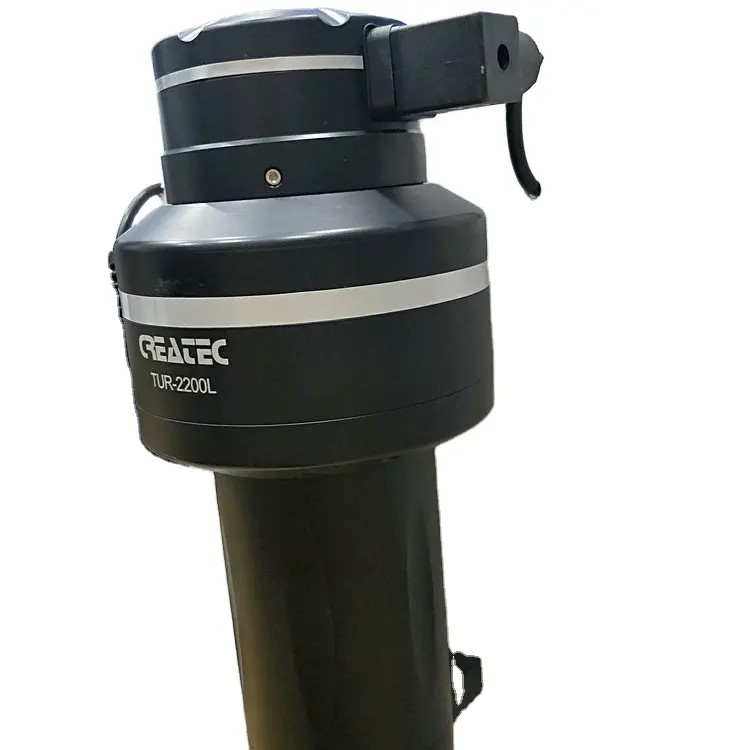
Turbine meters use a bladed rotor suspended in the flow path. Rotation speed is proportional to flow. Under clean-water conditions they deliver ±0.5% of reading accuracy across a 10:1 turndown and hold that accuracy for years with routine bearing inspection.
Buyers should require:
- Tungsten carbide or ceramic bearings for groundwater sites with sand.
- NSF-61 certified wetted parts where the same well feeds domestic water.
- Pulse output and 4–20 mA output on the same transmitter, so the meter can talk to both the SCADA and the local pivot panel.
- Straight run of 10× pipe diameter upstream and 5× downstream to avoid installation-induced error.
Turbine meters do not tolerate air slugs. If the pivot pump primes with entrained air, expect blade damage within weeks. The mitigation is an air-release valve upstream of the meter — an inexpensive fitting that prevents a bearing repair costing many times more.
Paddle Wheel Flow Meters — The Drip and Reuse Workhorse
Paddle wheel meters use an insertion-style rotor with only a small paddle exposed to flow. That geometry survives sediment, algae strands, and reuse-water debris that would immobilize a turbine. Accuracy is typically ±2% of reading, which is fine for drip submain and reservoir intake service.
Procurement should require:
- Insertion-style body with hot-tap capability. Farm managers cannot shut down a running submain to replace a meter; insertion designs allow removal under pressure using a ball-valve isolation.
- PVDF or 316 stainless wetted parts.
- Digital signal processing to suppress noise from turbulent flow, common in T-junction installations.
- Field-verifiable K-factor so meters can be calibrated in situ using a bucket-and-stopwatch test on low-flow lines.
Paddle wheel meters are far more forgiving of poor pipe conditioning. A 3D upstream / 1D downstream straight run is generally sufficient, opening up installation locations that would otherwise be off-limits.
The Buyer’s Checklist
- Match meter technology to water quality, not to pipe size alone.
- Require manufacturer accuracy statements at multiple flow points (10%, 50%, 100% of range), not a single headline figure.
- Specify IP68 for the meter head and IP66 for the transmitter.
- Require pulse and 4–20 mA outputs; Modbus RTU is preferred for anything that will feed a cloud gateway.
- Insist on a field-calibration procedure the farm’s own technicians can execute. Meters that require factory return every two years are a hidden operating cost.
- Verify local regulatory certification — for example, legal-metrology pattern approvals (OIML/WELMEC-type) or state water-agency approvals — before award.
- Bundle strainers and air-release valves into the initial purchase order.
- Score suppliers on regional spare-parts availability; a 72-hour turnaround target should be contractual.
Total Cost of Ownership for a Typical Farm
For a mixed farm operating four center pivots and 30 hectares of drip, the metering hardware line lands in the five-figure range: turbine meters on the pivot mains, paddle wheel meters on the drip submains, one dual-output transmitter family across the network, plus installation labor and fittings. The transmitters are the quiet cost-saver — if turbine and paddle wheel meters terminate on the same transmitter family, the farm stocks one spare instead of two.
Set that capital line against the cost of failing an audit. In California, compliance enforcement under SGMA can mean fines, mandatory meter upgrades, and curtailed pumping allocations for growers with missing or inaccurate meters — penalties that dwarf the price of the meters themselves. On top of compliance, correctly-metered variable-rate irrigation typically trumps flood-style scheduling on pumping cost, adding a meaningful annual saving in reduced OPEX. Payback on the metering network is usually measured in one or two seasons, not years.
What Shanghai ChiMay Delivers
Shanghai ChiMay offers both turbine flow meters and paddle wheel flow meters as insertion or in-line designs, in DN25 through DN300. Both product lines terminate on the same 2-in-1 mini transmitter, so a farm running turbines on pivot mains and paddle wheels on drip submains stocks only one transmitter spare. Outputs cover pulse, 4–20 mA, and Modbus RTU, matching every mainstream irrigation controller and telemetry gateway. Wetted-parts options include 316L stainless and PVDF for reuse or brackish service, and the meters ship with individual calibration certificates rather than production averages.
Closing Note
The right flow-metering strategy for a modern farm is not one meter technology but two. Turbine meters own the clean, high-flow mainline; paddle wheel meters own the drip, reuse, and reservoir-intake edges of the network. Procurement teams that build the RFP around that split — and around real telemetry and calibration requirements — end up with a network that survives audits, drives fertilizer efficiency, and keeps regulators satisfied for the full asset life.