Table of Contents
Introduction
Industrial facilities lose billions of dollars annually to corrosion-related failures—the NACE IMPACT study put the global cost of corrosion at roughly $2.5 trillion per year, about 3.4% of global GDP. The difference between facilities managing corrosion effectively and those suffering repeated failures often comes down to monitoring technology adoption.
Technology 1: Linear Polarization Resistance (LPR)
How LPR Works
LPR applies a small electrical potential (±10 mV) across working electrodes while measuring resulting current. The polarization resistance (Rp) inversely correlates with corrosion rate using the Stern-Geary equation:
Corrosion Rate (MPY) = B × K / (Rp × ρ)
Advantages of LPR
| Feature | LPR Performance | Coupon Testing |
|---|---|---|
| Response time | Seconds | Weeks |
| Measurement range | 0.001-10 MPY | Average only |
| Annual cost | Low | Higher (labor and lab work) |
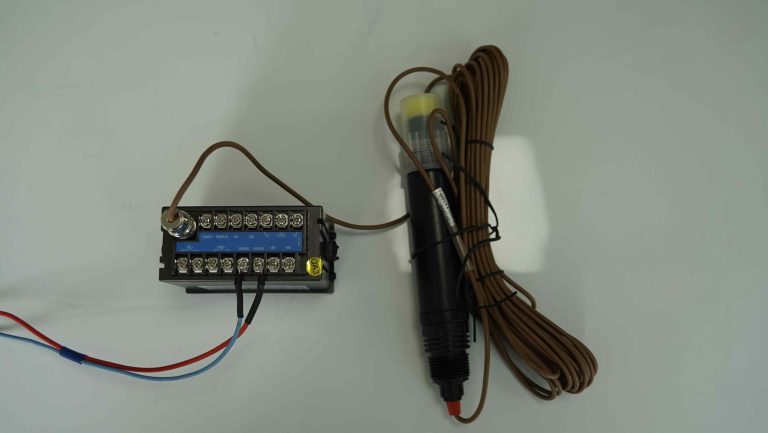
LPR sensors excel in cooling water systems, process water lines, and heat exchangers. Shanghai ChiMay’s LPR systems integrate with plant controls through Modbus RTU/TCP protocols.
Technology 2: Electrical Resistance (ER) Probes
How ER Works
ER probes measure metal thickness loss through resistivity changes. As metal corrodes, the sensing element’s resistance increases proportionally.
ASTM G96 covers on-line corrosion monitoring by electrical resistance and electrochemical methods. Element selection sets the resolution: thin elements resolve very small metal losses, while thicker elements trade sensitivity for total range up to hundreds of micrometers. Typical accuracy is within a few percent.
Key Benefits
ER probes function in non-conductive media where LPR fails—hydrocarbon service, soils, and atmospheric exposure. Probes operate 12-24 months between replacements, making them ideal for buried pipelines and tank farms.
Technology 3: Galvanic Sensors
How Galvanic Monitoring Works
Galvanic sensors measure current flowing between dissimilar metal couples. When two metals with different electrode potentials connect electrically, galvanic corrosion current flows proportionally to corrosion rate.
Advantages
- Zero electrical requirements: Self-powered operation
- Simple installation: Direct coupon replacement
- Low cost: Basic systems are inexpensive
- Directional indication: Shows whether conditions are improving or worsening
Galvanic sensors excel in seawater applications and mixed-metal cooling systems.
Technology 4: Ultrasonic Thickness (UT) Monitoring
How UT Works
Ultrasonic thickness monitoring employs high-frequency sound waves (5-20 MHz) to measure remaining wall thickness:
Thickness = (Velocity × Time) / 2
Advanced systems incorporate automated corrosion mapping, remaining life prediction, and minimum thickness alerts for regulatory compliance.
Applications
UT monitoring is critical for:
- Refinery piping: API 570 inspection requirements
- Boiler tubes: ASME Section I mandates
- Storage tanks: API 653 compliance
- Heat exchangers: Shell and tube integrity
Accuracy: ±0.1 mm with 10-50 measurement points per hour.
Technology 5: Corrosion Coupons
How Coupon Testing Works
Metal specimens of known composition and weight are exposed to service for 30-90 days, then cleaned and reweighed:
CR (MPY) = (K × W) / (A × T × D)
Where K = 87,600, W = weight loss (mg), A = surface area (in²), T = hours, D = metal density.
Advantages
- Complete metallurgical analysis: Visual and microscopic examination
- Regulatory acceptance: Recognized by NACE, API, and ASME
- No electrical requirements: Universal applicability
- Cost-effective: Equipment is inexpensive
Coupons remain essential for validating other monitoring methods and high-temperature service.
Comparative Analysis
| Technology | Response | Accuracy | Best Application |
|---|---|---|---|
| LPR | Seconds | High | Cooling water, process water |
| ER | Hours-Days | High | Non-conductive, buried |
| Galvanic | Minutes | Moderate | Seawater, dissimilar metals |
| UT | Real-time | ±0.1mm | Fixed equipment, piping |
| Coupon | Weeks | Moderate | Validation, high temperature |
Multi-Technology Implementation
LPR + Coupon Combination
For most cooling and process systems:
- LPR: Real-time rate monitoring and trend analysis
- Coupons: Visual confirmation and pit depth measurement
Pairing the two catches both fast excursions and slow long-term trends, at lower total cost than either program run alone.
ER + UT for Critical Assets
For high-value equipment:
- ER probes: Continuous wall loss monitoring
- UT mapping: Periodic thickness surveys
- Remaining life calculation: Predictive scheduling
This layered strategy is standard practice in petrochemical service precisely because it catches catastrophic failure precursors before they develop.
Shanghai ChiMay Solutions
Shanghai ChiMay offers comprehensive corrosion monitoring:
- LPR corrosion rate sensors: Continuous cooling water monitoring
- Multi-parameter transmitters: Integrated index calculation
- SCADA integration: Modbus RTU/TCP and 4-20 mA output
Conclusion
Facilities that deploy the right combination of monitoring technologies get fewer unplanned equipment failures, lower corrosion-related maintenance costs, and avoided production losses that dwarf the cost of the instruments. The technologies above are mature, widely proven, and available today.
Shanghai ChiMay’s corrosion monitoring solutions enable effective corrosion management for chemical processing and industrial water applications.