Table of Contents
Short answer
- Conductivity is the cheapest reliable proxy for dissolved ionic load, and ionic load is what drives scaling, membrane fouling, and dissolved-solids permit limits.
- Two or three grab samples a day miss the swings that actually cause trouble. Online conductivity reads continuously and can drive blowdown, dosing, and alarms directly.
- The payback usually comes from three places: less chemical over-dosing, less freshwater purchased, and fewer permit excursions.
- Conductivity is a bulk measurement. It tells you the total ionic picture, not which ion changed, so it works best alongside pH, turbidity, and ion-specific data.
Industrial facilities worldwide face continuing pressure to cut freshwater intake and reduce what leaves through the discharge pipe. Industrial water use keeps climbing while discharge permits tighten, which makes reuse a cost issue rather than a sustainability slogan. Successful recycling programs depend on continuous, reliable measurement of water quality, and few measurements are as useful as electrical conductivity.
Why does such a simple electrical measurement matter so much for reuse decisions? Because conductivity tracks dissolved ionic content directly, and dissolved ionic content determines scaling potential, membrane performance, and permit compliance.
Understanding Conductivity in Industrial Context
The Science of Electrical Conductivity
Electrical conductivity measures water’s ability to carry current, which depends on the concentration and mobility of dissolved ions. Standard Methods for the Examination of Water and Wastewater treats conductivity as a rapid, reliable indication of Total Dissolved Solids (TDS):
Conductivity (μS/cm) × 0.65 ≈ TDS (mg/L)
Treat the 0.65 factor as a working approximation, not a constant. It assumes a mixed natural water; the TDS-to-conductivity ratio commonly falls somewhere between 0.55 and 0.8 depending on which ions dominate. In a plant where the ionic mix changes, verify the factor against laboratory TDS on your own water rather than borrowing a textbook number.
Conductivity also reflects the ionic composition that determines:
- Scaling potential in heat exchange equipment
- Biological treatment efficiency
- Membrane system performance
- Discharge permit compliance
Why Real-Time Measurement Changes Everything
Traditional wastewater monitoring relies on periodic sampling and laboratory analysis. Grab samples give you an accurate answer to a question asked hours ago. Between samples, the process is unobserved: a chemical spill, a slug of high-salinity effluent, or a cooling tower upset can pass through the plant before anyone sees the lab sheet.
Online conductivity closes that gap. A contacting or toroidal sensor reading at one- or five-second intervals feeds a controller that can trim blowdown, throttle a feed pump, or trip an alarm while the event is still happening. That is the difference between responding to a trend and responding to a spill.
Applications in Industrial Wastewater Reuse
Cooling Tower Cycle Control
Cooling towers concentrate dissolved solids through evaporative loss, so they need periodic blowdown to prevent scale. Conductivity is the standard control signal for automating that blowdown:
- Setpoint range: 2-6× feedwater conductivity for typical applications
- Response time: seconds, limited mostly by sample transport lag in the flow cell
- Accuracy requirement: about ±1% of reading for stable control
- Typical effect: maintaining cycles of concentration at target cuts makeup water and treatment chemical use compared with fixed-rate bleed
ASHRAE guidance and cooling tower practice both point the same way: automated conductivity-controlled blowdown holds a tighter, higher and more repeatable cycles-of-concentration value than manual bleeding, which is where the water and chemical savings come from.
Membrane System Protection
Reverse osmosis (RO) and nanofiltration (NF) membranes are sensitive to feedwater quality. Conductivity data supports membrane protection through:
- Pre-treatment control: triggering backwash or media flush when inlet conditions shift
- Scaling detection: watching for the conductivity rise that precedes scaling precursor conditions
- Integrity monitoring: catching a step change in permeate conductivity that signals a breach or seal failure
- Product quality verification: confirming permeate conductivity meets specification
Membrane life depends on how consistently you keep the feed and the recovery inside design limits. Continuous conductivity on feed, concentrate, and permeate is the cheapest way to know whether you are actually doing that between cleanings and lab checks.
Biological Treatment Optimization
Industrial biological treatment depends on consistent influent quality. Conductivity provides early warning of:
- Toxic shock loads: sudden conductivity changes often travel with a chemical spill
- Salt concentration changes: affecting biological activity and sludge settleability
- Dilution events: large conductivity drops suggesting stormwater infiltration
- Loading trends: tracking contaminant loading for process balancing
Conductivity will not tell you that the salt is sodium chloride or ammonium sulfate, and that distinction matters to the biology. Used as a trigger for directed sampling, though, it turns a random lab schedule into an event-driven one.
Economic Impact Analysis
Chemical Treatment Cost Reduction
Conductivity-based process control enables dosing that follows actual loading instead of a fixed recipe, which removes both under-dosing (treatment failures) and over-dosing (chemicals down the drain). The savings are real, but they are site-specific: a plant running a fixed coagulant feed against a swinging influent will find meaningful money, while a plant already controlling on jar tests will find less. Any vendor promising a fixed percentage reduction in chemical spend without seeing your data is guessing.
Water Conservation Value
Conductivity monitoring supports more aggressive recycling because it tells operators when recycled water is still acceptable. Facilities running high recycling rates through conductivity-optimized treatment typically see:
- lower freshwater purchase costs
- smaller discharge volumes
- lower pumping and heating energy, because less water is being moved and tempered
The magnitude depends far more on the plant’s processes and permit limits than on the instrument.
Regulatory Compliance Considerations
Discharge Permit Management
Most industrial discharge permits set maximum concentrations for dissolved solids, chlorides, sulfates, and other ionic species. Continuous conductivity monitoring supports compliance by:
- providing near-real-time verification instead of a once-a-day snapshot
- creating timestamped records for reporting
- triggering process adjustments before a limit is exceeded
- documenting due diligence when a regulator asks what happened on a specific date
Note the limit of the method: conductivity is a surrogate. When a permit limit is written in mg/L of a specific ion, conductivity proves the process is stable but does not replace the required analytical method.
Zero Liquid Discharge Support
Facilities pursuing Zero Liquid Discharge (ZLD) lean on conductivity data to manage brine concentration and crystallization. Conductivity informs:
- Brine concentration setpoints: commonly in the tens of thousands to roughly 150,000 μS/cm before crystallization, depending on the salt system
- Crystallizer feed control: holding consistent ionic strength for crystal growth
- Product quality checks: verifying salt purity against specification
- Water recovery optimization: pulling the maximum clean water out of the concentrate stream
Technology Selection Criteria
Sensor Types and Applications
Industrial conductivity sensors fall into two main categories.
Contacting electrode sensors (2-pole or 4-pole)
- Measurement range: roughly 0.1 μS/cm to 200 mS/cm
- Cell constant selection critical: K=0.01 (ultrapure) to K=10 (high conductivity)
- Electrode materials: stainless steel, titanium, Hastelloy for corrosive duty
- Maintenance: electrode cleaning every 30-90 days
Toroidal (inductive) sensors
- Measurement range: roughly 1 μS/cm to 2 S/cm
- No wetted electrodes, so polarization effects disappear
- Well suited to high-conductivity or fouling service
- Maintenance: annual calibration is often enough
Installation Best Practices
Installation affects measurement reliability more than the sensor datasheet does:
- Flow cell orientation: vertical installation prevents air bubble entrapment
- Flow rate: enough to keep the cell swept and representative
- Temperature compensation: required for accurate TDS calculation across temperature swings
- Grounding: proper shielding removes electrical interference from VFDs and pumps
Where This Goes Next
The role of conductivity monitoring keeps expanding:
- Control integration: conductivity values driving dosing and blowdown directly rather than informing an operator
- Wireless and loop-powered sensors: removing wiring cost for distributed monitoring
- Trend analytics: flagging slow drifts before they become excursions
- Digital twin work: simulating treatment response to ionic load changes
Market forecasts for the conductivity sensor segment vary widely by scope, but they agree on the direction: tightening discharge rules and water scarcity keep pushing instrument demand up.
What This Means in Practice
Real-time conductivity monitoring is now standard equipment for industrial wastewater reuse programs. It provides a continuous, cheap measurement of ionic content that supports tighter process control, lower chemical consumption, better equipment protection, and demonstrable compliance.
The benefits are real but they are not automatic. Instrument placement, correct temperature compensation, and periodic verification against laboratory TDS are what separate a control loop that earns its keep from a sensor that just logs numbers. As water costs rise and discharge rules tighten, conductivity monitoring becomes harder to justify doing without.
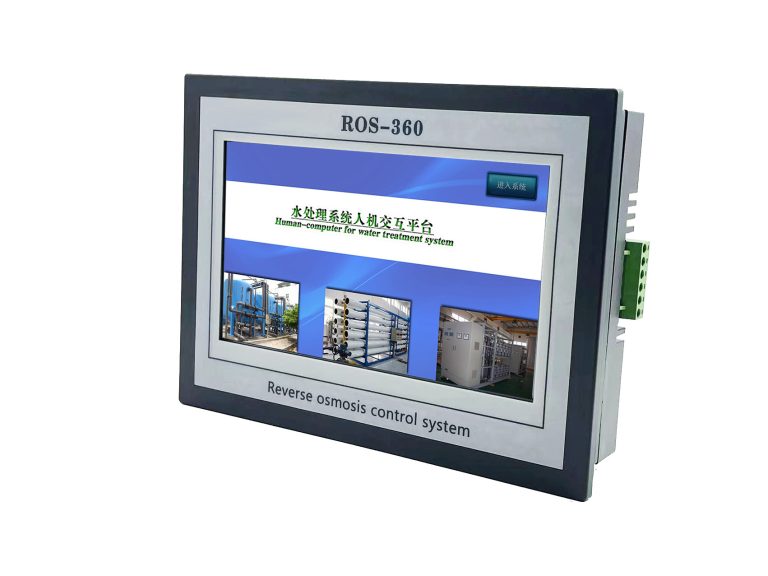
Shanghai ChiMay offers conductivity monitoring solutions including inline sensors, transmitters with digital communication, and integrated IoT platforms that turn conductivity data into operational information.
![BSQ-MINI] Water Quality Monitoring Transmitter, EC/ER/PH/ORP](https://shchimay.com/wp-content/uploads/2023/11/图2-768x576.jpg)