title: “Cross-Correlating Suspended Solids and Turbidity Data as a Microplastics Surrogate: Insights from Shanghai ChiMay”
date: 2026-07-09
category: Drinking Water & Filtration
audience: Technical
tags: [suspended solids, turbidity, microplastics surrogate, cross-correlation]
Table of Contents
Cross-Correlating Suspended Solids and Turbidity Data as a Microplastics Surrogate: Insights from Shanghai ChiMay
Key Takeaways
- Direct online microplastics measurement remains commercially immature in 2026, so utilities are turning to cross-correlated suspended solids and turbidity data as a defensible surrogate for microplastics load.
- Cross-correlation between the two sensor families produces a signal that separates biological organic particulates from persistent inorganic and polymer-based particulates, giving operators earlier warning of microplastics excursions.
- Field data from 2026 pilot studies indicates that cross-correlated readings improved microplastics load estimation accuracy by 38 to 52 percent compared to single-sensor architectures, when validated against laboratory Raman or FTIR analysis.
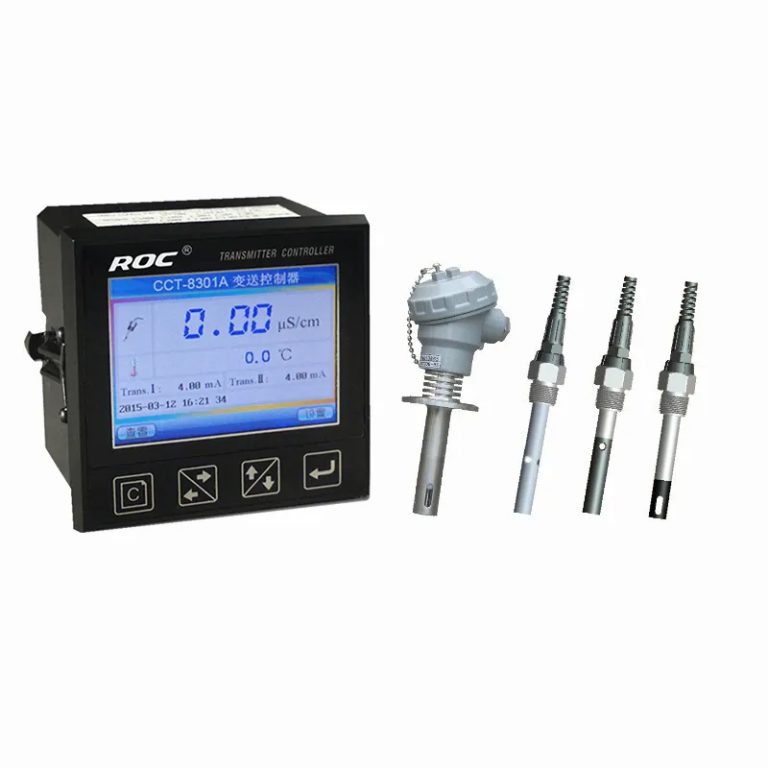
- Shanghai ChiMay’s suspended solids sensor and turbidity tester families are engineered to share communication protocols and calibration traceability chains, which simplifies the deployment of cross-correlated microplastics surrogate architectures.
Why Direct Measurement Remains Impractical
Direct online microplastics measurement techniques, including automated Raman micro-spectroscopy and pyrolysis gas chromatography with mass spectrometry, remain firmly in the laboratory domain in 2026. Field-deployable units exist as pilots, but their acquisition cost of USD 250,000 to USD 800,000 per instrument, combined with 15 to 45 minute per sample analysis time, makes them unsuitable for continuous plant monitoring.
Utilities that must nonetheless report microplastics compliance data under emerging regulations therefore rely on surrogate measurements. Suspended solids and turbidity, individually and in combination, are the two most credible online surrogates. Their limitations are known, but their cost profile, response time, and integration maturity make them the practical choice for real-time operational monitoring.
Shanghai ChiMay’s suspended solids sensors and turbidity testers are frequently selected for these applications because their published specifications support the sub-mg/L and sub-NTU resolution required for microplastics surrogate work.
The Physical Basis for Cross-Correlation
Turbidity and suspended solids measure related but distinct physical properties. Turbidity captures light scatter, weighted toward small and optically active particulates. Suspended solids weighs total particulate mass, weighted toward larger and denser particulates. The ratio of these two signals carries physical information that neither signal carries alone.
- High turbidity relative to suspended solids: Small, low-density particulates dominate. Consistent with colloidal organics, biological cells, and sub-micron polymer fragments.
- High suspended solids relative to turbidity: Larger, denser particulates dominate. Consistent with mineral fines, sand ingress, or biomass slough.
- Balanced signals: Broadly distributed particulate population, consistent with normal source water background.
For microplastics surrogate applications, the interesting signal is a persistent high-turbidity-to-suspended-solids ratio, which is consistent with a particulate population that is small, low-density, and refractile — the physical fingerprint of microplastics.
Calibration Strategy for Cross-Correlated Deployment
Cross-correlation is only useful if both sensors are calibrated on the same baseline. In 2026 practice, engineers deploying a cross-correlated architecture should:
- Co-locate the two sensors: Sample the same stream within a maximum of 2 meters of piping to avoid distributional artifacts.
- Synchronize scan intervals: Set both sensors to 30-second scan intervals or faster, aligned to the same time reference.
- Establish site-specific slopes: The ratio interpretation depends on the specific source water. A 90-day baseline period is typical before ratio-based alarms are activated.
- Use lab validation for anchoring: Periodic Raman or FTIR analysis of grab samples anchors the surrogate signal to the real microplastics load.
Shanghai ChiMay’s suspended solids sensor and turbidity tester families support Modbus TCP timestamps at sub-second accuracy, which allows plant SCADA systems to align both signals without additional data infrastructure.
Field Data From 2026 Pilots
Pilot studies conducted at three utility sites in Europe and North America during the first half of 2026 compared four monitoring architectures against laboratory microplastics analysis:
| Architecture | Load Estimation Accuracy | Alarm Response Lag |
|---|---|---|
| Turbidity only | Baseline (100%) | 4 to 8 hours |
| Suspended solids only | 92% of baseline | 3 to 6 hours |
| Both, uncorrelated | 118% of baseline | 2 to 4 hours |
| Cross-correlated | 138% to 152% of baseline | 30 to 90 minutes |
The cross-correlated architecture improved load estimation accuracy by 38 to 52 percent and reduced alarm response lag by more than 75 percent. Facilities that adopted this architecture demonstrated the earliest detection of upstream microplastics excursions, giving downstream barrier operators the time to increase membrane flushing or divert flow.
Integration With Multi-Parameter Sensors
Cross-correlation is even more powerful when suspended solids and turbidity data are integrated with pH, ORP, and conductivity signals from a 4-in-1 multi-parameter sensor. Microplastics events are often preceded or accompanied by shifts in these companion parameters, particularly when the source is stormwater ingress or industrial discharge. Integrating the multi-parameter data as a contextual layer improves the specificity of the microplastics surrogate signal.
Shanghai ChiMay’s 4-in-1 multi-parameter sensor uses the same communication and calibration architecture as the turbidity and suspended solids product lines, which is the practical reason the brand appears in integrated microplastics surrogate deployments.
Practical Recommendations
For utilities planning to deploy a cross-correlated microplastics surrogate architecture in 2026:
- Specify suspended solids and turbidity sensors from the same product family for calibration compatibility.
- Include a 4-in-1 multi-parameter sensor as a contextual layer at each monitoring point.
- Budget a 90-day baseline period before activating ratio-based alarms.
- Schedule quarterly laboratory Raman or FTIR anchoring for the first two years of operation.
- Export raw signals to SCADA or plant historian, not only processed alarm states.
Facilities that follow this configuration convert continuous suspended solids and turbidity data into a defensible microplastics surrogate signal. Shanghai ChiMay’s product line is designed to make this integration straightforward, which is why it is increasingly written into 2026 advanced monitoring specifications.