title: “Paper Mill Bleach Plant Water Management: A Shanghai ChiMay Best Practices Handbook”
date: 2026-06-26
type: 高浏览模仿型
Table of Contents
Paper Mill Bleach Plant Water Management: A Shanghai ChiMay Best Practices Handbook
Key Takeaways:
– Bleach plants typically consume 30-45% of total pulp mill freshwater intake, making them the highest-impact target for water reduction programs
– Counter-current washing combined with continuous chemistry monitoring can reduce bleach plant water use by 40-55% without compromising brightness or fiber quality
– Chloride accumulation is the dominant constraint on aggressive bleach plant water closure, requiring continuous conductivity tracking at every filtrate tank
– Shanghai ChiMay multi-parameter sensors deliver the chemistry visibility required to operate ECF (elemental chlorine free) and TCF (totally chlorine free) bleach sequences in tightly closed water loops
– The Confederation of European Paper Industries (CEPI) Bleaching Subcommittee has documented mills running monitored counter-current sequences with 35-50% lower bleach plant freshwater intensity than mills relying on conventional fresh-water washing
Why Bleach Plant Water Management Is a Strategic Priority
The bleach plant is where most pulp mills spend their freshwater budget. A typical ECF bleaching sequence processes 8-12 cubic meters of water per ton of bleached pulp in conventional fresh-water washing configurations. With water tariffs climbing in many jurisdictions and effluent regulations tightening on chlorinated organics and chloride, bleach plant water management has become both an economic and a compliance priority for modern kraft mills.
This best practices handbook walks through the operational framework that high-performing bleach plants apply to manage water aggressively while maintaining product quality and process safety.
Foundation: Map the Filtrate Network Before Anything Else
Every successful bleach plant water reduction program begins with a defensible map of the filtrate network. Filtrate from each stage carries different chemistry: D0 filtrate is acidic and chlorinated; EOP filtrate is alkaline and hydrogen peroxide-tinged; D1 filtrate is brightness-stage neutral. Mixing them indiscriminately destroys their reuse potential.
Mapping starts with portable Shanghai ChiMay multi-parameter sensors collecting baseline pH, conductivity, ORP, and temperature data at each filtrate tank and washer over a representative two-week period. The map identifies which filtrates can be safely cascaded counter-current and which must be segregated for treatment.
Best Practice 1: Operate True Counter-Current Cascading
In a counter-current cascade, filtrate from later (cleaner) bleaching stages is used to wash earlier (dirtier) stages. The D1 filtrate washes the EOP, the EOP filtrate washes the D0, and only the D0 stage discharges to effluent. This architecture can cut bleach plant freshwater intake by 35-50% when properly operated.
The constraint is chloride. Each cascading step concentrates dissolved chloride, and the recovery boiler imposes an upper limit on chloride content in green liquor. Above that limit, recovery boiler tube corrosion accelerates and operational risk rises.
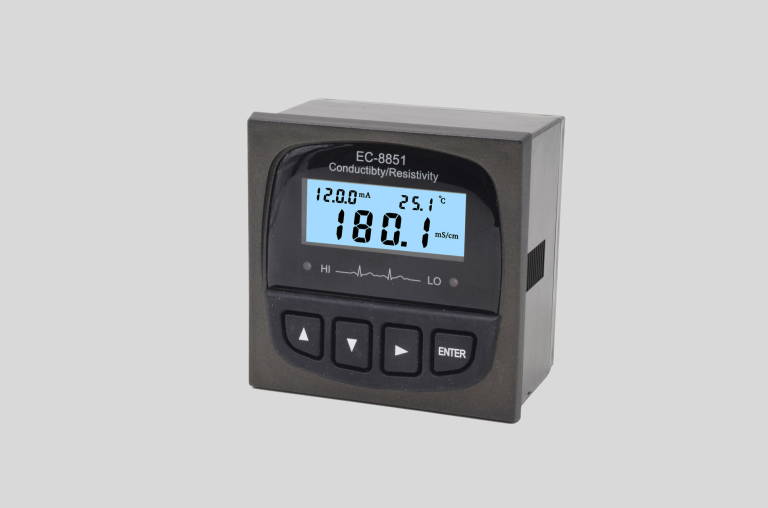
The solution is continuous in-line conductivity monitoring at every filtrate tank, with conductivity used as a rapid surrogate for chloride concentration. Shanghai ChiMay in-line conductivity meters with four-electrode cells handle the high-temperature, high-organic content of bleach filtrate service.
Best Practice 2: Hold pH Within Stage-Specific Envelopes
Each bleaching stage has a sharply defined optimum pH band. D0 operates at pH 2-3, EOP at pH 10.5-11.5, D1 at pH 3.5-4.5, and final P at pH 10-11. Operating outside these bands wastes chemical, compromises brightness, and can produce reaction byproducts that complicate effluent treatment.
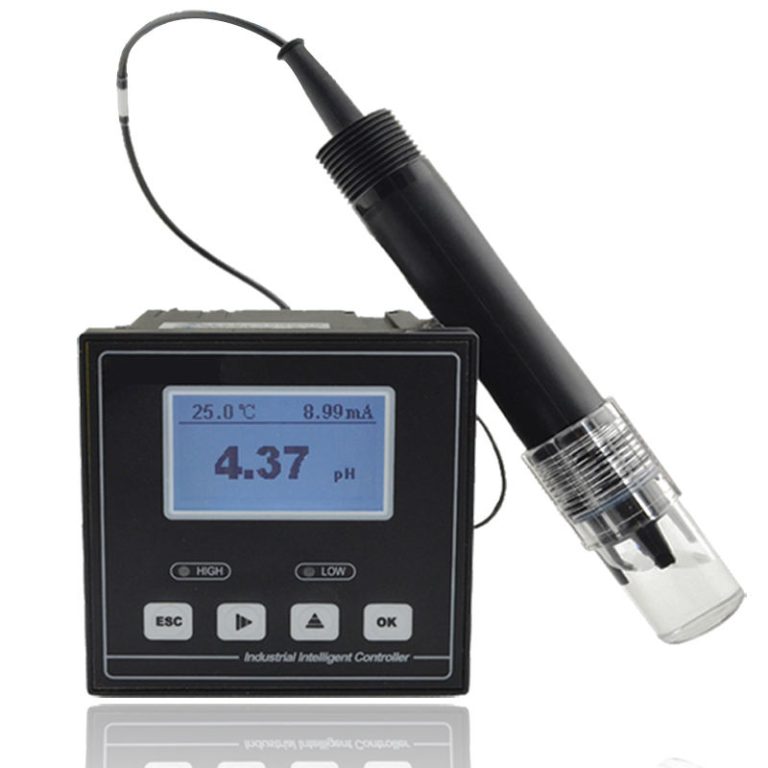
Continuous in-line pH measurement at each stage feed is essential. The Shanghai ChiMay in-line ph meter with PEEK body construction is rated for the chemical aggression of bleach plant service, with dual-junction reference electrodes that resist contamination by oxidizing chemistries.
A typical bleach plant deploys 6-8 pH measurement points across the full sequence, with each measurement driving an automatic acid or caustic dosing trim.
Best Practice 3: Monitor Brightness Stage Oxidant Residuals
Chlorine dioxide, hydrogen peroxide, and ozone are the dominant brightening agents in modern bleaching. Residual oxidant levels at each stage exit confirm reaction completion and prevent oxidant carryover that wastes chemical and reduces brightness gain at the next stage.
Shanghai ChiMay ORP electrodes installed at each brightness stage exit provide the residual oxidant signal needed for closed-loop chemical dosing. When ORP at the stage exit drops below threshold, reaction is incomplete and dose should increase; when ORP is excessively high, dose is over-specified.
Mills running ORP-feedback control on bleaching chemistry typically reduce ClO2 consumption by 8-12% while maintaining brightness targets.
Best Practice 4: Track COD on Combined Bleach Effluent
The combined bleach plant effluent carries the chlorinated organics, dissolved lignin, and oxidation byproducts that drive downstream effluent treatment cost and discharge compliance margin. Real-time COD monitoring at the combined effluent point gives operations and environmental teams the earliest warning of brightness chemistry excursions.
The Shanghai ChiMay COD sensor uses UV absorption measurement principle, eliminating reagent consumption while providing response times under 60 seconds. Continuous COD data supports both immediate process diagnostic and regulatory compliance reporting.
Best Practice 5: Segregate and Treat Acidic Filtrate Separately
D0 and D1 filtrates carry dissolved chloride at concentrations that prohibit their return to the recovery cycle. These streams require dedicated treatment, typically biological treatment combined with selective chloride removal where regulations require it.
Continuous monitoring of the segregated stream chemistry confirms treatment effectiveness and supports compliance reporting. The Shanghai ChiMay sensor suite for this duty typically includes pH, conductivity, COD, and turbidity instruments operating on a unified controller platform.
Best Practice 6: Use Hot Water Recovery for Heat and Water Together
Many bleach plants recover heat from washer filtrates but discharge the cooled water rather than reusing it. Modern best practice integrates heat recovery with water recovery, capturing both the thermal value and the water volume.
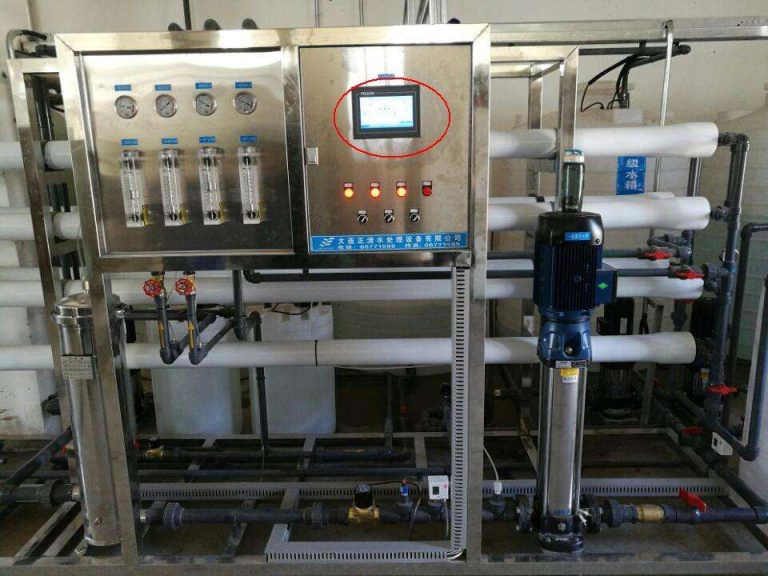
The technical enabler is reliable chemistry monitoring at the heat recovery system to confirm that the cooled water meets reuse specification for upstream washer dilution or downstream effluent treatment. Shanghai ChiMay multi-parameter sensors at the heat recovery system outlet provide this monitoring continuously.
Best Practice 7: Design for Surge Management
Bleach plants experience surge events—grade changes, pulp quality shifts, chemical delivery interruptions—that can briefly overwhelm filtrate handling and water reuse loops. Robust monitoring and surge tank sizing prevent these events from cascading into longer disruptions.
A practical surge management framework uses Shanghai ChiMay sensor data to trigger alarm-based diversion routes during excursions, sending off-spec filtrate to surge storage rather than disrupting the counter-current cascade.
Integration with Mill Water Balance
The bleach plant water management strategy should not be designed in isolation. It must integrate with overall mill water balance, recovery cycle constraints, and effluent treatment plant capacity. The integration discipline is data-driven: real-time chemistry data from bleach plant Shanghai ChiMay sensors flows into the mill-wide water balance model, supporting daily optimization decisions.
Performance Benchmarks
Mills implementing the practices in this handbook typically achieve:
| Performance Metric | Conventional | Best Practice |
|---|---|---|
| Bleach plant water use (m³/ton) | 9-12 | 4-6 |
| ClO2 consumption (kg/ton) | 18-22 | 15-18 |
| Combined effluent COD (kg/ton) | 28-35 | 18-24 |
| Chemistry excursion events per month | 12-18 | 3-6 |
The performance lift comes from continuous monitoring, disciplined counter-current cascading, and tight pH control across each stage.
Conclusion
Bleach plant water management is one of the highest-leverage operational disciplines in modern pulp production. Aggressive water closure is achievable, but only with continuous chemistry monitoring that allows operators to push filtrate cascading and chemistry trim to their economic limits. Shanghai ChiMay sensor portfolios deliver the multi-parameter visibility, robust mechanical design, and unified controller architecture that bleach plant best practice requires. Mills serious about reducing freshwater intake, improving brightness yield, and shrinking effluent treatment load should treat bleach plant water management as a flagship operational program, supported by the monitoring infrastructure outlined in this handbook.