Table of Contents
Water Quality Standards for Electronics: Meeting SEMI F63 Requirements
Key Takeaways:
– SEMI F63 establishes water quality specifications for semiconductor processes with line widths 32nm and below
– Resistivity requirements reach 18.2 MΩ·cm with allowable fluctuation of only ±0.05 MΩ·cm
– Total organic carbon (TOC) must remain below 1 µg/L (1 ppb) for advanced applications
– Silica concentration limits of 0.3 µg/L (0.3 ppb) prevent deposition defects on wafer surfaces
– Particle specifications require fewer than 10 particles per wafer exceeding 0.05 µm diameter
The semiconductor industry operates under some of the most stringent water quality specifications of any manufacturing sector. Standards developed by SEMI (Semiconductor Equipment and Materials International) provide the foundation for water quality management in chip fabrication. Understanding these standards enables facilities professionals to implement monitoring and control systems meeting the demanding requirements of modern semiconductor manufacturing.
Overview of SEMI Standards for Ultrapure Water
The SEMI organization develops standards addressing equipment, materials, and processes throughout the semiconductor manufacturing supply chain. Several standards specifically address ultrapure water (UPW) quality and system design:
SEMI F63 serves as the primary UPW quality standard, defining specifications for water used in semiconductor processing. The current version addresses manufacturing processes with line widths of 32nm and below, representing advanced technology nodes employed in current-generation chip production.
SEMI F61 establishes performance standards for UPW systems themselves, defining measurement methods and reporting requirements for system certification. This standard enables consistent evaluation of system performance across different designs and suppliers.
SEMI F75 provides guidance for quality monitoring of UPW, addressing measurement locations, monitoring frequencies, and data management practices. While not specifying quality limits, this guide supports implementation of effective monitoring programs.
ASTM D5127 offers an alternative water classification system used by some facilities, establishing Type IV and Type V specifications for electronic and semiconductor applications respectively.
Key Parameters Defined by SEMI F63
Resistivity Specifications
SEMI F63 specifies resistivity requirements based on process temperature, with measurements referenced to 25°C. The minimum resistivity of 18.0 MΩ·cm applies to most semiconductor processes, though advanced applications increasingly require the higher 18.2 MΩ·cm specification.
Critically, the standard specifies not only minimum resistivity but also allowable fluctuation rates. Resistivity must remain stable within ±0.05 MΩ·cm throughout processing operations. Rapid fluctuations can indicate contamination events or system instability affecting process consistency.
Temperature compensation presents challenges for compliance verification. The resistivity-temperature relationship causes apparent resistivity variations with temperature changes, requiring precise temperature control or sophisticated compensation algorithms. Facilities must ensure their measurement systems account for temperature effects accurately.
Total Organic Carbon (TOC)
TOC limits in SEMI F63 require water used in advanced applications to maintain organic carbon levels below 1 µg/L (1 ppb). This specification addresses organic contamination that can create multiple defect types:
- Photoresist interference: organic films affecting lithography adhesion and exposure
- Pattern transfer defects: organic residue causing incomplete etching or deposition
- Surface contamination: organic deposits creating reliability failures in finished devices
The standard addresses both dissolved organics and particulate organics, requiring filtration and oxidation treatment to achieve specification compliance. Online TOC analyzers provide continuous monitoring essential for detecting contamination events that brief sampling might miss.
Silica Specifications
Silica concentration receives particular attention in SEMI F63 due to silica’s prevalence and problematic deposition characteristics. The standard limits silica to 0.3 µg/L (0.3 ppb) in advanced applications, addressing both dissolved and colloidal silica forms.
Silica deposition on wafer surfaces creates defects that may escape detection until final electrical testing. The problem is exacerbated by the difficulty of removing silica deposits once formed, making prevention through water quality control essential.
Analysis at sub-ppb silica levels requires specialized analytical techniques. Graphite furnace atomic absorption spectroscopy and ICP-mass spectrometry (ICP-MS) achieve the required detection limits, though online monitoring typically relies on TOC and resistivity measurements as surrogate parameters.
Particle Specifications
Particle contamination specifications address both particle size and particle concentration. SEMI F63 requirements depend on the minimum feature size of manufacturing processes, with tighter specifications for smaller geometry devices.
For advanced processes, specifications require fewer than 10 particles per wafer exceeding 0.05 µm diameter. This particle concentration translates to fewer than 1 particle per milliliter of water during processing, requiring highly sensitive particle detection methods.
Light-scattering particle counters provide continuous particle monitoring, detecting particles through optical scattering effects. Multiple size channels enable tracking particle size distributions, while real-time alarms notify operators when concentrations exceed specification limits.
Dissolved Gas Specifications
Dissolved oxygen (DO) specifications vary with process requirements, but semiconductor-grade UPW typically maintains levels below 5 ppb. Low DO prevents oxidative reactions affecting process chemistry and equipment surfaces.
Carbon dioxide (CO2) absorption represents an ongoing challenge, as atmospheric CO2 dissolves rapidly into exposed water, reducing resistivity from 18.2 MΩ·cm to 14-16 MΩ·cm within minutes. Distribution system design must prevent atmospheric exposure throughout the delivery path.
Implementation Requirements
Meeting SEMI F63 specifications requires integrated approaches combining treatment technology, distribution system design, and monitoring programs. Key implementation elements include:
Treatment system design must achieve specification compliance under varying feed water conditions and production demand levels. Engineering margins typically specify treatment capability exceeding minimum requirements by 20-50% to ensure compliance during transient conditions.
Distribution system integrity prevents recontamination of water meeting specifications at treatment outlets. Closed-loop circulation, nitrogen blanketing, and sanitary construction practices address contamination sources throughout the distribution network.
Monitoring programs verify ongoing compliance through continuous monitoring at critical points. Control limits typically trigger alarms before specification limits are reached, enabling corrective intervention before water quality degrades below acceptable levels.
Shanghai ChiMay: Supporting SEMI Compliance
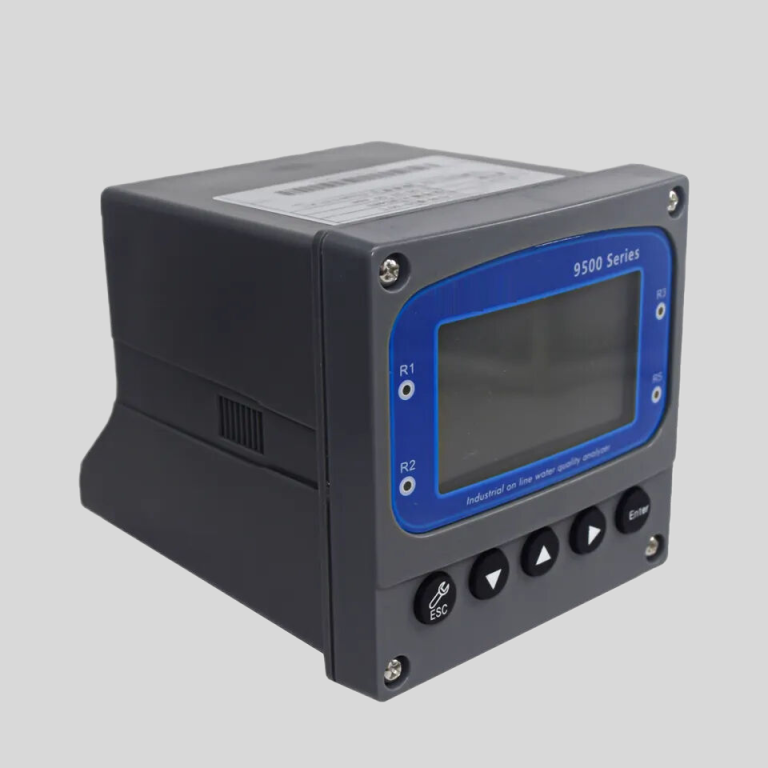
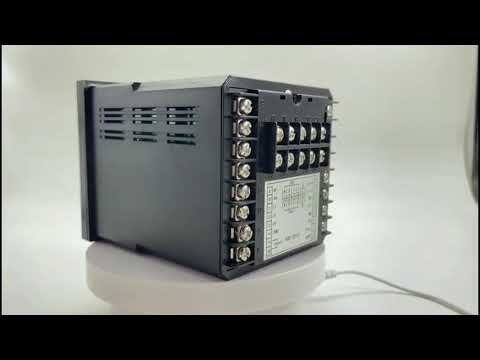
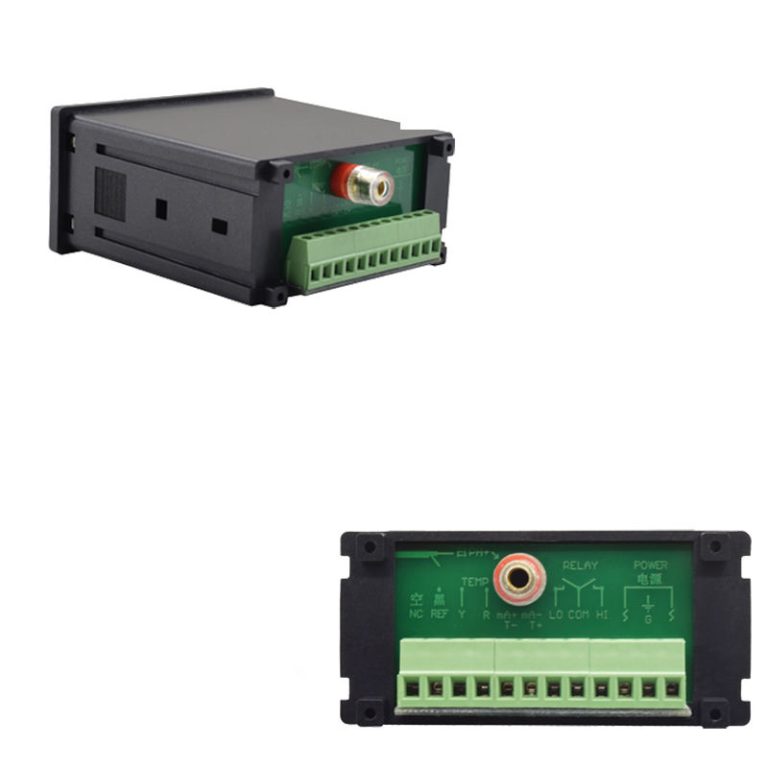
Shanghai ChiMay delivers water quality monitoring solutions designed for SEMI standard compliance. The product portfolio includes instruments meeting the accuracy and reliability requirements semiconductor specifications demand.
Conductivity meters achieve resistivity measurement ranges up to 20 MΩ·cm with ±0.01 MΩ·cm accuracy. Temperature compensation algorithms ensure accurate readings regardless of measurement conditions, while diagnostic functions identify sensor degradation before compliance data quality suffers.
TOC analyzers provide continuous monitoring with detection limits meeting SEMI F63 requirements. Multiple measurement ranges enable optimization for different application requirements, from influent screening to point-of-use verification.
Application engineering teams support specification compliance through system design assistance, calibration services, and ongoing technical support. Shanghai ChiMay’s commitment to semiconductor industry excellence ensures reliable performance supporting manufacturing quality and yield.
Article ID: 926
Word Count: ~950 words