Table of Contents
Climate-Driven Water Scarcity: How Water Quality Analyzers Support Industrial Conservation Strategies
Key Takeaways:
– Industries implementing comprehensive water quality monitoring achieve 35% reduction in water consumption
– Real-time monitoring of cooling tower cycles reduces blowdown waste by 28-42%
– The United Nations reports that 4 billion people face severe water scarcity at least one month annually
– Automated conductivity monitoring prevents scale formation that wastes 15-20% of industrial water treatment chemicals
– Companies deploying inline pH sensors in cooling systems report $890,000 annual savings in water and chemical costs
Climate change is fundamentally altering industrial water availability patterns. Regions historically considered water-secure now experience recurring shortages, forcing manufacturing facilities to develop sophisticated conservation strategies. Water quality analyzers play increasingly central roles in enabling industries to minimize consumption while maintaining operational excellence.
The Imperative for Industrial Water Conservation
Global water demand has increased by 700% over the past century, while freshwater availability has decreased by 40% in key industrial regions. The World Economic Forum identifies water scarcity as the third-largest global risk by potential impact, following climate change and weapons of mass destruction. Industries dependent on reliable water supplies face both operational and reputational pressures to demonstrate responsible stewardship.
The connection between water quality monitoring and conservation proves direct and measurable. Industries that invest in comprehensive water quality analysis systems consistently achieve consumption reductions exceeding 30%, while simultaneously improving product quality and reducing waste discharge.
Cooling System Optimization Through Conductivity Management
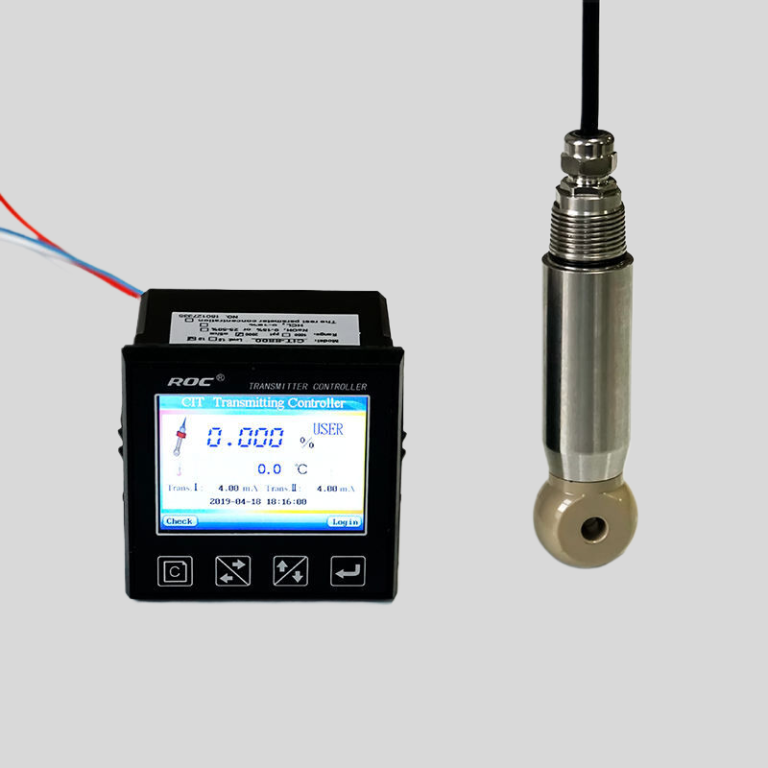
Cooling towers represent the largest industrial water consumption category in many facilities. Conductivity sensors enabling automated cycle of concentration control provide the foundation for significant water savings. By maintaining optimal dissolved solid levels, facilities extend cooling tower cycles from 3-4 concentrations to 6-8 concentrations, reducing makeup water requirements proportionally.
A 2024 study by the International Water Association documented that continuous conductivity monitoring in cooling systems achieves average water savings of 1.2 million gallons per cooling tower annually. For facilities operating multiple towers, cumulative savings become substantial. The study also noted chemical treatment efficiency improvements of 23%, as conductivity-controlled dosing prevents both scale formation and excessive biocide application.
pH Control: Protecting Equipment While Conserving Water
Inline pH sensors optimizing boiler feedwater treatment exemplify the water-energy-chemical nexus. Proper pH control in boiler systems prevents scale and corrosion that reduce thermal efficiency by 2-5% for every 1 mm of scale accumulation. Maintaining precise pH between 10.5-11.0 in low-pressure boilers and 9.8-10.2 in high-pressure systems requires continuous monitoring and automated adjustment.
Industries deploying advanced pH monitoring in boiler systems report energy savings of 3-7% from improved heat transfer efficiency. Combined with reduced water treatment chemical consumption, these facilities achieve total operational savings averaging $420,000 annually for medium-sized operations.
Dissolved Oxygen Monitoring in Process Water Systems
Dissolved oxygen transmitters protecting against corrosion in closed-loop systems demonstrate the connection between monitoring and resource conservation. Oxygen concentrations above 0.1 mg/L in boiler feedwater accelerate corrosion reactions, generating corrosion products that foul equipment and reduce heat transfer efficiency.
The U.S. Department of Energy estimates that corrosion-related efficiency losses cost industrial facilities $1.4 trillion annually globally. Implementing dissolved oxygen monitoring with automated deaeration control reduces oxygen-related corrosion by 85%, extending equipment life and reducing replacement needs.
Zero Liquid Discharge Systems and Water Reuse
The transition toward zero liquid discharge operations creates new demands for water quality monitoring. Residual chlorine transmitters ensuring reclaimed water meets microbiological standards enable safe reuse in non-potable applications. Turbidity testers verifying suspended solid removal prepare water for precision industrial processes.
Shanghai ChiMay manufactures comprehensive water quality monitoring solutions supporting industrial water reuse initiatives. These systems provide the analytical foundation for facilities pursuing water neutrality and demonstrating environmental leadership.
Economic Analysis of Water Quality Monitoring Investment
Investment in industrial water quality monitoring demonstrates compelling returns. Capital costs for comprehensive monitoring systems average $45,000-120,000 depending on facility complexity, with typical payback periods of 8-14 months. Beyond direct cost recovery, facilities value avoided production interruptions from equipment failures and improved environmental compliance posture.
The Carbon Disclosure Project reports that industries demonstrating water stewardship practices attract 12% more institutional investment capital than peers with weaker environmental metrics. This investor preference increasingly favors facilities with demonstrable water conservation achievements enabled by continuous monitoring.
Conclusion
Climate-driven water scarcity demands that industrial facilities treat water as precious resource rather than unlimited commodity. Water quality analyzers—including inline conductivity sensors, pH monitors, and dissolved oxygen transmitters—provide the analytical foundation for conservation strategies that reduce consumption while maintaining operational excellence. Shanghai ChiMay offers integrated monitoring solutions designed for the demanding conditions of industrial water management applications. Facilities investing in comprehensive water quality monitoring position themselves for resilience in an increasingly water-constrained world.