Table of Contents
Coastal Infrastructure Resilience: Protecting Water Systems from Sea Level Rise and Storm Surge
Key Takeaways:
– Sea level rise threatens water infrastructure serving 1.2 billion people in coastal zones
– Saltwater intrusion monitoring enables 85% faster identification of aquifer contamination events
– Conductivity sensors detecting intrusion at 1,000 μS/cm above baseline prevent irreversible aquifer damage
– Coastal wastewater systems with monitoring achieve 92% compliance with discharge standards during storm events
– Infrastructure protection investments provide $4-7 return per dollar invested in avoided damage costs
Sea level rise and intensifying coastal storms create unprecedented challenges for water infrastructure. Saltwater intrusion threatens freshwater supplies, storm surge overwhelms treatment systems, and erosion damages critical equipment. Building coastal water infrastructure resilience requires comprehensive monitoring strategies that detect threats early and enable protective action.
The Growing Coastal Water Infrastructure Threat
Global sea levels have risen 20 cm since 1900, with acceleration to 3.6 mm annually currently observed. The National Oceanic and Atmospheric Administration projects additional rise of 30-120 cm by 2100, threatening coastal water infrastructure serving major population centers. This threat affects both drinking water supplies and wastewater management systems essential for public health protection.
Saltwater intrusion into coastal aquifers represents the most significant long-term threat. When saline waters penetrate freshwater lenses, reversing contamination proves extremely difficult and expensive. Early detection through continuous conductivity monitoring provides the only practical strategy for protecting freshwater resources.
Conductivity Monitoring for Saltwater Intrusion Detection
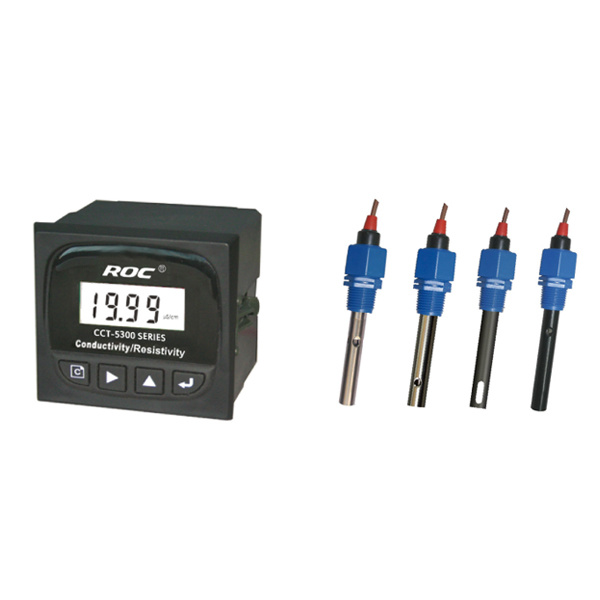
Inline conductivity sensors positioned in monitoring wells provide continuous surveillance of aquifer conditions. Baseline conductivity levels in coastal aquifers typically range from 500-2,000 μS/cm, while advancing saltwater creates rapid increases to 3,000-50,000 μS/cm depending on intrusion severity.
The California Coastal Commission reports that aquifers with continuous conductivity monitoring achieve 85% faster intrusion detection compared to quarterly sampling programs. This early warning enables freshwater extraction management that maintains positive hydraulic gradient, physically excluding saltwater from aquifer zones. Without intervention, contaminated aquifers require 10-30 years of reduced extraction before freshwater conditions restore.
pH Changes in Coastal Water Systems
Seawater intrusion alters not only conductivity but also pH conditions in coastal aquifers. Ocean waters with pH of 8.1-8.3 differ from typical freshwater pH of 6.5-7.5, creating signatures detectable through continuous monitoring. Inline pH sensors identifying acidification trends provide supplementary intrusion indication, particularly valuable when conductivity anomalies have alternative explanations.
Coastal wastewater treatment facilities also benefit from pH monitoring. Storm events flushing tidal waters through collection systems create variable pH conditions affecting biological treatment efficiency. Continuous pH monitoring enables automated chemical adjustment maintaining treatment effectiveness despite challenging influent conditions.
Storm Surge Protection for Coastal Treatment Facilities
Coastal water treatment facilities face acute risk from storm surge during hurricane and typhoon events. Monitoring systems tracking water quality at vulnerable points enable emergency protocols activating flood barriers and protecting critical equipment. Real-time data streams support decision-making during rapidly evolving storm conditions.
Turbidity testers monitoring source water quality detect sediment loading from storm runoff that can overwhelm treatment processes. When source water turbidity exceeds 500 NTU, facilities implementing source switching or enhanced treatment achieve consistent treated water quality, while facilities without monitoring experience treatment failures.
Dissolved Oxygen in Coastal Receiving Waters
Coastal discharge systems require dissolved oxygen monitoring to protect marine ecosystems. Wastewater discharges with depressed oxygen levels create localized hypoxia harming aquatic life. The National Marine Fisheries Service reports that oxygen depletion below 5 mg/L causes measurable harm to economically important fish species, creating both environmental and economic impacts.
Residual chlorine transmitters ensuring adequate disinfection while preventing excessive chlorine that damages marine organisms balance public health and environmental protection objectives. Advanced monitoring systems maintain chlorine residual above 0.1 mg/L at discharge points while minimizing environmental impact.
Infrastructure Hardening Through Monitoring-Driven Design
Coastal water infrastructure projects increasingly incorporate monitoring-driven design principles. Monitoring data identifying specific vulnerability points enable targeted hardening investments rather than uniform protection approaches. This precision reduces capital costs while improving overall system resilience.
The American Society of Civil Engineers estimates that monitoring-informed infrastructure design reduces protection costs by 30-40% while improving resilience outcomes. Real-time data supporting adaptive management enables facilities to respond to changing conditions rather than relying on static protection designed for historical conditions.
Shanghai ChiMay Coastal Monitoring Solutions
Shanghai ChiMay manufactures water quality monitoring equipment designed for the demanding conditions of coastal environments. Corrosion-resistant sensors withstand salt spray exposure, while robust enclosures protect electronics from flood damage. Multi-parameter sensor platforms combining conductivity, pH, turbidity, and dissolved oxygen measurement simplify installation while providing comprehensive situational awareness.
Conclusion
Coastal water infrastructure resilience requires comprehensive monitoring strategies addressing saltwater intrusion, storm surge, and ecosystem protection. Conductivity sensors, pH monitors, turbidity testers, and dissolved oxygen transmitters provide the analytical foundation for protecting coastal water systems from climate-driven threats. Shanghai ChiMay offers monitoring solutions designed for coastal deployment challenges. Communities investing in coastal water monitoring infrastructure position themselves to maintain service continuity as sea levels rise and storms intensify.