Table of Contents
Key Takeaways
- Online conductivity measurement catches boiler feedwater contamination between lab rounds — sometimes hours before a grab sample would have shown anything.
- Total Dissolved Solids (TDS) tracks conductivity closely — roughly ±2% correlation accuracy is achievable with proper temperature compensation.
- Proper monitoring prevents scale formation, the silent killer of boiler efficiency and tube life.
- Condensate return monitoring lets you push recovery rates past 85% with confidence in the water chemistry.
Boiler systems eat a large share of the energy in industrial facilities — often the single biggest end use — which makes water quality management a direct operating cost issue. Long-standing ASME operating guidance treats conductivity as the primary control parameter for boiler water impurities, and plant chemists have run it that way for decades.
The Science of Conductivity Measurement
Conductivity measures water’s ability to carry electrical current, which tracks directly with dissolved ion concentration. As a working rule, every 1 μS/cm of conductivity corresponds to roughly 0.5-0.7 mg/L TDS in typical boiler feedwater — close enough for trend monitoring and blowdown control.
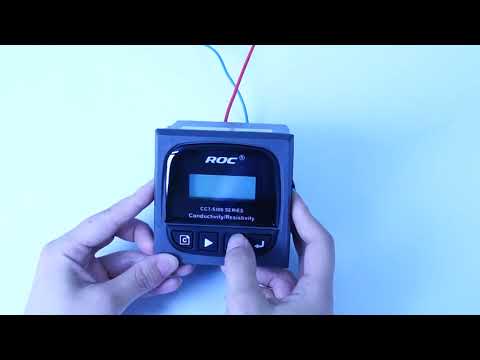
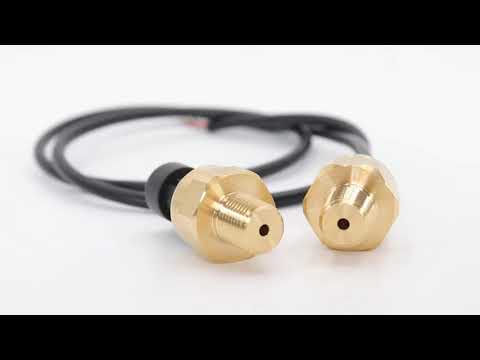
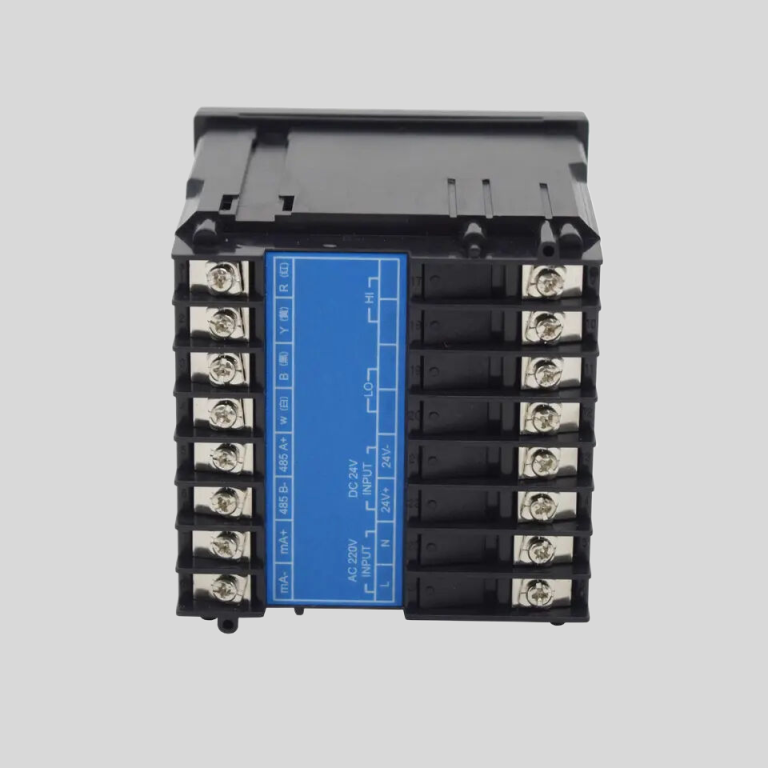
ChiMay in-line conductivity meters use four-electrode technology that eliminates the polarization effects common in two-electrode systems. This design holds accuracy within ±1% across ranges from 0.1 μS/cm (pure steam condensate) to 100 mS/cm (concentrated blowdown).
Comparative Monitoring Approaches
| Method | Response Time | Detection Limit | Operator Intervention |
|---|---|---|---|
| Continuous Online Monitoring | Real-time (<1 sec) | 0.1 μS/cm | Minimal |
| Periodic Laboratory Analysis | 2-24 hours | 1 μS/cm | High |
| Handheld Meter Spot Checks | Immediate | 1 μS/cm | Frequent |
| Visual/Taste Inspection | N/A | >500 μS/cm | None |
The difference between continuous monitoring and grab sampling isn’t subtle in practice. A condenser leak that starts between sampling rounds can dump impurities into the boiler for half a day before the lab flags it. Continuous monitoring catches the excursion when it starts — that’s the entire argument for the instrumentation spend.
Boiler System Applications
Feedwater Quality Control
Boiler feedwater needs conductivity below 10 μS/cm for low-pressure systems and <1 μS/cm for high-pressure units above 60 bar. Continuous monitoring triggers automatic diversion valves when conductivity exceeds setpoints, keeping contaminated water out of the boiler shell.
Cation conductivity monitoring — measuring conductivity after the sample passes through a cation exchange column — is the standard trick for detecting organic contamination and steam condenser in-leakage, since it strips out the background ammonia and leaves a clean reading of the acid-forming contaminants you actually care about. Refineries and chemical plants that run dual-conductivity monitoring on their boilers catch contamination events that simple specific-conductance readings miss entirely.
Condensate Return Optimization
Condensate is the cheapest boiler feedwater you’ll ever have — it’s already pure and already hot, typically running 40-60°C above ambient. But condensate contaminated by leaking heat exchangers or atmospheric exposure carries impurities straight into the boiler and accelerates corrosion.
The U.S. Department of Energy has pushed this point for years in its Steam Tip Sheets — “Return Condensate to the Boiler” is Tip Sheet #8 — and the reasoning is straightforward: recovering hot, clean condensate cuts fuel consumption, reduces water treatment chemical demand, and reduces blowdown losses all at once. Continuous conductivity monitoring is what makes aggressive condensate return safe, because it verifies the condensate is actually clean before you let it into the boiler. Plants that monitor condensate conductivity return more of it, and the fuel savings show up on the very next energy bill.
Scaling and Corrosion Prevention
Scale formation remains one of the most common causes of boiler tube failures reported by inspectors and insurers alike. The physics is unforgiving: scale thermal conductivity (0.5-1.2 W/m·K) is a tiny fraction of clean boiler steel (45-60 W/m·K), so even a thin layer forces metal temperatures up until the tube bulges or fails.
Continuous conductivity monitoring enables:
- Early detection of silica and calcium scaling precursors
- Blowdown frequency optimization based on actual TDS accumulation instead of a fixed schedule
- Phosphate dosing control for precipitation of hardness ions
Blowdown is a direct energy loss — you’re dumping hot, treated water. Monitoring lets you run blowdown as tight as the chemistry allows, which is always tighter than a calendar-based schedule.
Implementation Recommendations
Successful conductivity monitoring systems need:
Sensor Placement: Install sensors where they see a well-mixed water stream, avoiding dead legs and low-flow zones where readings lag reality. Make sure there’s enough flow past the element for a representative, stable reading.
Temperature Compensation: All conductivity measurements need automatic temperature compensation to the 25°C reference. Skip it and you’ll carry roughly 1.5-2.0% error per °C of deviation — enough to make precision control impossible.
Calibration Verification: Set calibration verification intervals by process criticality — typically 30-day intervals for critical boiler systems and 90-day intervals for auxiliary equipment.
Article #850 | ChiMay Inline Conductivity Meter | ChiMay Conductivity Sensor for boiler water treatment