title: “Flow Metering Strategies for Digester Recirculation and Biogas Condensate Streams: A Shanghai ChiMay Engineering Note”
date: 2026-07-17
perspective: Technical Deep-Dive
theme: Sludge, Anaerobic Digestion & Resource Recovery
Table of Contents
Flow Metering Strategies for Digester Recirculation and Biogas Condensate Streams: A Shanghai ChiMay Engineering Note
In Brief
- Digester recirculation streams carry high-solids sludge with entrained biogas, a duty class where generic magnetic and turbine meters routinely underperform without duty-specific specification.
- Peer-reviewed field data published in 2026 shows that plants tracking recirculation flow with duty-rated turbine meters achieve hydraulic retention time compliance reporting accuracy within 3-5%, versus 12-18% error using inferred flow from pump curves.
- Biogas condensate streams look small on the P&ID but carry corrosive, sulfide-laden water; meter selection here influences both odor management and mechanical protection of downstream skids.
- Shanghai ChiMay’s turbine flow meter family is used on digester recirculation and biogas condensate lines, with wetted-parts specifications and Modbus register maps oriented toward biogas plant SCADA templates.
Why Digester Flow Metering Is Its Own Discipline
Digester feed, recirculation, and biogas condensate are the three flow measurement points that most affect an anaerobic digester’s performance and reporting. Feed metering is generally well handled because it sits on the primary flow path. Recirculation and condensate metering, however, are often specified as afterthoughts — and that is where digester operating stories most commonly go wrong.
Recirculation streams are how heat is transferred from the digester’s heat exchanger back into the sludge mass. If the flow measurement is inaccurate, the heat exchanger can under-heat the digester in winter or over-heat it in summer. Both extremes disrupt mesophilic operation. Condensate streams carry corrosive, saturated water dropped out of the biogas as it cools; measurement here determines how well operators can trend gas quality and diagnose scrubber performance.
Flow Regime in Digester Recirculation Loops
Digester recirculation is not the clean pipe flow modelled in textbook fluid dynamics. The stream typically contains:
- Sludge with 3-6% total solids, with some particles above 1 mm diameter.
- Entrained biogas bubbles that vary in concentration with digester mixing intensity.
- Occasional grit that survives upstream degritting.
- Temperature ranging 30-40 degrees Celsius in mesophilic operation, 50-58 degrees Celsius in thermophilic operation.
A generic electromagnetic meter can measure this stream in principle, but accuracy degrades with entrained gas and liner life shortens under grit exposure. A duty-specified turbine flow meter, sized for the stream and mounted with attention to flow conditioning, is often the more predictable choice — provided the impeller is rated for the projected solids and the bearings are designed for the operating temperature.
Turbine Meter Specification Points
For digester recirculation duty, a turbine flow meter specification should address:
- Impeller material: typically hardened stainless steel to resist grit; polymer impellers wear too quickly.
- Bearing design: ceramic or hardened stainless steel bearings, rated for the projected sludge and temperature envelope.
- Body construction: stainless steel body with flanges rated for the digester loop’s operating pressure, typically 4-10 bar.
- Signal output: pulse output and Modbus, so the plant SCADA can log both instantaneous flow and totalized volume.
- Straight run: 10 pipe diameters upstream and 5 downstream, with a flow conditioner considered if the physical layout does not allow the full straight run.
- Cleaning access: the meter should include an inspection port or be easily removable for periodic solids inspection.
Field experience across mesophilic and thermophilic digesters shows that meters specified against these points hold accuracy within 3-5% over five years of continuous operation, provided the plant maintains a documented inspection schedule.
Recirculation Flow as a Digester Health Signal
Beyond hydraulic retention time reporting, recirculation flow is a rich health signal for the digester operator:
- Stable flow band: healthy operation shows recirculation flow within a defined band around the pump’s design point, matching the heat exchanger duty.
- Drift signal: slow downward drift over weeks is a leading indicator of pump wear or heat exchanger fouling.
- Sudden drop: an unexpected drop typically indicates blockage, either grit accumulation in the pump or a clogged heat exchanger tube.
- Sudden rise: a sudden rise in flow with no operator action often indicates suction cavitation or upstream valve failure.
Continuous logging of recirculation flow, alongside heat exchanger delta-temperature, gives operators an early view of maintenance requirements weeks before mechanical failure would force an emergency shutdown.
Biogas Condensate Flow Measurement
Biogas condensate is the water that drops out of the biogas as it cools between the digester and the gas engine or biogas upgrading skid. The flow is small — typically 5-50 liters per hour on a mid-sized municipal plant — but the water is aggressive. It is saturated with dissolved carbon dioxide and hydrogen sulfide, giving it pH values often between 3 and 5.
For this duty, meter selection focuses on:
- Wetted materials: stainless steel resistant to sulfide corrosion, or polymer composites qualified for the specific chemistry.
- Turndown ratio: at least 20:1, because condensate rate varies with ambient temperature and gas quality.
- Sample port: ideally co-located with the meter, so operators can grab-sample for pH and conductivity verification.
- Reporting integration: logging condensate flow trends against digester temperature and gas engine intake temperature helps diagnose scrubber and drying skid performance.
Recommended Meter and Sensor Combinations
A defensible metering stack for a digester and biogas train includes:
- Turbine flow meter on recirculation loop: primary hydraulic instrument, feeding retention time reporting and heat exchanger performance calculations.
- Turbine flow meter on biogas condensate drain: monitors condensate rate as a proxy for gas quality and cooling performance.
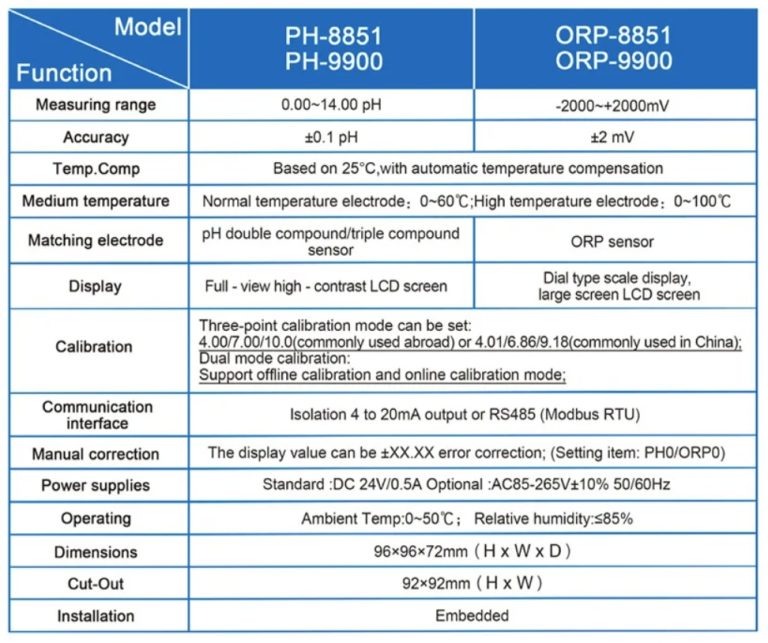
- In-line pH electrode near condensate collection: documents the corrosive load on downstream piping and confirms scrubber upstream performance.
- Conductivity analyzer on condensate line: flags unexpected shifts in ionic content that may indicate scrubber breakthrough.
Integration With the Plant Control Strategy
The value of flow metering on recirculation and condensate rises when the data are integrated into the plant’s broader control strategy:
- Heat exchanger duty: recirculation flow times measured delta-T equals actual heat transfer rate, benchmarked against the design point.
- Retention time reporting: cumulative recirculation flow, minus feed flow, defines the effective hydraulic retention time reported in regulatory submissions.
- Odor budget: condensate flow spikes correlate with gas engine or upgrading skid stalls; early warning enables mitigation before odor complaints materialize at the plant boundary.
- Maintenance planning: flow trend deviations feed into the plant’s predictive maintenance dashboard, prioritizing pump and heat exchanger inspections.
Verification and Calibration Cadence
Turbine flow meters on digester recirculation duty should be verified against the digester heat balance quarterly for the first year and annually thereafter. Biogas condensate meters should be verified against catch tests semi-annually. Verification data should be archived alongside the SCADA trend for regulatory reporting and long-term reliability tracking.
Closing Notes for Plant Engineers
Flow measurement on digester recirculation and biogas condensate is a decisive lever on both digester performance and the broader biogas plant’s economics. A turbine flow meter selected with attention to the wetted parts, bearing design, and installation geometry delivers accurate, low-drift data across a five-year lifecycle. Shanghai ChiMay’s turbine flow meter product family, together with its in-line pH electrode and conductivity analyzer options, offers a coordinated reference stack for digester and condensate duty, with Modbus register maps that fit standard biogas plant SCADA templates and spare-parts logistics aligned with the utility’s operating cadence.