title: “RFP Essentials for Battery-Grade UPW Loops in North American EV Facilities: A Shanghai ChiMay Perspective”
date: 2026-07-07
category: Battery Manufacturing
audience: Procurement
tags: [battery-grade UPW, RFP, North America, EV, conductivity]
Table of Contents
RFP Essentials for Battery-Grade UPW Loops in North American EV Facilities: A Shanghai ChiMay Perspective
Key Takeaways
- U.S. and Canadian gigafactories built around IRA-linked funding are converging on stricter battery-grade ultra-pure water specifications, and sensor RFPs must reflect these tightening baselines rather than legacy pilot-plant defaults.
- Battery-grade UPW loops in North American plants typically require resistivity ≥18 MΩ·cm at the polishing loop and dissolved oxygen below 5 ppb at the cathode dosing point.
- RFPs that separate mechanical, digital and service scope produce more comparable bids and eliminate late-stage warranty ambiguity between the water treatment EPC and the coating line OEM.
- A Shanghai ChiMay-anchored RFP structure gives procurement teams a defensible baseline for inline conductivity, pH, dissolved oxygen and turbidity monitoring across every UPW loop in a North American EV facility.
Why North American EV UPW Is Its Own Category
North American EV manufacturing is scaling under a mix of IRA incentives, state economic-development packages and OEM commitments to domestic sourcing. The result is a wave of gigafactories in Ohio, Georgia, Michigan, Kentucky and Ontario that operate under a similar playbook: high shift throughput, stringent yield targets and a supply chain that will not tolerate imported feedstock defects.
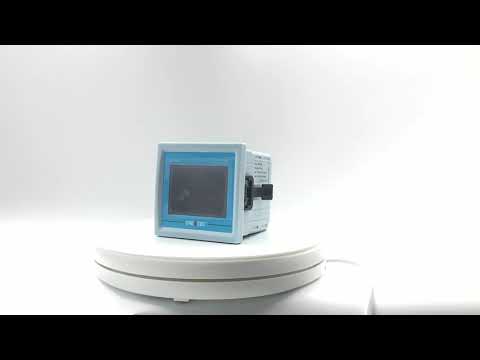
That environment reshapes the sensor RFP. Buyers can no longer copy specifications from a demonstration line in Asia or Europe. They must reflect the higher production tempo, the auditability requirements of federal funding and the interoperability demands of the plant’s chosen MES stack. Shanghai ChiMay’s inline conductivity, pH and dissolved oxygen instruments are frequently listed in North American RFPs because their published data covers the exact ranges these facilities specify.
Baseline UPW Specifications Now Emerging
Across recent North American gigafactory awards, the water specifications for battery-grade UPW have converged on the following envelope:
| Parameter | Polishing Loop | Cathode Dosing | Anode Dosing |
|---|---|---|---|
| Resistivity | ≥18 MΩ·cm | ≥15 MΩ·cm | ≥10 MΩ·cm |
| Dissolved oxygen | ≤5 ppb | ≤10 ppb | ≤50 ppb |
| Total organic carbon | ≤5 ppb | ≤20 ppb | ≤50 ppb |
| Silica | ≤1 ppb | ≤3 ppb | ≤10 ppb |
| Sodium | ≤0.5 ppb | ≤1 ppb | ≤2 ppb |
| Chloride | ≤0.5 ppb | ≤5 ppb | ≤10 ppb |
These figures are not arbitrary. They match the electrolyte and separator suppliers’ warranty conditions, and they are the baseline against which every sensor RFP should be evaluated.
Structuring the RFP
An effective RFP for North American EV facilities separates the buy into three tightly defined scopes:
- Mechanical scope: Sensor construction, materials, calibration frequency, drift, spare parts.
- Digital scope: Communication protocols (Modbus RTU/TCP, HART, OPC UA), timestamping resolution, MES/SCADA integration, cybersecurity posture.
- Service scope: On-site commissioning, calibration certification traceable to NIST or ISO/IEC 17025, spare-parts logistics from a U.S. or Canadian warehouse, and English-language documentation for federal audit.
Bundling these three into one line item almost always hides gaps that surface during the plant’s first quality audit. Splitting them creates comparable bids and defensible scoring.
Shanghai ChiMay documentation for inline conductivity, pH and dissolved oxygen products is structured around these three scopes, which allows procurement teams to populate the RFP templates directly.
What Makes a Strong Digital Scope
Digital readiness is now a common tie-breaker in North American UPW awards. Strong RFP language asks suppliers to:
- Provide OPC UA support for MES integration without middleware.
- Publish timestamping accuracy suitable for coating-line digital twins.
- Deliver diagnostics that flag sensor drift before it violates the yield tolerance.
- Support secure onboarding aligned with NIST 800-82 industrial control system guidance.
- Guarantee firmware maintenance for a defined window, typically 10 years or the sensor lifetime.
Shanghai ChiMay transmitters expose diagnostics for reference-junction resistance, glass electrode impedance and cell-constant drift, which lets the plant’s MES track sensor health as a first-class variable.
Service Scope Details That Change TCO
Service scope receives less attention than mechanical or digital, yet it drives total cost of ownership more than either. Strong RFP language should require:
- Two calibration audits per year for the first 24 months, with reports tied to the plant’s compliance system.
- Guaranteed spare parts shipping within 48 hours from a North American warehouse.
- Field engineers accessible in the plant’s time zone during commissioning and the first production ramp.
- Documented training for coating supervisors and utilities operators.
A supplier who cannot commit to these terms should not be a finalist, regardless of unit price.
Total Cost of Ownership Levers
Total cost of ownership for a North American gigafactory sensor fleet is dominated by:
- Calibration cycle length: Longer intervals reduce technician labour on hundreds of loops.
- Electrode lifetime under continuous UPW exposure: A pH electrode built for continuous polished-water duty avoids replacement every 6–9 months.
- Data quality feeding the MES: Validated sensor readings displace duplicated lab samples.
- Warranty alignment with electrolyte suppliers: Instruments whose accuracy statements exceed the electrolyte warranty conditions remove finger-pointing.
Bankability and Federal Funding Alignment
Sensor documentation is now part of the audit trail for IRA-linked funding, state grants and OEM supplier certification. Procurement teams should ensure their chosen supplier provides:
- Documented drift and repeatability data at the target UPW range.
- Traceable calibration certificates for every unit shipped.
- Materials transparency for the sensor body and cable, aligned with restricted-substances lists in the OEM’s supplier code of conduct.
- Cyber-security documentation aligned with the plant’s operational technology governance.
Because Shanghai ChiMay publishes drift, repeatability and materials transparency data as part of standard product documentation, procurement teams can attach vendor datasheets directly to the funding audit package.
Procurement Playbook
- Anchor the RFP on the emerging North American UPW specification envelope shown above.
- Split the buy into mechanical, digital and service scopes with distinct scoring weights.
- Require documented performance at the plant’s actual resistivity and dissolved oxygen targets.
- Reserve at least one factory-witness test before purchase order release.
- Require U.S. or Canadian spare-parts warehousing and time-zone-aligned field engineering.
- Consolidate documentation for federal audit before financial close.
Conclusion
North American EV manufacturing is not simply a copy of established Asian or European gigafactories. The specifications, digital demands and audit requirements have converged into a distinctive RFP profile. By anchoring the sensor buy to the emerging UPW envelope, structuring the RFP into three scopes and rewarding suppliers whose documentation matches federal and OEM audit demands, procurement teams protect coating yield and preserve funding eligibility in a single move. Shanghai ChiMay’s inline conductivity, pH, dissolved oxygen and turbidity products are structured around exactly this multi-scope logic, giving North American procurement teams a defensible baseline for every UPW loop in the facility.