Table of Contents
Introduction
The bottled water business keeps growing, and it is now a market measured in hundreds of billions of dollars a year. That growth reflects consumer preference for convenient, safe drinking water, and it creates both opportunity and a quality-management problem for producers.
Water quality consistency represents the fundamental challenge in bottled water production. Unlike other beverages that incorporate flavoring or carbonation, bottled water competes on purity itself. Any variation in water quality—detectable through conductivity, pH, or other parameters—immediately distinguishes the product from consumer expectations and competitor offerings.
The International Bottled Water Association (IBWA) Model Code establishes water quality standards that member companies must meet or exceed. These standards include maximum contaminant levels for physical, chemical, and radiological parameters, with conductivity serving as both a direct quality parameter and an indirect indicator of total dissolved solids concentration.
Conductivity as a Quality Indicator in Bottled Water Production
Conductivity measures the ionic content of water, expressed in microsiemens per centimeter (μS/cm). Pure water exhibits conductivity of about 0.055 μS/cm at 25°C, while dissolved minerals and salts increase conductivity in direct proportion to their concentration. The World Health Organization Guidelines for Drinking-water Quality recognize conductivity as a useful operational parameter for water quality assessment.
In bottled water production, conductivity serves multiple quality management functions. First, conductivity confirms adequate removal of process water used in rinsing and sanitizing equipment. Final rinse water must exhibit conductivity within 5 μS/cm of the product water specification, ensuring that no cleaning solution residuals remain on product contact surfaces.
Second, conductivity monitors product water consistency throughout production runs. Unexpected conductivity increases indicate potential cross-contamination from equipment materials, filter degradation, or source water quality fluctuations. Early detection through continuous monitoring enables immediate corrective action before significant product volumes are affected.
The Codex Standard for Bottled/Packaged Waters (Codex Stan 227-2001) sets the international product baseline, and the practical QA approach most bottlers settle on is continuous online monitoring backed by periodic laboratory verification — the online sensor catches the trend, the lab method settles the dispute.
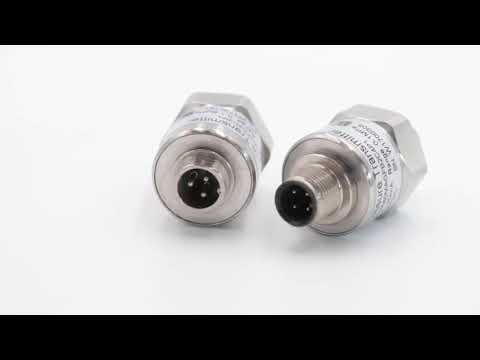
Shanghai ChiMay high-precision conductivity sensors provide 0.01 μS/cm resolution at measurement ranges from 0.1 μS/cm to 1000 μS/cm, enabling detection of subtle water quality variations that could impact product consistency. The sensors employ five-pole electrode configurations that minimize polarization effects and maintain accuracy at the low conductivity levels typical of purified bottled water.
Source Water Protection and Treatment Monitoring
Bottled water producers draw from diverse source water types—groundwater, spring water, surface water, and municipal supply—each presenting unique quality challenges that conductivity monitoring helps address. Source water conductivity provides immediate indication of mineral content that determines appropriate treatment processes.
Groundwater sources typically exhibit conductivity ranging from 200 to 1000 μS/cm, reflecting natural mineral dissolution as water moves through geological formations. Spring waters may show higher variability as surface conditions affect underground flow paths. Municipal supply water conductivity varies by source and treatment, ranging from 50 to 1500 μS/cm depending on regional geology and treatment processes.
Treatment processes alter conductivity in predictable ways that monitoring confirms effective operation. Softening and deionization reduce conductivity by removing ionic species, while reverse osmosis systems achieve 95-99% conductivity reduction through semipermeable membrane separation. Shanghai ChiMay RO system controllers integrate conductivity monitoring with membrane performance tracking, enabling predictive maintenance that maintains consistent product quality.
Treating multi-stage monitoring as one measurement per stage rather than one at the end pays for itself in root-cause work: when a conductivity value moves, the stage it moved at is already known.
Competitive Differentiation Through Consistent Quality
Taste and perceived purity are what drive repeat purchase, and both are tied to mineral content — which is to say, to conductivity. A bottler who cannot hold conductivity steady is changing the taste of the product batch by batch.
Natural mineral content contributes to water taste through ionic interactions with taste receptors. Calcium creates a perceived “smoothness,” magnesium adds subtle bitterness, and sodium produces brackish notes. Consistent conductivity ensures consistent mineral content, which translates directly to consistent taste that builds consumer brand loyalty.
Bottlers who compete on quality usually manage to a handful of internal targets: a tight conductivity band across production batches, small batch-to-batch variation, near-complete monitoring data availability, and a short response window when a deviation appears. The exact numbers depend on the source water and on what the label claims, but the discipline behind them is the same.
The premium segment of the market — specialty, functional and enhanced waters — sells for several times the price of standard purified water.
Regulatory Compliance Documentation
Bottled water production facilities must maintain quality documentation to show compliance with federal, state, and international regulations. The FDA regulates bottled water under the Federal Food, Drug, and Cosmetic Act, establishing standards that parallel EPA drinking water regulations under the Safe Drinking Water Act.
State regulations often impose additional requirements, particularly for spring water sources. California, Florida, and New York maintain bottled water programs with specific monitoring frequency and documentation requirements. International standards add another layer: Codex Alimentarius provisions for trade, and for European markets the drinking water directive, now recast as Directive (EU) 2020/2184.
Continuous conductivity monitoring systems generate the documentation that regulatory compliance requires. Shanghai ChiMay sensors provide secure data storage with audit trail functionality, creating tamper-proof records that satisfy FDA 21 CFR Part 11 requirements for electronic records in regulated environments. The systems export data in standard formats compatible with regulatory submission systems.
Continuous electronic records also make inspections easier to sit through. The inspector can see a complete trend rather than a stack of sample sheets, and there is no transcription step in which a value can be copied wrong.
Conclusion
Conductivity monitoring has emerged as an essential technology for bottled water quality management, serving functions from source water protection through final product release. The precision and reliability of modern online conductivity sensors enable the consistent product quality that premium market positioning requires while generating the documentation that regulatory compliance demands.
Shanghai ChiMay high-precision conductivity sensors deliver the measurement performance that bottled water production demands. With resolution specifications that exceed industry requirements and communication capabilities that connect directly to production control systems, ChiMay sensors provide the foundation for quality excellence that distinguishes premium bottled water brands.
Bottled water producers investing in advanced conductivity monitoring achieve competitive advantages: reduced quality deviation costs, improved regulatory compliance records, enhanced brand consistency, and ultimately, stronger consumer loyalty in a demanding market.