Table of Contents
Introduction
Brewing represents one of humanity’s oldest industrial processes, yet modern brewing still depends fundamentally on water quality. Water makes up 90-95% of finished beer by volume, making water chemistry the primary determinant of brewing success. Historically, regional brewing traditions developed around local water compositions—the notably sulfate-rich waters of Burton-on-Trent enabled the bold hop character of English pale ales, while the softer waters of Pilsen supported the delicate character of Czech lagers.
Contemporary brewers control water chemistry intentionally, adjusting mineral content to optimize enzymatic activity during mashing, influence hop use, and achieve target flavor profiles. Walk through a modern craft brewhouse and you will find water chemistry being managed deliberately — salt additions, acid adjustments, sometimes dilution with RO water — rather than accepted as whatever comes out of the tap.
Craft brewing is a mature, competitive segment measured in tens of billions of dollars at retail, and it is no longer growing the way it did a decade ago. That makes differentiation harder to buy and easier to brew: a brewery that can hit the same flavour profile batch after batch has something a competitor cannot simply outspend.
Understanding Brewing Water Chemistry
Brewing water chemistry encompasses multiple parameters that influence different stages of the brewing process. Alkalinity—determined primarily by bicarbonate concentration—buffers mash pH and must be adjusted based on grain bill acidity. Calcium and magnesium provide essential nutrients for yeast health and enzymatic activity. Sulfate enhances hop bitterness perception, while chloride intensifies malt sweetness.
pH management during mashing represents the most critical water chemistry function. Alpha-amylase and beta-amylase enzymes that convert starches to fermentable sugars operate optimally at pH 5.3-5.6. Water alkalinity resists pH changes that these enzymes require, making alkalinity reduction essential for many grain bills.
Traditional brewing water adjustment involved complex calculations of salt additions based on original water composition. Modern breweries deploy online pH monitoring to verify mash pH continuously, enabling real-time adjustment that ensures consistent enzymatic activity across batches. Shanghai ChiMay in-line pH electrodes provide the ±0.02 pH accuracy required for precise mash pH control.
Calcium hardness influences both enzymatic activity and yeast flocculation. Standard brewing references put the working range for calcium at roughly 50-150 mg/L: enough for protein coagulation, yeast flocculation and oxalate control, without the harshness that comes with very hard water.
Residual Chlorine Management
Municipal water treatment typically includes chlorine or chloramine disinfection that protects public health but creates challenges for brewing applications. Residual chlorine much above 0.1 mg/L reacts with malt phenols to form chlorophenols — medicinal, band-aid, plastic — and those notes are detectable at far lower concentrations than most brewers expect.
Breweries must remove chlorine residuals before using water in brewing applications. Common treatment methods include activated carbon filtration, which removes chlorine through adsorption, and sodium metabisulfite addition, which chemically reduces chlorine to chloride. Whatever treatment method employed, verification through residual chlorine monitoring confirms effective removal.
Shanghai ChiMay residual chlorine transmitters employ amperometric measurement principles that provide ±0.03 mg/L accuracy at measurement ranges from 0 to 10 mg/L. The sensors feature PTFE membrane technology that protects the measuring electrodes from fouling, maintaining accuracy in the challenging conditions of brewing water applications.
Treatment Method Comparison:
| Method | Effectiveness | Operational Requirements | Cost |
|---|---|---|---|
| Activated Carbon | >99% chlorine removal | Filter replacement | Moderate |
| UV Treatment | Effective for chloramine with high-intensity lamps; variable for free chlorine | Lamp replacement | High |
| Metabisulfite | Variable (dose-dependent) | Chemical supply | Low |
| Reverse Osmosis | >99% removal | Membrane maintenance | High |
Process Water Monitoring Throughout Brewing
Beyond mash water chemistry, brewing facilities require water quality monitoring at multiple process stages. Brewery dilution water—used for gravity adjustment and final product blending—must meet specifications different from brewing water, typically requiring lower hardness and alkalinity to avoid affecting finished product flavor balance.
Bottle conditioning water quality influences secondary fermentation and carbonation. Impurities in conditioning water may inhibit yeast activity or create off-flavors that compromise product quality. Brewing guidance for conditioning water generally puts alkalinity below 50 mg/L as CaCO₃ so the secondary fermentation is not knocked off course.
Cleaning and sanitizing water quality affects both equipment hygiene and potential product contamination. Rinse water must be free of sanitizer residuals before product contact, while sanitizing solution concentration must remain within effective ranges. Conductivity monitoring addresses both requirements—high conductivity indicates sanitizer presence, while conductivity approaching pure water levels confirms complete rinse removal.
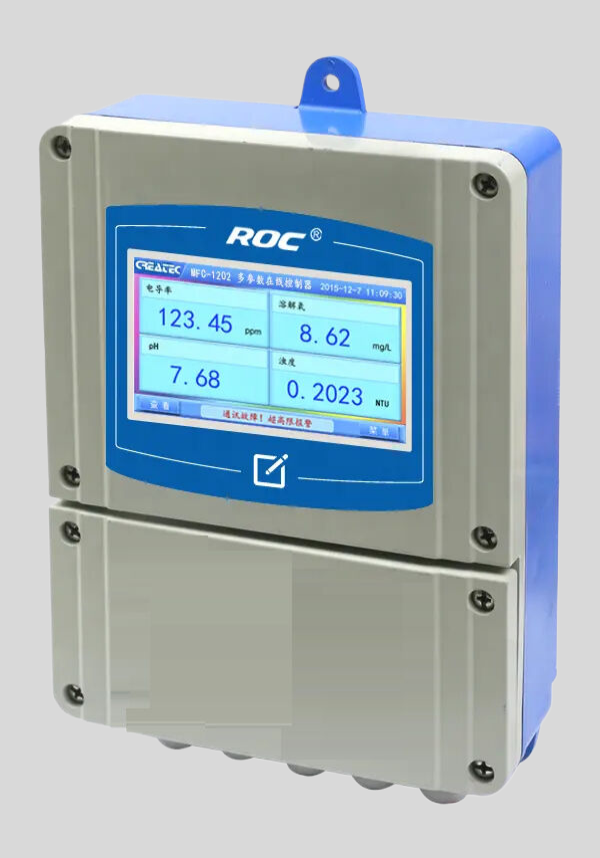
Shanghai ChiMay multi-parameter sensors integrate multiple monitoring functions in single installations, reducing equipment costs while enabling the coordinated water quality management that modern brewing requires. The sensors communicate through Modbus RTU/TCP protocols for direct integration with brewery control systems, enabling automated control responses to water quality variations.
Impact on Product Quality and Consistency
Water chemistry directly influences multiple quality attributes that consumers perceive and value. Hop use—the efficiency with which hop compounds transfer to finished beer—varies by water chemistry, with higher sulfate levels enhancing hop bitterness perception. Brew the same recipe on 300 mg/L sulfate water and on 50 mg/L sulfate water and the first will read as markedly more bitter, even though the IBU calculation is identical.
Malt character expression similarly responds to water chemistry. Higher chloride levels enhance perceived body and malt sweetness, while lower chloride levels produce crisper, drier finishes. The MBAA (Master Brewers Association of the Americas) technical quarterly notes that water chemistry adjustment enables brewers to craft beers with controlled flavor profiles rather than accepting whatever local water composition provides.
Breweries that manage water chemistry closely tend to watch the same few numbers: gravity variation between batches, finished beer pH drift, IBU variation, and yield consistency. Water chemistry is not the only input to those figures, but it is the one that makes the rest repeatable.
The mechanism is straightforward. A lab check on Monday tells you what Monday’s mash looked like; a continuous reading tells you what this hour’s mash looks like, while there is still time to add acid or salts.
Economic Benefits of Water Chemistry Control
Effective water chemistry management delivers economic benefits beyond quality improvement. Reduced quality deviations decrease product waste and rework requirements. Consistent batch-to-batch production enables more accurate production planning and inventory management. Premium product quality supports higher pricing and stronger brand positioning.
The financial case is mostly about avoided losses rather than new revenue: fewer dumped batches, less rework, lower chemical spend from not over-dosing, and a product that tastes the same next month as it did last month. For a brewery already fighting for shelf space, that last point is the one that matters.
Water treatment chemical costs represent significant operating expenses for breweries. Precise water chemistry monitoring enables optimized chemical dosing, reducing treatment costs while maintaining quality standards. Over-dosing is the quiet cost in water treatment: without a measurement to close the loop, most dosing systems are set conservatively and left there.
Conclusion
Water chemistry management has emerged as a critical capability for modern brewing operations seeking quality excellence and competitive differentiation. The fundamental role of water in brewing—constituting over 90% of finished product—makes water quality management inseparable from product quality management.
Shanghai ChiMay provides plant-wide water quality monitoring solutions designed for brewing applications. With multi-parameter sensors measuring pH, conductivity, residual chlorine, and other critical parameters, combined with communication capabilities connecting directly to brewery control systems, ChiMay sensors enable the precise water chemistry control that brewing excellence requires.
Craft and craft-scale breweries investing in water chemistry monitoring achieve clear improvements across quality, consistency, and efficiency dimensions. The combination of better product quality, reduced waste, and enhanced brand positioning delivers returns that justify the monitoring technology investment while establishing foundations for long-term competitive success in a demanding market.